Transportation in the Philippines
Introducing Unique Public Transportation in the Philippines
This is an overview of traditional public transportation unique to the Philippines. The main modes are tricycles, jeepneys, and multicabs (Figure 1). Each of their detailed characteristics is shown in Table 1, with tricycles being small and operating over short distances, while jeepneys and multicabs are medium-sized and operate over medium distances. Some may envision the bustling road scenes of the Philippines when thinking of tricycles and jeepneys. Jeepneys are brightly decorated with vibrant colors.
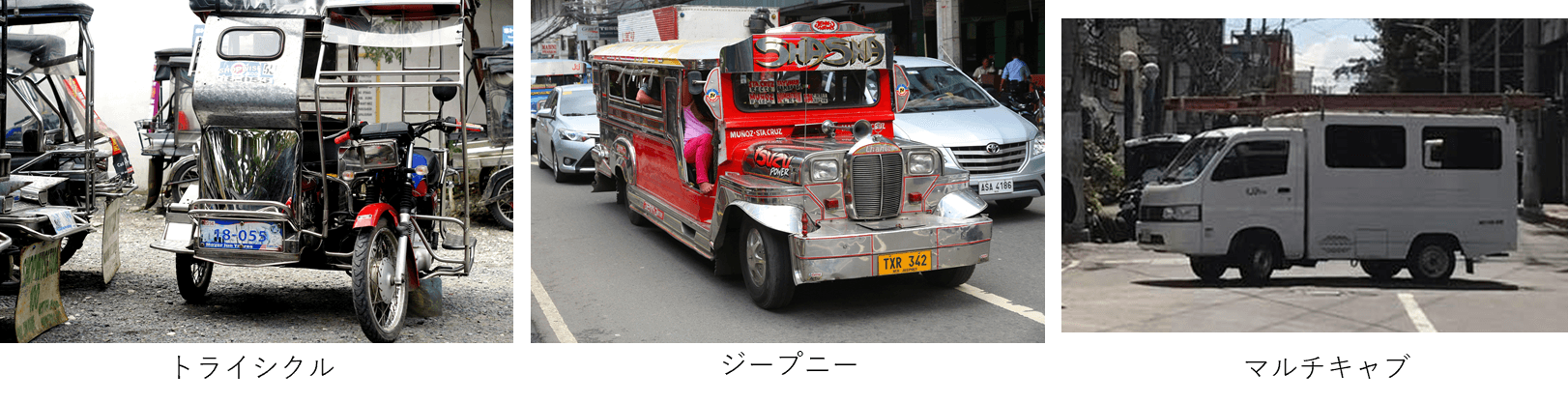
Figure 1 Unique Public Transportation in the Philippines
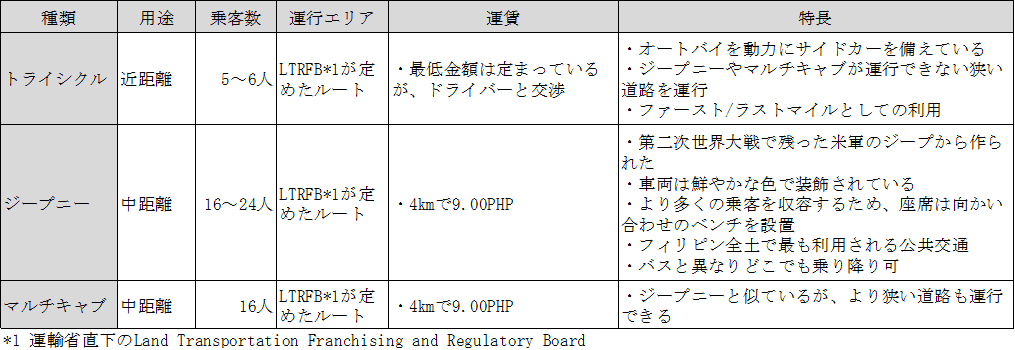
Table 1 Overview of Public Transportation in the Philippines
Source: Zenmov data
The Paradox of Public Transportation: Hard to Access
While traditional vehicles may add charm to the scenery, actually riding them can be quite difficult for anyone other than locals. For example, while tricycle fares are generally fixed, passengers often have to negotiate with the driver based on the situation. Furthermore, even if you do manage to ride, the vehicles are not necessarily clean inside. Additionally, since the drivers of these vehicles are independent operators, there is no system for managing schedules or operating according to demand. During peak morning and evening hours, they flock to pick up passengers, contributing to congestion on the roads. During off-peak times, there are often situations where drivers can be seen napping, making it difficult for those who wish to travel to find available transportation.
So, should one just take a taxi instead of relying on traditional transport? Taxis are often not that clean either, and there have been instances where their meters are broken, unexpected charges occur, or undesirable items are lurking in the dashboard, leading to advice that if traveling with more than one person, one should sit in the front passenger seat to keep the dashboard in check — fortunately, I haven’t encountered such situations yet. Personally, I rarely take taxis anymore; I find ride-hailing services like Grab to offer more transparent pricing, and the drivers' backgrounds are generally clearer than those of taxi drivers. Initially, the vehicles were quite clean, but I did notice some deterioration when I went back last year; they seem to be gradually getting more 'Filipino'.
Ride-Hailing Apps are Convenient, but Cause Traffic!?
Apps like Grab have become very popular in the Philippines, with about 55,000 vehicles registered as of 2020. As mentioned, they are quite convenient and I use them frequently, but from a transportation capacity perspective, these vehicles often carry only a few passengers which results in many of them occupying road space without transporting a significant number of people. I believe this is one of the factors contributing to traffic congestion in the Philippines.
Resolving Traffic Congestion Leads to Development
According to estimates by the Japan International Cooperation Agency (JICA) in 2018, the economic loss due to traffic congestion in Metro Manila amounts to 3.5 billion Philippine pesos (about 7.55 billion yen) per day.
Improving public transportation that is convenient, accurate, safe, and clean with high passenger capacity per vehicle greatly contributes to the development of the Philippines. When visiting the area, I hear many voices from government officials, businesses, and locals expressing the need for convenient and safe transportation.
Providing Public Transportation Suited to Local Conditions!
The convenience, accuracy, safety, and cleanliness of Tokyo's public transport can be confidently declared as world-class. I am always grateful and impressed by how the Yamanote Line and the Tōkaidō Shinkansen operate accurately even under extremely tight schedules, accommodating all ages and genders without perception of anxiety. While MaaS is trending, Japan has already been offering remarkably convenient transportation services for decades; in that sense, Japan has long been developing its unique form of MaaS. At Zenmov, our daily goal is to upgrade public transportation by adapting those disciplined elements into a form that can be embraced locally, contributing to improved transportation in the area.