Mobility Operations Platform— MoveOps™
Mobility Operations Platform— MoveOps™
We build it. We run it.
Mobility, end to end.
The real work begins after the build.

From bus operations management to dispatch optimization.
We've deployed fleet management and shared mobility services in the field.
Maritime transport and island mobility.
Video analytics and edge AI are powering digital transformation in tourism.
From bus operations management to dispatch optimization.
We've deployed fleet management and shared mobility services in the field.
Maritime transport and island mobility.
Video analytics and edge AI are powering digital transformation in tourism.
From fixed-route bus operations to launching municipal ride-share programs.
Public transit digital transformation and transit operations.
Global mobility deployment, field implementation, and operations-led development. That's our work.
From fixed-route bus operations to launching municipal ride-share programs.
Public transit digital transformation and transit operations.
Global mobility deployment, field implementation, and operations-led development. That's our work.
The future of MaaS and the reality of smart cities.
Mobility transformation starts with on-demand transit.
Next-generation mobility for transit deserts.
Autonomous driving integration, electric buses, and green transformation: the next frontier.
The future of MaaS and the reality of smart cities.
Mobility transformation starts with on-demand transit.
Next-generation mobility for transit deserts.
Autonomous driving integration, electric buses, and green transformation: the next frontier.
Transportation data analytics that turn location data into value.
Driver shortage solutions, shared taxis, and public transit restructuring.
Video LLMs and real-time operations management are transforming the field.
Transportation data analytics that turn location data into value.
Driver shortage solutions, shared taxis, and public transit restructuring.
Video LLMs and real-time operations management are transforming the field.
About Us
We take mobility from pilot to real business
0.1 ▸ 1
We are not a development company.
Zenmov doesn't just build mobility systems. We have run mobility businesses ourselves, from operating transit services overseas to driving public transit DX for municipalities in Japan.
Many projects stall after the pilot. We are strongest from that point on: assembling the system, mobilizing people, and making it a viable business.
Turning 0.1 into 1: that's our strength.
What We Do
Our Two Core Offerings
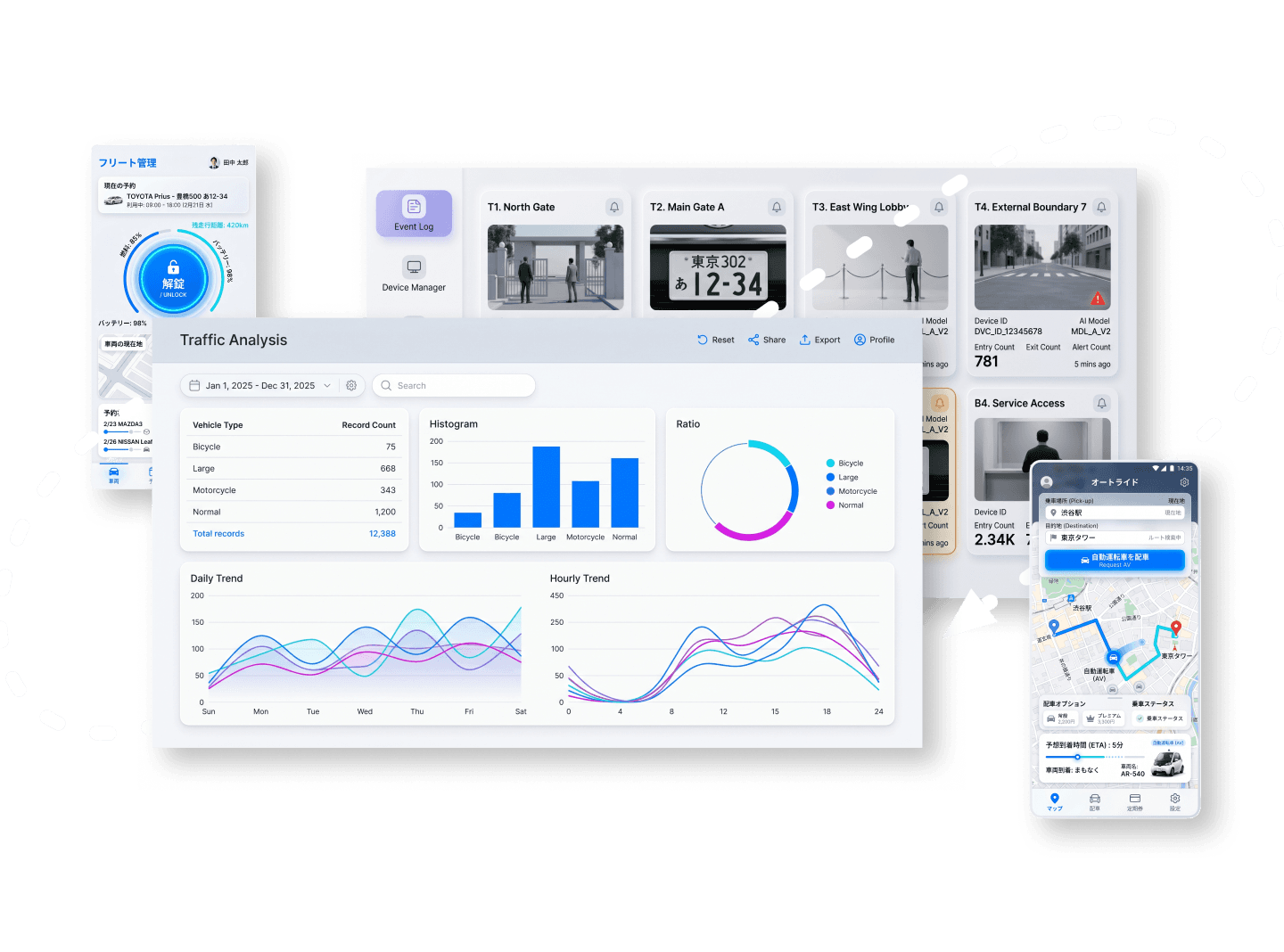


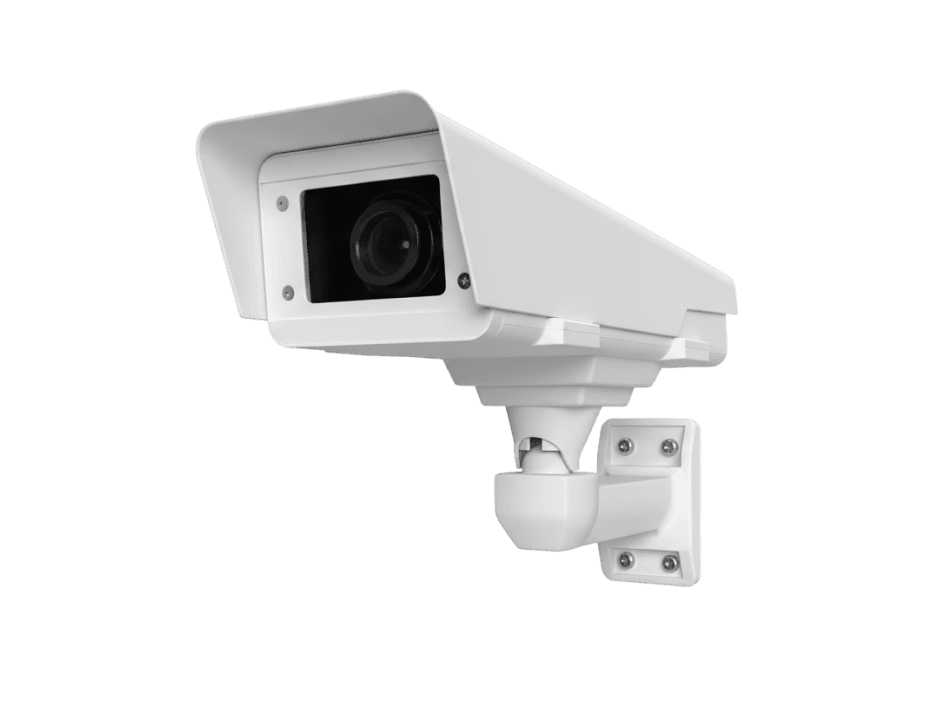
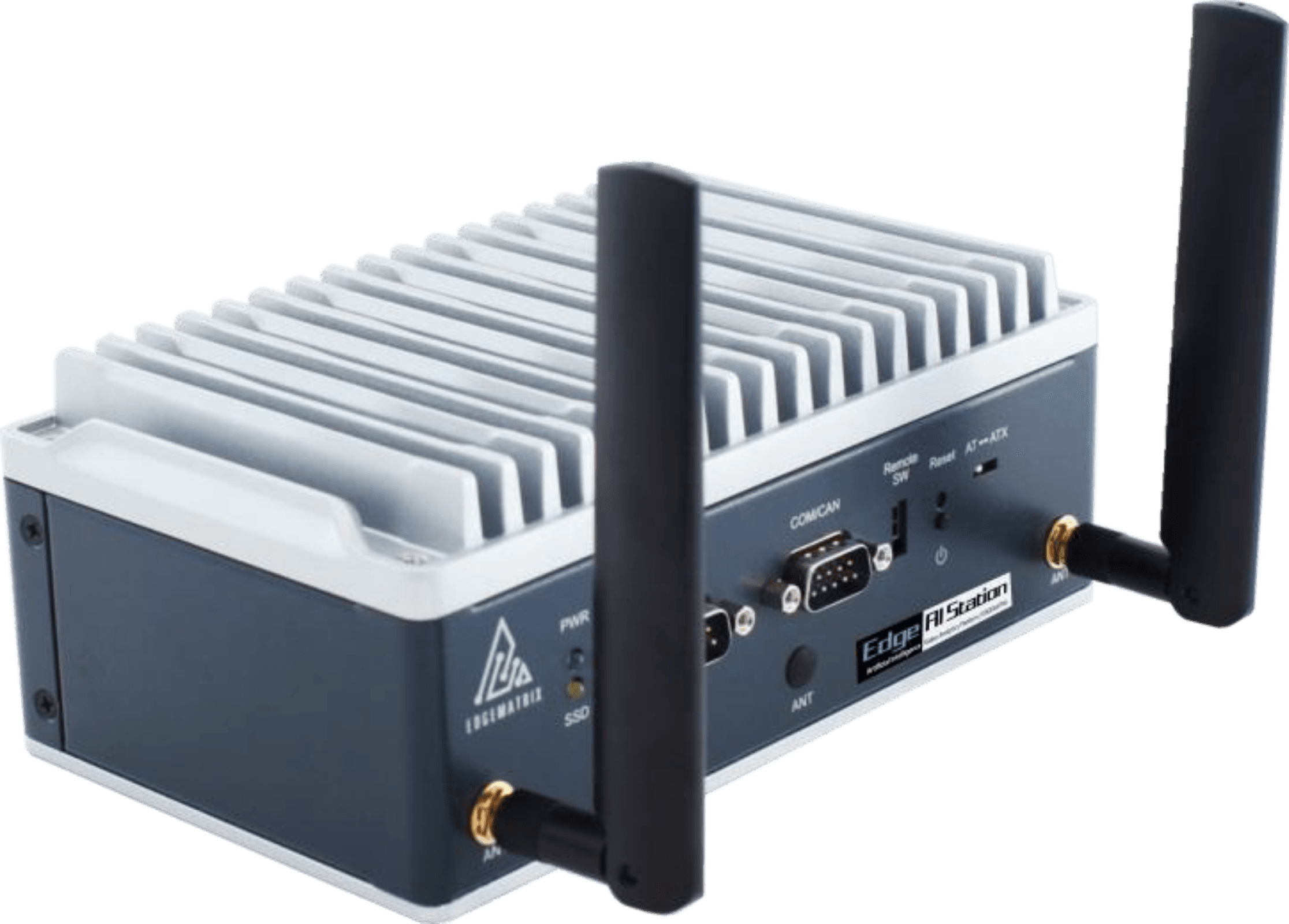
Archives
Proven in Operation Across 7 Countries


We Deliver
From government agencies to Tokyo Stock Exchange Prime Market companies
Three strengths behind this track record.
01 / Business Planning
From the concept stage, we turn ideas into viable businesses.
02 / Global Expansion
We overcome barriers in local connectivity, regulations, and language through hands-on implementation experience.
03 / Field Operations
We've run services ourselves, so we understand the field long after delivery.
"Stuck at PoC." "Unexpected barriers overseas." "Built it, but the field doesn't use it." Zenmov resolves these common pitfalls in mobility digital transformation through three strengths: planning, implementation, and operations.
Tell us about your current challenges

SmartJAMP






SmartJAMP
NEWS
Latest News
Our Vietnamese engineer hiring case study was featured in "xseeds Hub."
Announcement and Notice of the Establishment of Current Mobility Co., Ltd.
We exhibited at SusHi Tech Tokyo, one of Asia’s largest innovation events.
SETOUCHI Current Mobility has started operating the electric moped bike "e-Vino".
Setouchi Karen has been reborn as "Setouchi Current Mobility."
View all news
BLOG
Field Notes from Mobility

[Media Coverage] Our "Digital Key" was featured in the May 2025 issue of 'Aftermarket'.
[Media Coverage] Our 'Digital Key' has been featured in the May 2025 issue of 'Aftermarket'
We are pleased to announce that an article about our initiative, the 'Digital Key', has been published in the May 2025 issue of the industry magazine 'Aftermarket'. It covers a wide range of topics including practical use cases, operational benefits, and future expansion possibilities.

Main Points of the Coverage
Locking/Unlocking/Starting with just a smartphone
Flexible management of permissions and deadlines, and log visualization
Integration with reservation and vehicle management systems
Optimization of operations through IoT linkage
Diverse utilization scenarios
Value Brought to the Field
Reduction of manpower and dependence on individuals: Reducing operations such as key storage, handover, and collection
Prevention of unauthorized use: Ensuring transparency through permission design and usage logs
Improvement of customer experience: Smooth initiation of use without face-to-face interaction, minimizing queues and paperwork


We have published a new page that clearly introduces the charm of edge AI.
Zenmov's Edge AI Solutions
➡ Visit the Edge AI Special Page here:https://zenmov.com/edge-ai
Recently attracting attention, "Edge AI" is technology that allows for the realization of both real-time and efficiency by processing data on-site without relying on the cloud.
At Zenmov, we are developing simulation solutions that leverage this Edge AI.
Features of Edge AI
Fast Processing:Active in situations that require immediate judgment, such as traffic monitoring and danger detection
Cost Reduction:Reduces communication volume by only sending necessary data
Flexible Scalability:Easily adaptable with the addition of cameras and sensors
Application Scenarios
Traffic Sector:Detects dangerous driving and illegal parking
Tourism Sector:Utilizes pedestrian flow data to formulate tourism strategies
Industrial Sector:Detects falls and absence of helmets in factories
Value Provided by Zenmov
Installation is completed in a few hours, waterproof and dustproof for outdoor reliability
Data is processed on-site → Ensures privacy protection
Equipped with over 50 AI models, available for use immediately after installation
Edge AI demonstrates immediate effectiveness across various fields such as traffic, tourism, and industry.
Through its implementation, Zenmov contributes to creating a safe and efficient society.
If you're interested, please feel free to contact us!
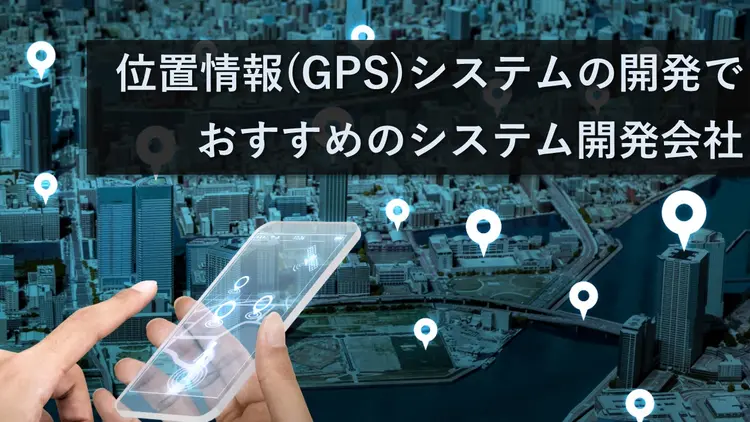
Zenmov has been featured in Order Navigation's "14 Recommended Development Companies for Location Information (GPS) System Development [2025 Edition]"
Zenmov was introduced in the "14 Recommended Development Companies for GPS System Development - 2025 Edition" by Hōchō Navi
Zenmov Inc. was selected for the feature article "14 Recommended Development Companies for GPS System Development - 2025 Edition" by Hōchō Navi.
Our company, Zenmov, is engaged in the development of GPS/location information systems specialized in the mobility sector under the corporate vision of "Resolving chaotic traffic with IT". We have received high praise for the MaaS-related projects that are in operation both domestically and internationally, as well as for our proprietary SMOC (Smart Mobility Platform).
You can view it from the link below:
https://hnavi.co.jp/knowledge/blog/location-information_companies/

Zenmov handles technology that reproduces and simulates real-world spaces and processes digitally (digital twin).
We have created a demo of a digital twin
We are developing a simulator that incorporates various data related to transportation and urban mobility, visualizing and analyzing current challenges, and detecting future bottlenecks and potential issues by altering traffic flow and movement patterns. This simulator can be flexibly applied to multiple cities and regions, supporting the reproduction of mobility behaviors and the extraction of challenges based on urban characteristics. Furthermore, this analytical foundation is aimed at evolving into a digital twin that reflects the overall situation of the city in real-time, and in the future, we plan to link with edge AI to enable immediate decision-making and feedback control in locations close to the field. It is expected to be widely utilized as infrastructure that enables advanced decision-making support for urban transportation, regardless of whether it is public or private.
*The video is from around Meguro Station.

Zenmov has been featured in BALANCe Magazine's "15 Recommended Development Companies".
Zenmov was featured in BALANCe Magazine's "Top 15 Recommended Development Companies"
In BALANCe Magazine's web feature "Recommended Development Companies for New Services and Business System Development: A Guide to Choosing," our company Zenmov was introduced as a "company strong in development."
You can view it through the link below:
https://balance.bz/magazine/category/system/new-system-development/#Zenmov株式会社

Vietnamese New Graduate Engineer Recruitment Activity Report at Sun Asterisk
Report on the Recruitment Activities for Vietnamese New Graduate Engineers at Sun Asterisk
Sun Asterisk is known as a company that actively promotes the recruitment and development of engineers overseas, particularly in Vietnam.
Through partnerships with top local universities, job fairs, and the development of highly skilled IT personnel who can speak Japanese, the company has implemented a global recruitment strategy, producing numerous talented individuals.
The company has established a comprehensive support system from recruitment to employment in Japan and career development.
Recently, we at Zenmov have been given the opportunity to utilize Sun Asterisk's recruitment program for Vietnamese new graduate IT engineers.
Through this program, we conducted online corporate briefings for many Vietnamese students, receiving applications that exceeded our expectations. After the document screening, we held the first interviews, and the final interviews took place on Saturday, November 29, at Sun Asterisk in Hanoi, Vietnam.
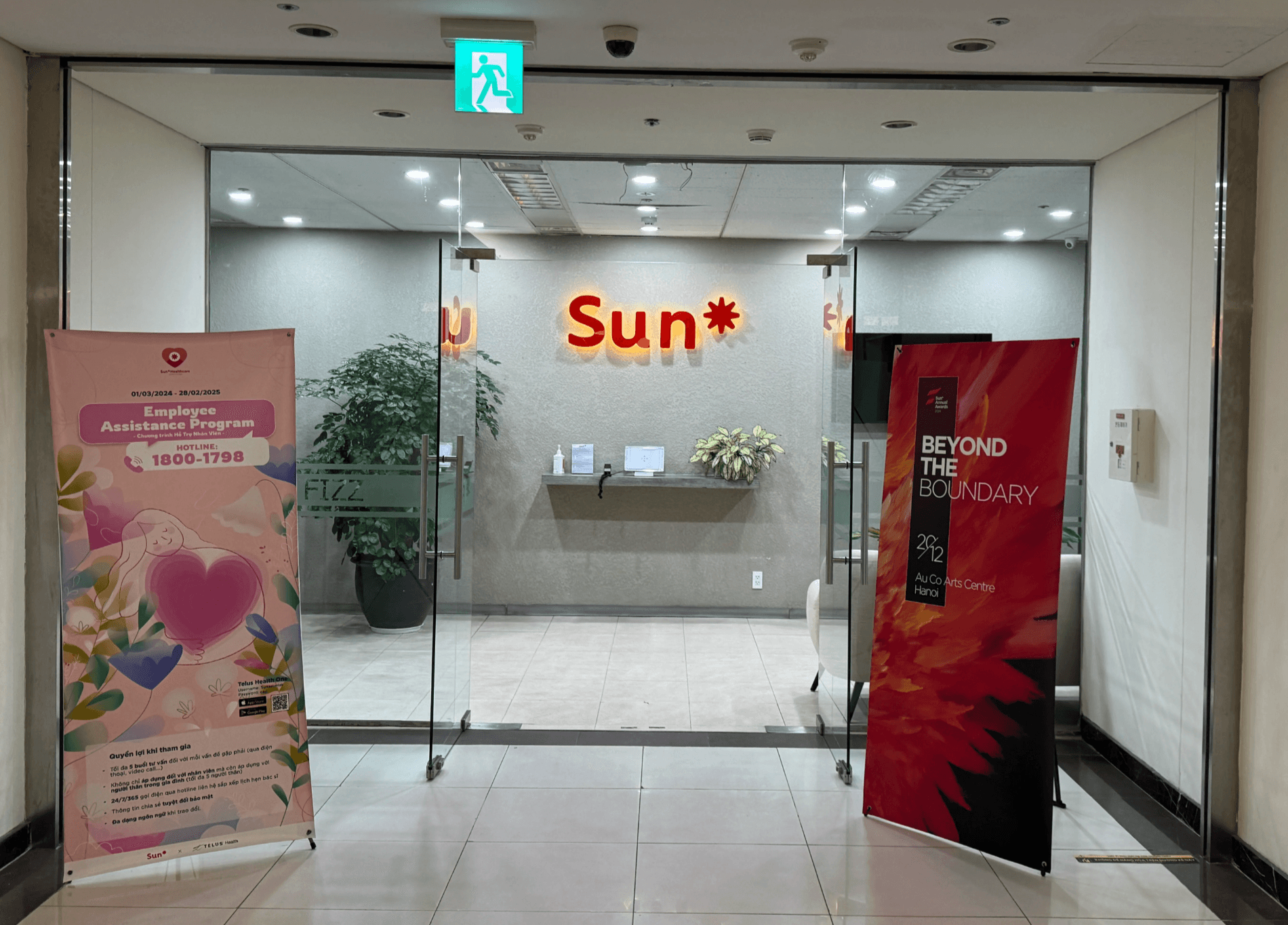
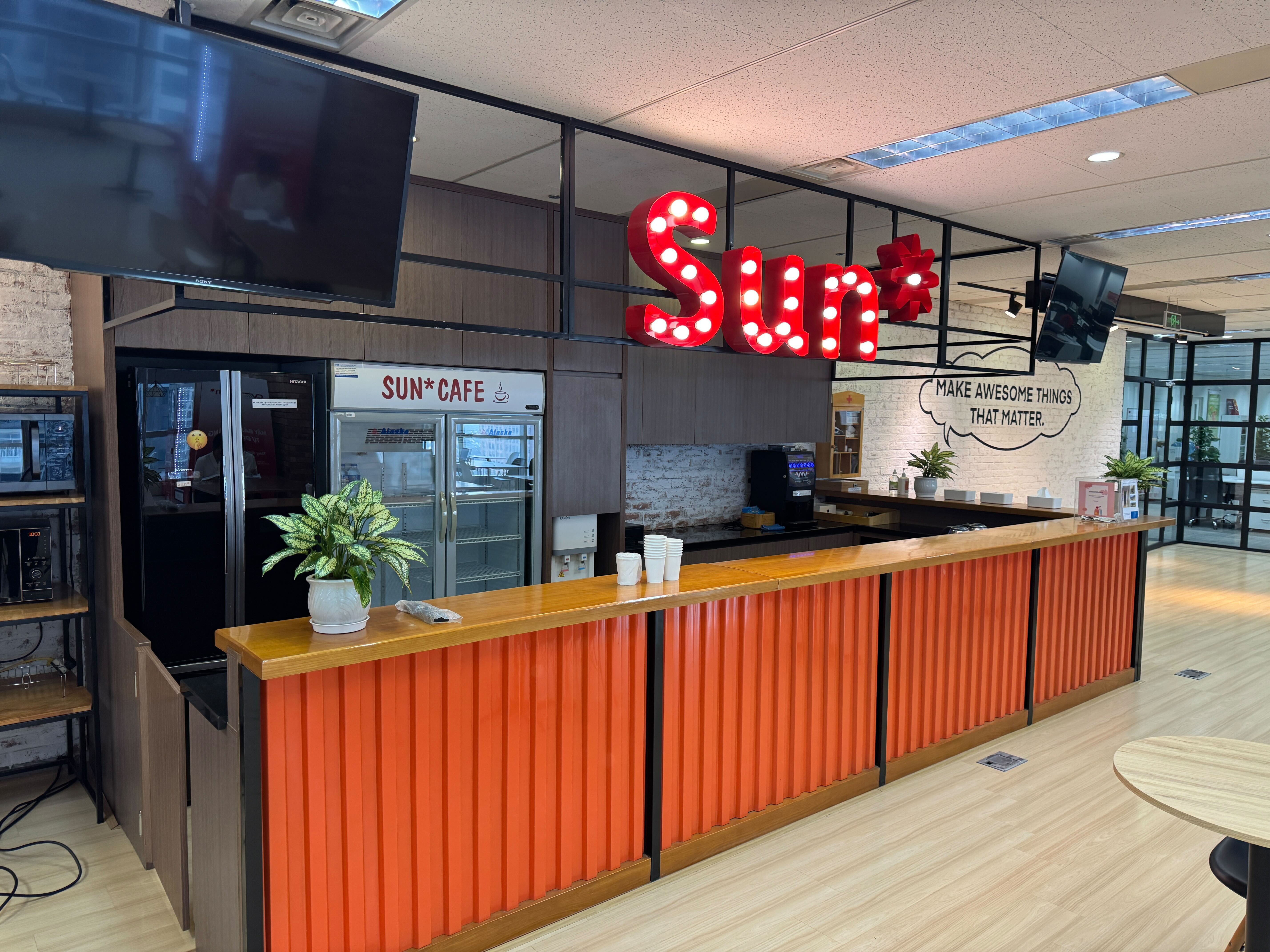
The office of Sun Asterisk features a stylish café counter. Visiting this stylish space was a valuable experience for the recruitment team.
Our CTO Manaka and the business development representative Tokuda participated in the final interviews.
As a result, we decided to hire four outstanding Vietnamese university students as new graduate engineers.
Two of them are scheduled to join Zenmov in November 2025, while the remaining two are set to join in November 2026.
All four will come to Japan after graduating from university and are expected to thrive as engineers at Zenmov.
The four hired will focus on improving their Japanese language skills and acquiring engineering skills during the period leading up to their graduation.
This will enable them to smoothly transition into their roles in Japan.
Additionally, we plan to provide opportunities for them to participate as interns in Zenmov projects while still in school, helping them gain practical experience.
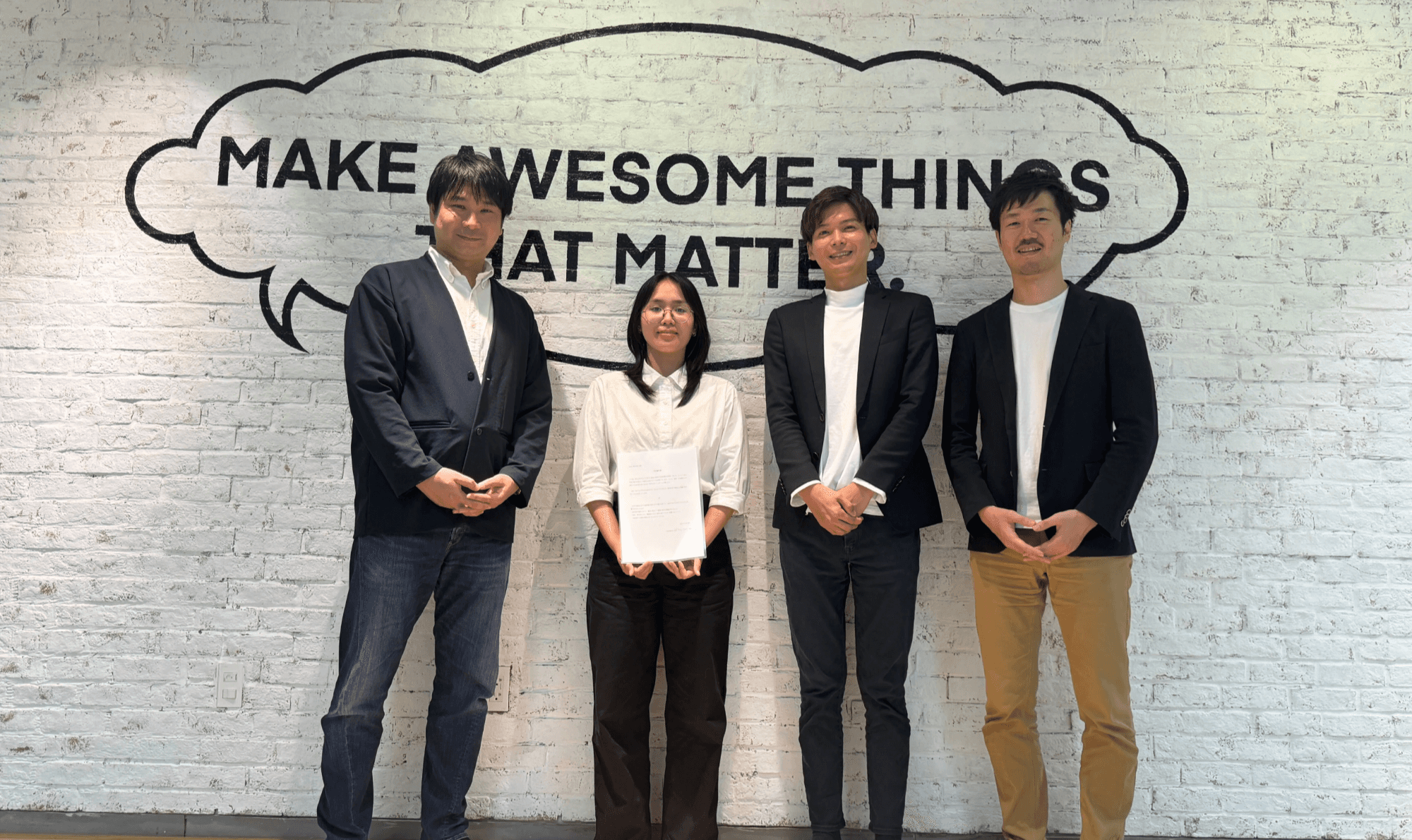
From left to right: Zenmov CTO Manaka, offer recipient Do Thi Thuy Ga, Zenmov Tokuda, and Sun Asterisk's Hirose.
Zenmov will continue to focus on recruiting talented individuals from a global perspective and will work on creating an environment that supports the growth of each employee.

Zenmov, implementation of Series A fundraising and flowering of Dracaena
Zenmov Implements Series A Fundraising and Dracaena Blooming
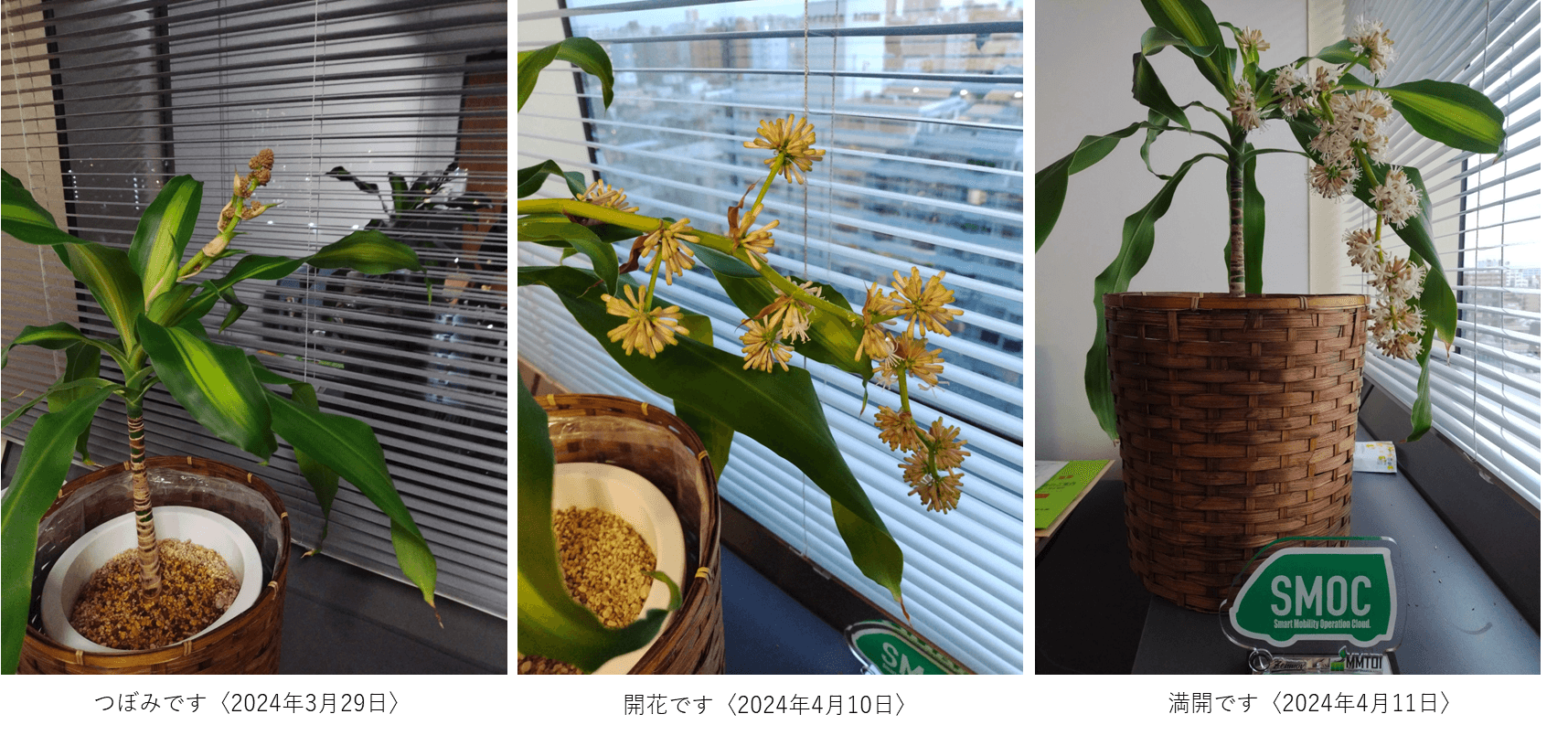
Zenmov's office faces the Meguro River. Speaking of the Meguro River, it is one of Tokyo's famous cherry blossom spots, but the cherry blossoms have already bloomed, and now we can enjoy the green leaves.
Inside our office, the buds of a certain plant have begun to bloom. This plant is known as the "Dracaena," also referred to as the tree of happiness. Dracaena is a popular houseplant, but its blooming cycle can be short, ranging from 2 to 3 years, and for longer periods, from 5 to 10 years, with no fixed blooming season, making it somewhat whimsical when it comes to flowering (the language of flowers for Dracaena is happiness).
Now, Zenmov has conducted a third-party allocation increase for Series A funding, with Broadleaf Inc. and Yoko Co., Ltd. as the two underwriting companies. With valuable contributions from both companies, we wish to accelerate the technological development and business expansion of our Smart Mobility Platform, our MaaS platform SMOC (Smart Mobility Operation Cloud), and do our utmost to tackle societal transportation challenges… as our representative Tanaka and all employees are committed to this effort.
The blooming of the Dracaena in the office may also be a message of encouragement (and a bit of celebration?) toward Zenmov's next stage... I interpret it positively and of my own accord.
Press Release April 9, 2024 Zenmov Implements Series A Fundraising https://prtimes.jp/main/html/rd/p/000000004.000081602.html
Brunei Scenery - Trying a Jungle Tour (2) -
The Scenery of Brunei - Trying a Jungle Tour (2)
The Scenery of Brunei - Trying a Jungle Tour (1) - This is a continuation of Landscape of Brunei - Let's go on a jungle tour! vol.1.
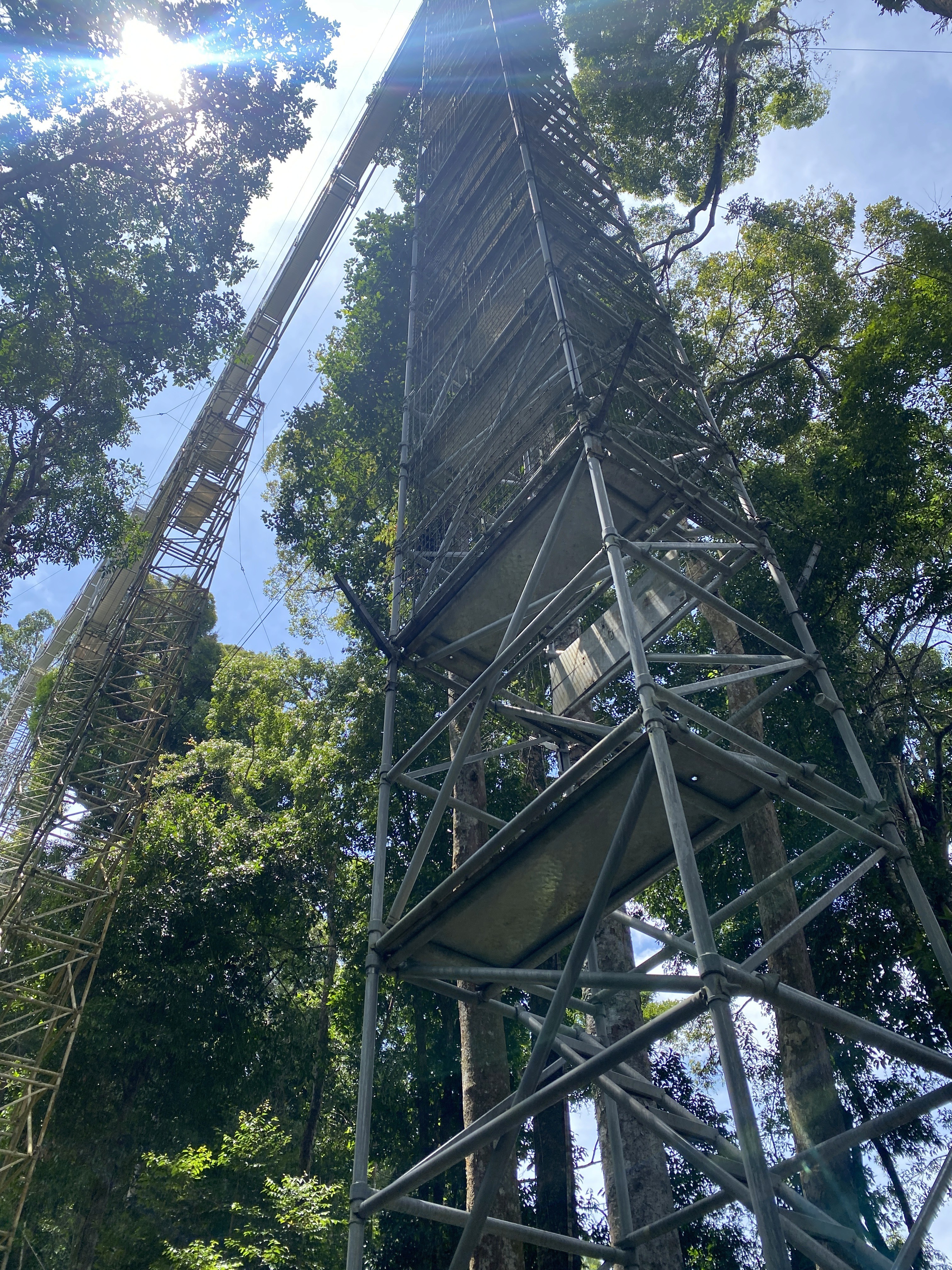
As you climb a long, long staircase, you reach the towering Belalong Canopy Walkway.
The Canopy Walkway is a famous scenic spot in Brunei that offers a panoramic view of the tropical rainforest, with five interconnected towers standing about 43 meters above the ground.
(Reference: Brunei Tourism Board)

Now, let's go up to the tower.
This is the view from the top of the canopy. It's a stunning view... but first, I might feel a bit dizzy.
Let's also walk along the walkway.
Walking on the Canopy Walkway
It's incredibly high, narrow, and quite thrilling.
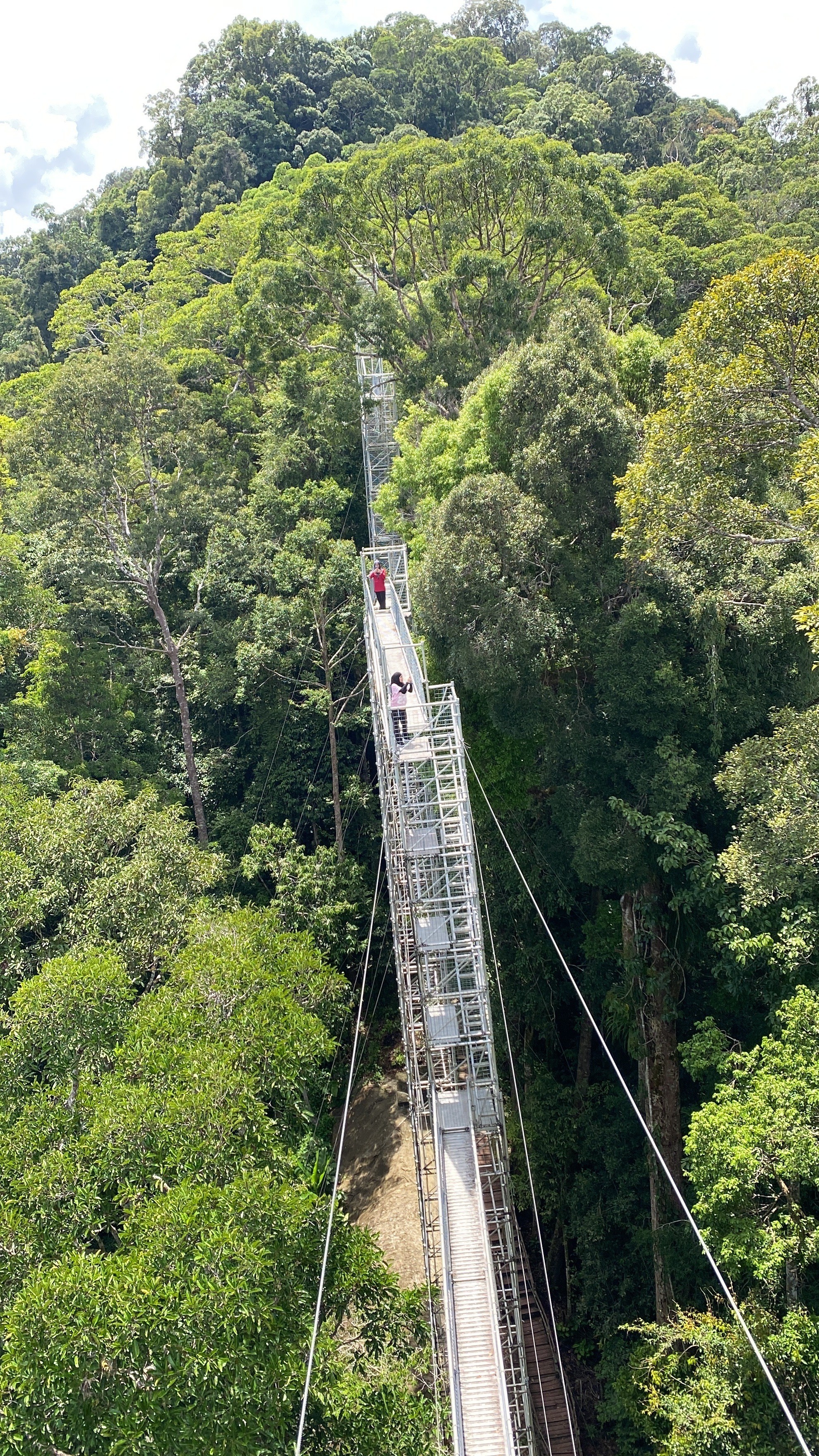
From above, the upper walkway looks like this.
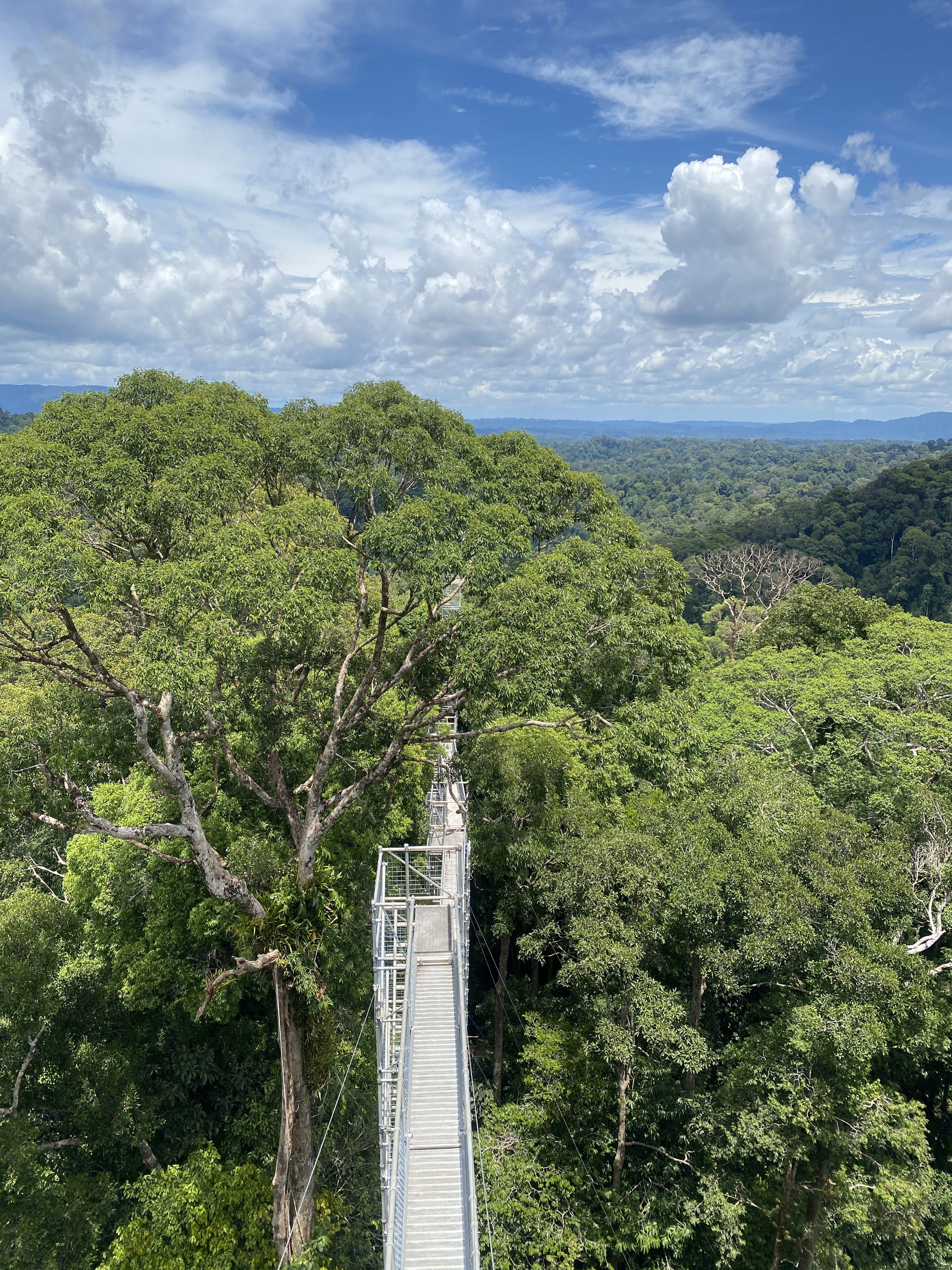
As far as the eye can see, the tropical rainforest of Brunei, one of the most diverse ecosystems in the world, expands. Choosing the right time to view the sunrise or sunset over the jungle horizon will also be a wonderful experience.
After the tour, we return to the lodge house for lunchtime.
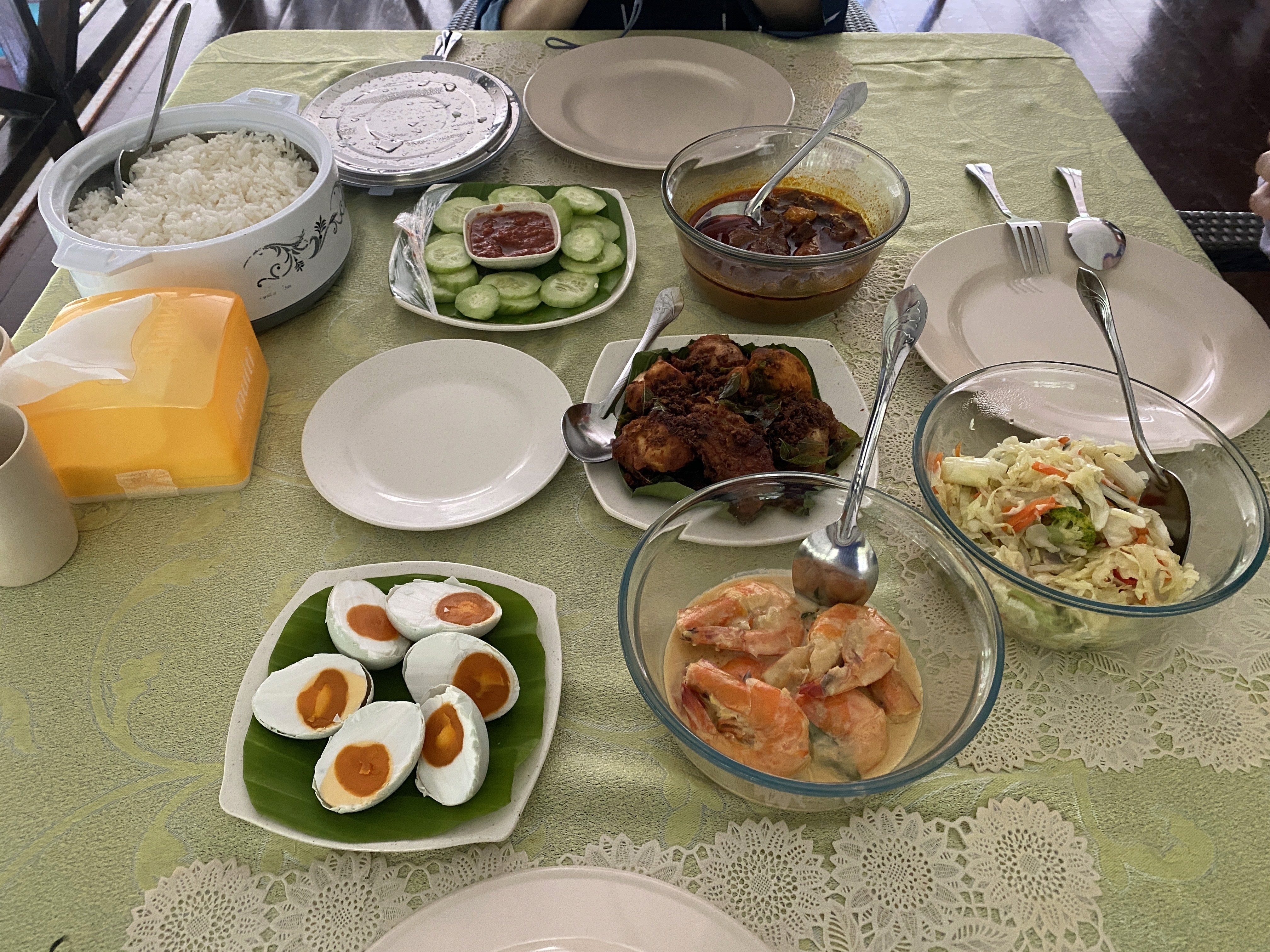
I would like to introduce Brunei's gourmet food on another occasion.
How was the jungle tour in the Temburong district?
It was a valuable experience captivated by the majestic tropical rainforest of Brunei.

The Scenery of Brunei - Trying a Jungle Tour (1)
Scenery of Brunei - Jungle Tour Experience (1)
Continuation of the landscape of Brunei - Across the Temburong Bridge.
Upon crossing the Temburong Bridge, you will be greeted by the rich nature of the Temburong district.
Temburong is an exclave located at the easternmost part of Brunei, separated by Malaysia. To the south lies Ulu Temburong National Park, with an area of 550 km2 of forested land. Moreover, a vast area of the Temburong district is covered in primary forest, promoting ecotourism that takes advantage of its nature-rich environment. Its biodiversity is among the best in the world, making this naturally abundant environment a significant attraction for Brunei.
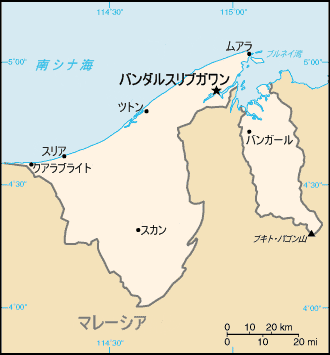
The exclave Temburong district
Now, let's head out for the jungle tour at the national park. First, check in at the lodge house!
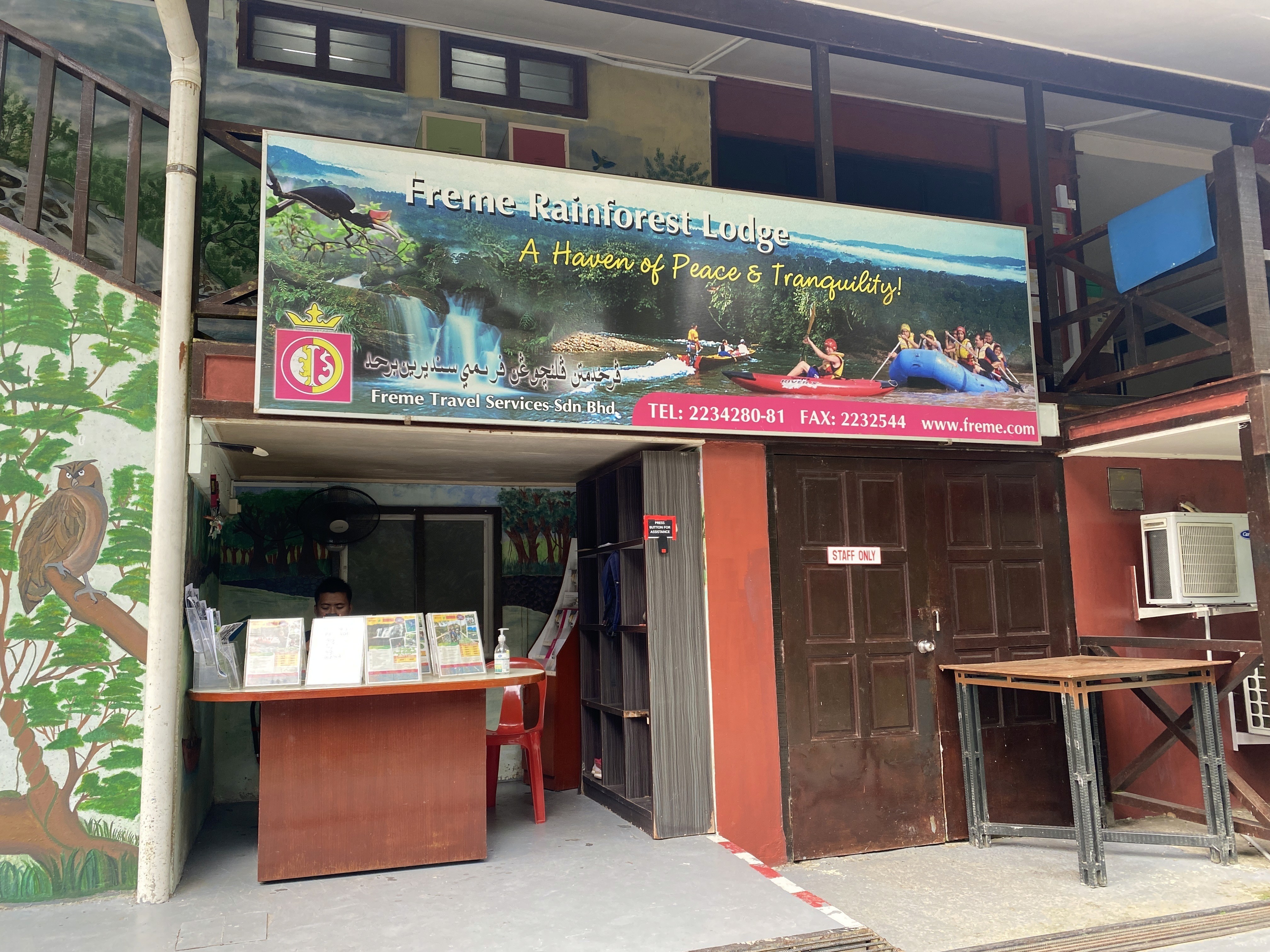
Welcome to the Jungle Tour
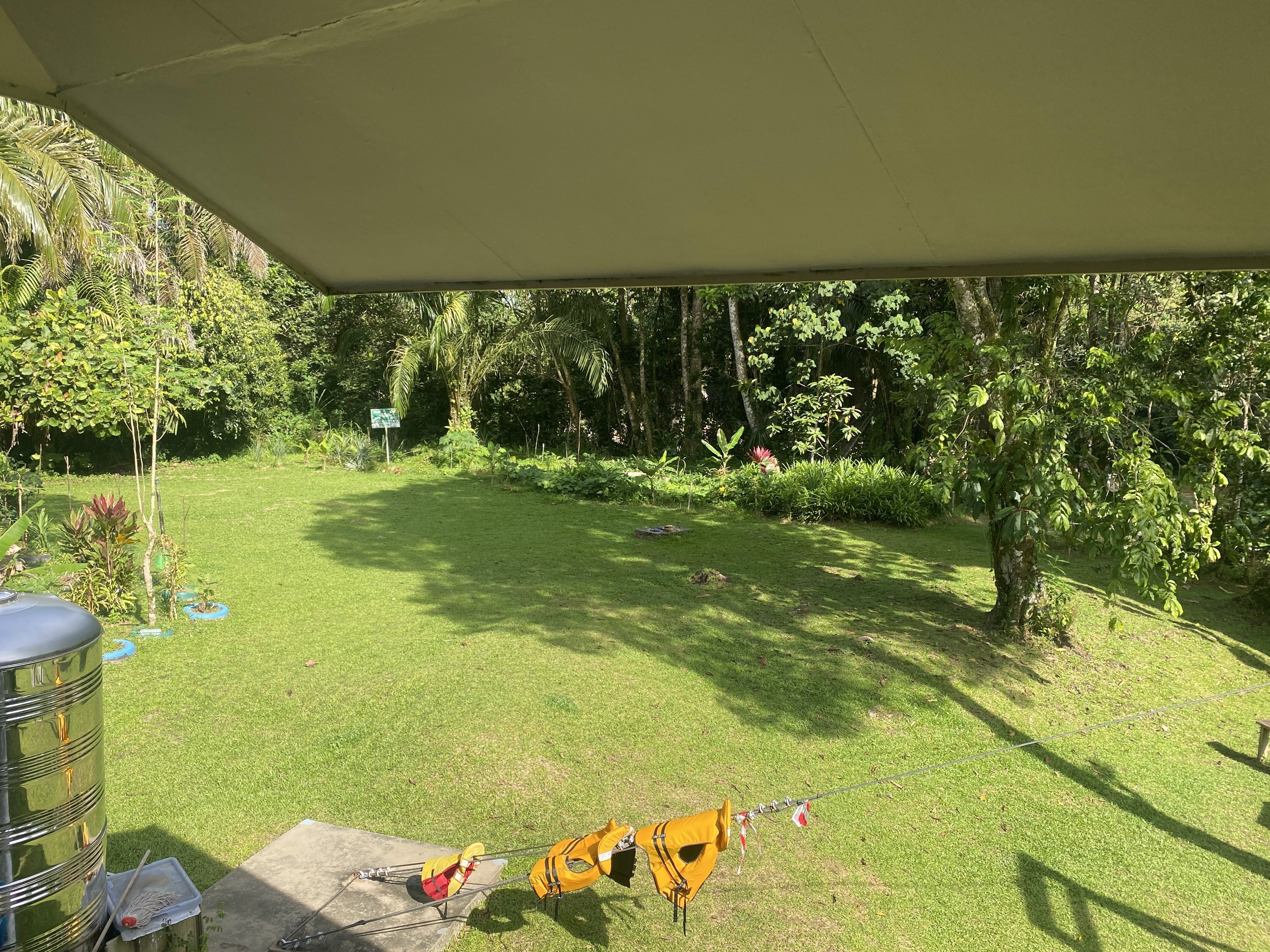
From the tour lodge house (1)
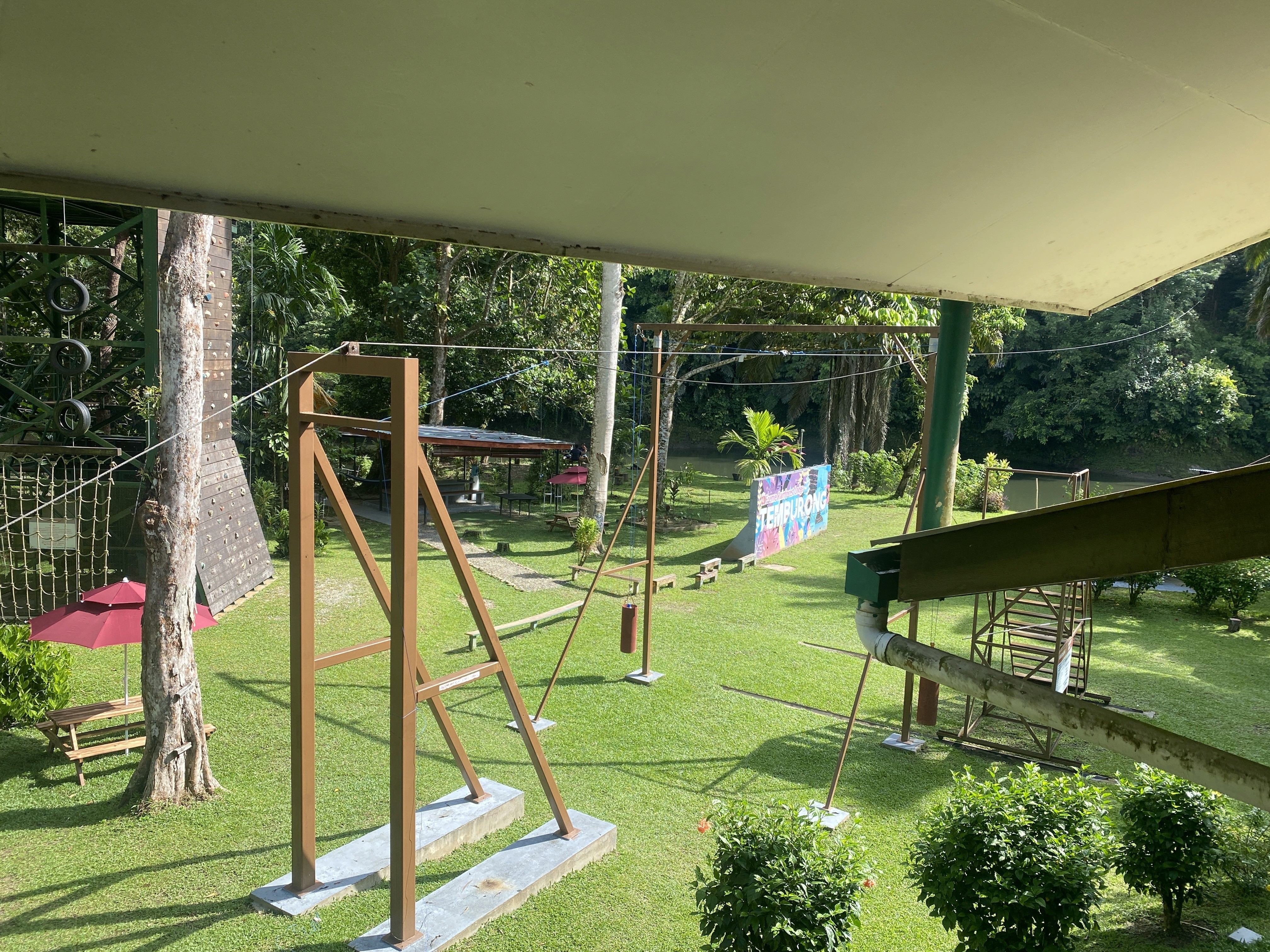
From the tour lodge house (2)
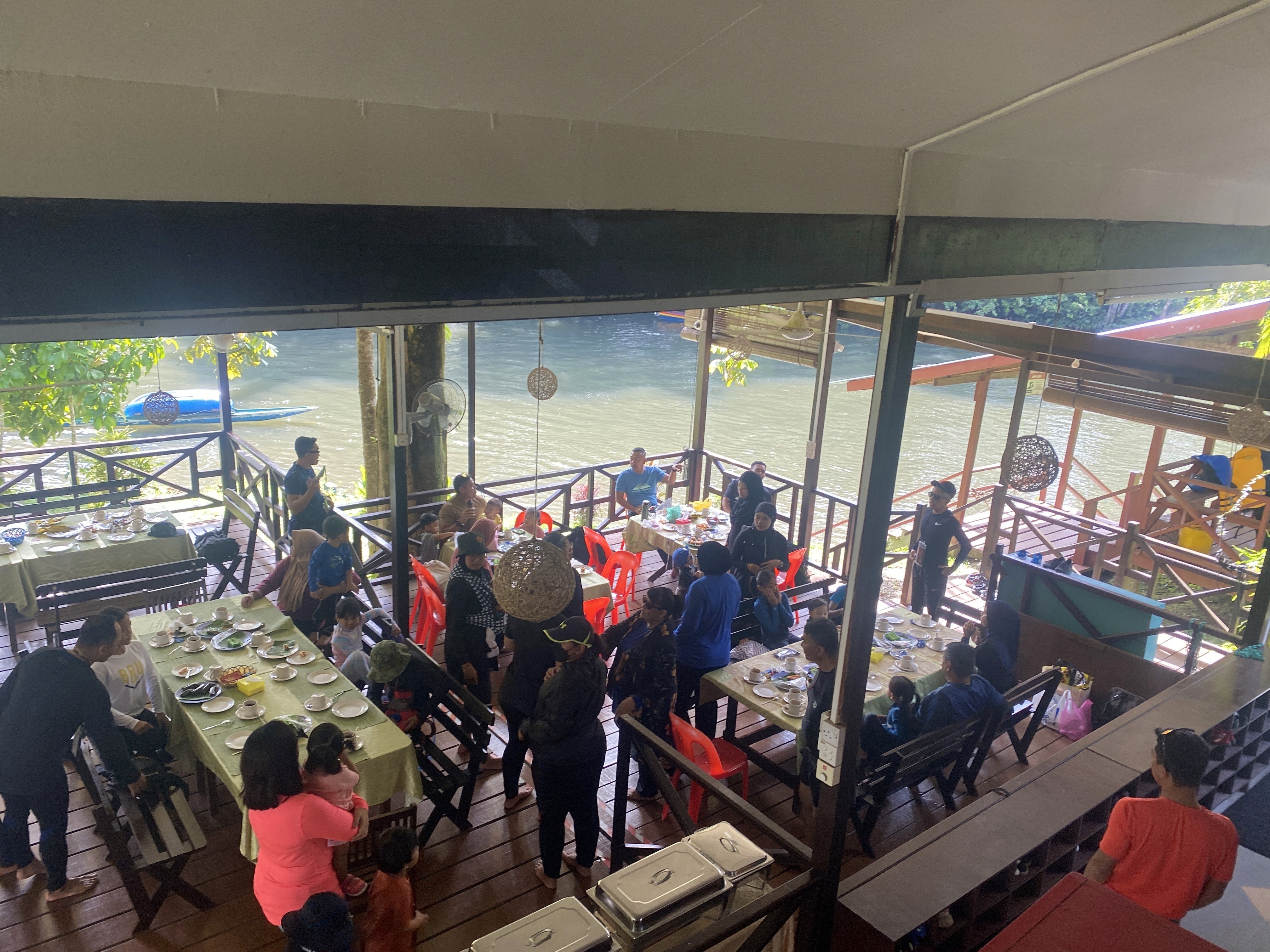
A meal before departing for the jungle tour
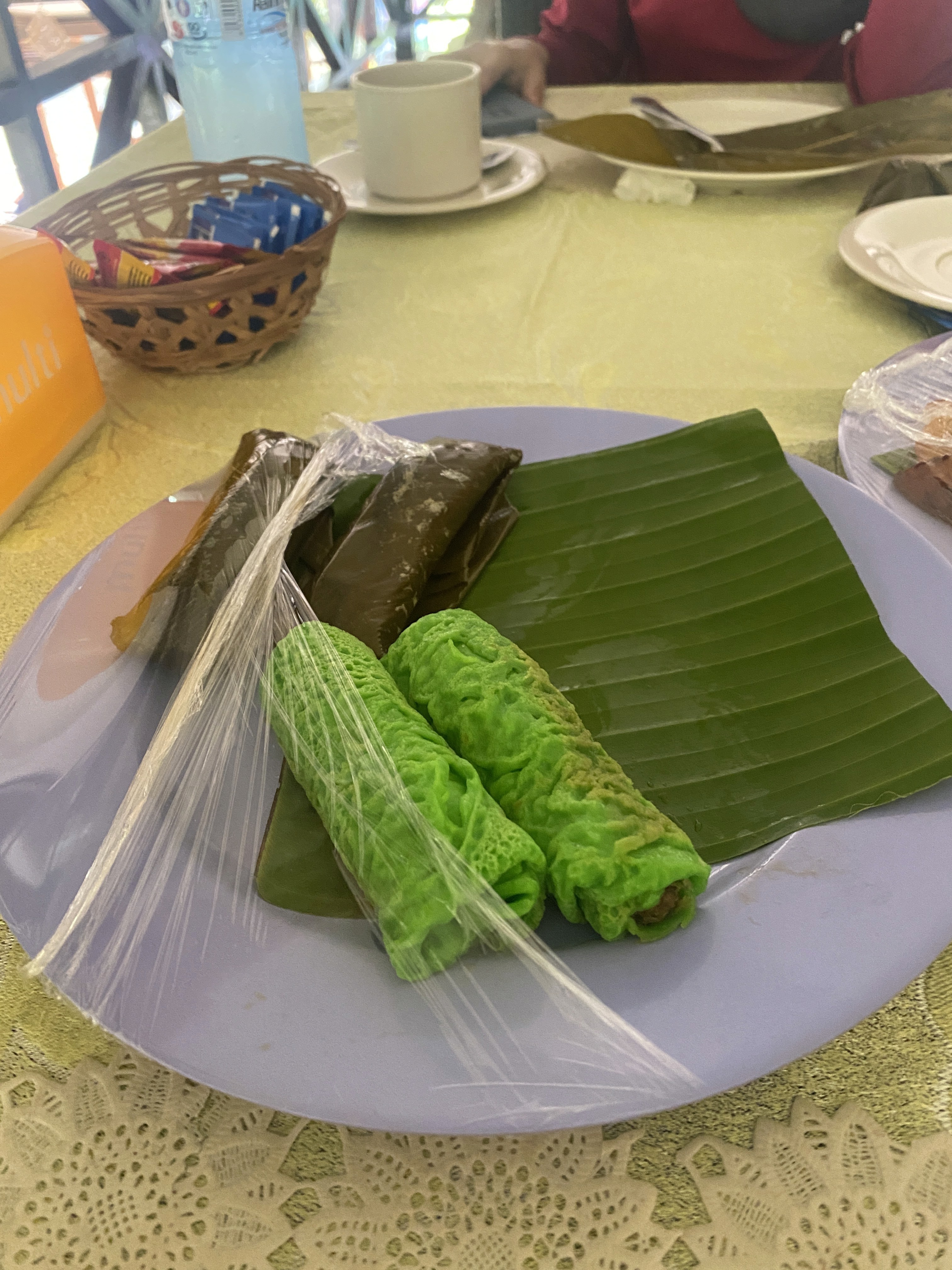
Wajid Temburong - Rice steamed with sugar and coconut?
After enjoying a meal, it's time to set off for the tour!
We have arrived at the entrance to the jungle!

Upon passing through the gate, a long suspension bridge awaits you.
After crossing the long suspension bridge, you will encounter a long, long staircase waiting ahead!
The tour continues on.
In the next post, I will introduce the scenery beyond the long staircase. >> To be continued (2)

Scenery of Brunei - Crossing the Temburong Bridge
Brunei Scenery ~ Crossing the Temburong Bridge ~
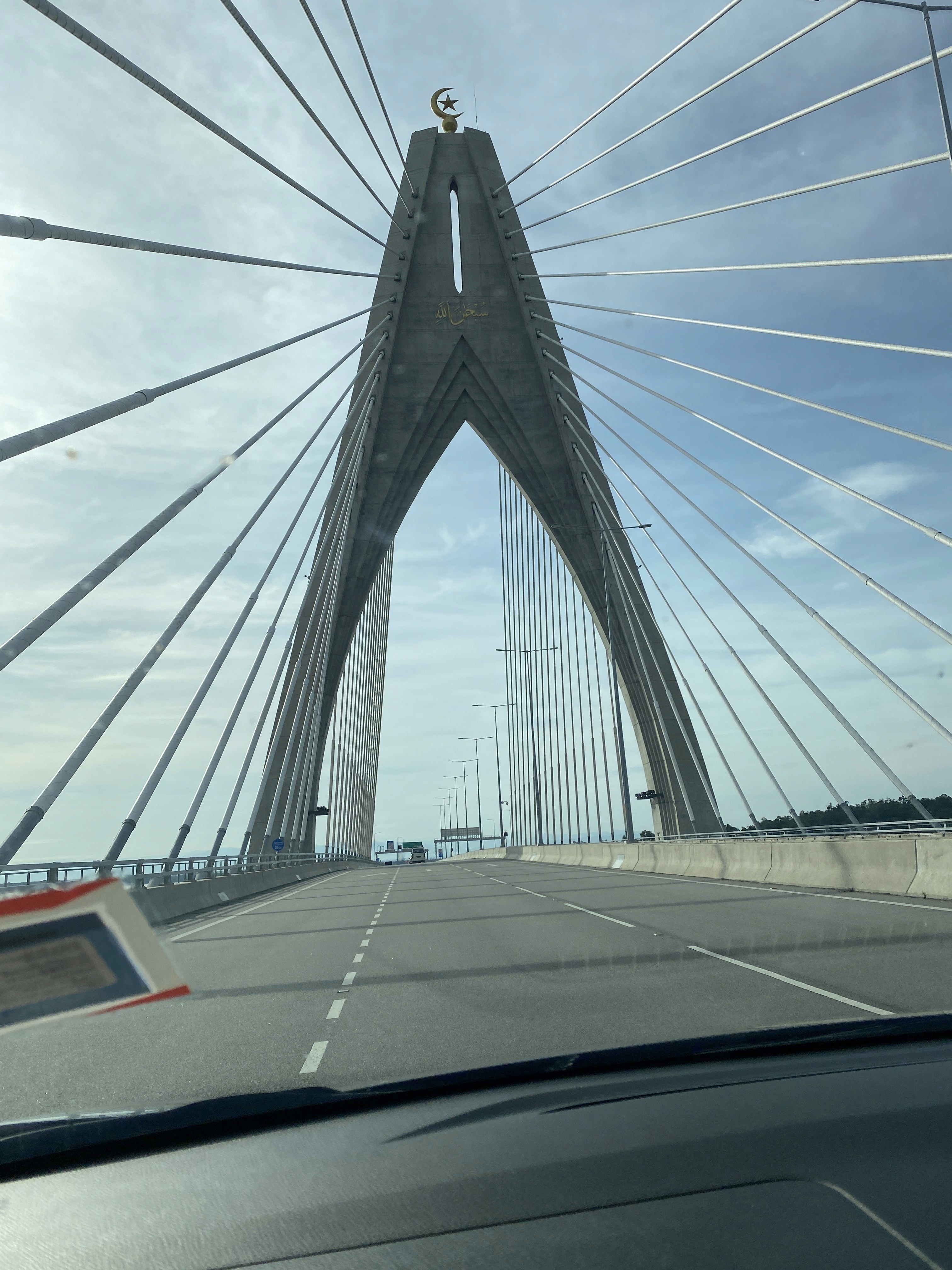
Running on the Temburong Bridge
I previously introduced the Temburong in "Travel to Brunei Part 4", but I would like to share the actual experience on-site in a few installments as part of the "Brunei Scenery Series".
This bridge connecting the mainland of Brunei and Temburong district is commonly referred to as the Temburong Bridge. Its real name is "Sultan Haji Omar Ali Saifuddien Bridge" and it is said to be named in honor of the 28th Sultan, Omar Ali Saifuddien III, who was the father of the current Prime Minister of Brunei, Hassanal Bolkiah Ibni Omar Ali Saifuddien III.
The bridge spans Brunei Bay and is the longest bridge in Southeast Asia at 30 kilometers in length. It is the only domestic road bridge that directly connects the Temburong district, separated from Brunei Bay by Malaysia, which began construction in 2014 and opened on March 17, 2020, delayed due to the impact of the COVID-19 outbreak.
The Temburong district which is an enclave
Crossing the long Temburong Bridge, you are welcomed by the rich nature of the Temburong district.
Jungle Entrance
Temburong is the easternmost district of Brunei, with Ulu Temburong National Park, a national park with a forested area of 550 km² in the south. Moreover, a vast area of the Temburong district is covered in pristine rainforest, and eco-tourism is developed utilizing this environment blessed by nature. The biodiversity is one of the richest in the world, and this nature-rich environment is also a significant attraction of Brunei.
In the next post, I will share about the jungle tour in the national park that unfolds beyond the Temburong Bridge.

Let's take a bus in Brunei!!
Let's ride the bus in Brunei!!
Mr. Okouchi, who has been taking care of us in Brunei, has created a video, so I will introduce it here as well.

The streets of the Philippines: what changes and what remains the same.
The Streets of the Philippines: Things That Change and Things That Don't
Where do you think these soaring skyscrapers piercing the blue sky are located? (Figure 1)
They are found in a newly developed area of Ayala Triangle Gardens, located in Makati City, the capital of the Philippines and part of Metro Manila. The tower on the right is a 40-story office building, while the left tower is a 24-story five-star hotel. This was taken during a business trip to the Philippines in September 2021 by two staff members from Zenmov amidst the COVID-19 pandemic.
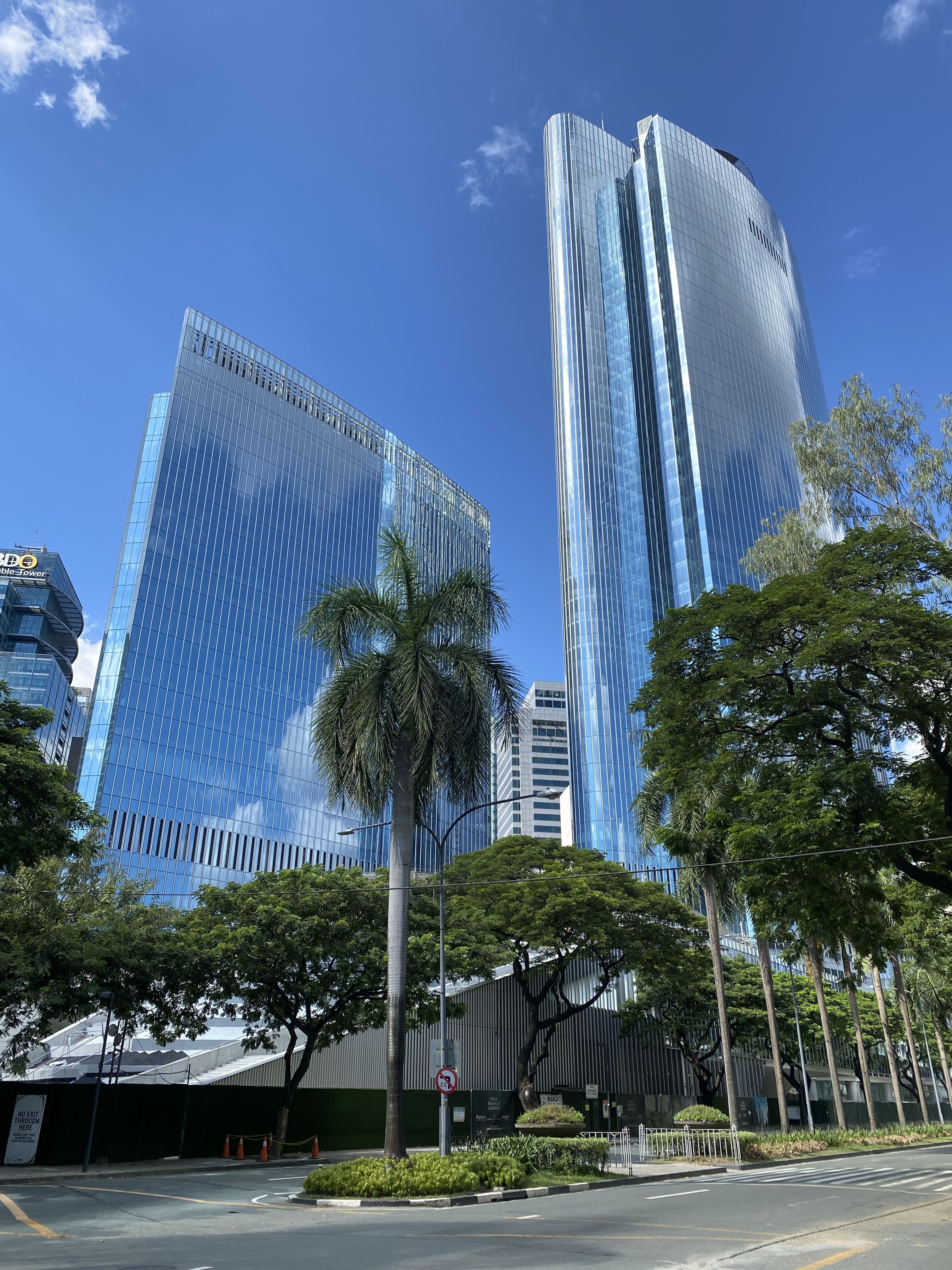
Figure 1 Ayala Triangle Gardens
Source: Taken by Zenmov Staff
When people think of the Philippines, they often have a strong image of it as a poor country with slums... but it is developing every day. The average age of Filipinos is 26, while in Japan, it is 47. The Philippines is a young and rapidly growing country, and each time I visit on business, the cityscape changes.
The 'Ayala' in Ayala Triangle Gardens, which has its skyscrapers, is named after a Philippine conglomerate that operates in various sectors including retail, education, real estate, banking, telecommunications, water infrastructure, renewable energy, electronics, information technology, automobiles, healthcare, management, and BPO.
The real estate division that developed this area is Ayala Land, one of the major developers in the Philippines, and one of the most spotlighted cities in the Philippines is Bonifacio Global City (BGC), located in the northeastern part of Taguig City, adjacent to Makati City (Figure 2). The area that BGC occupies was originally Fort McKinley, a US military base, which was returned to the Philippines in 1949 and renamed Fort Bonifacio. Since 1999, the Bases Conversion and Development Authority (BCDA) has been selling the land for development purposes for office areas, and Ayala Land and Campos Group’s Evergreen Holdings carried out the development. The current townscape of BGC, lined with modern high-rise office buildings, is orderly and beautiful, making one feel disoriented as to where they are (Figure 3).
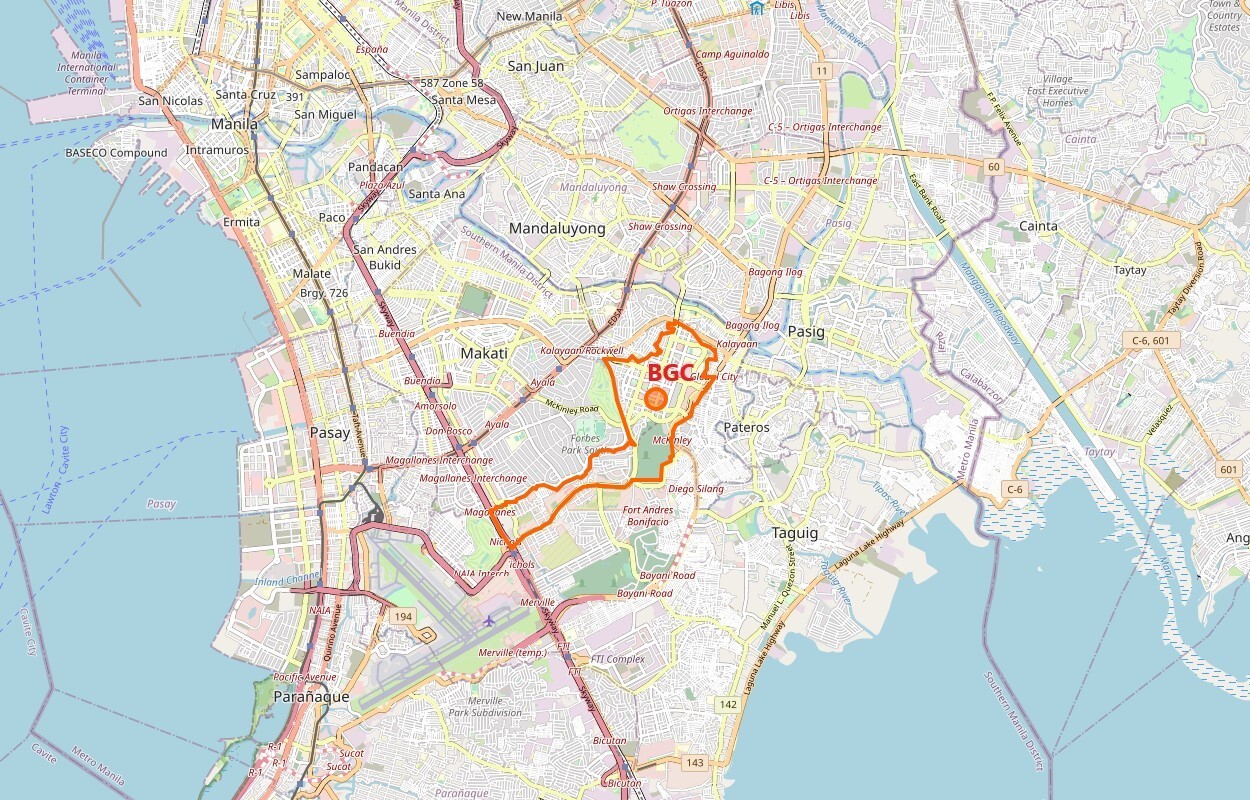
Figure 2 Location of BGC
Source: OpenStreetMap
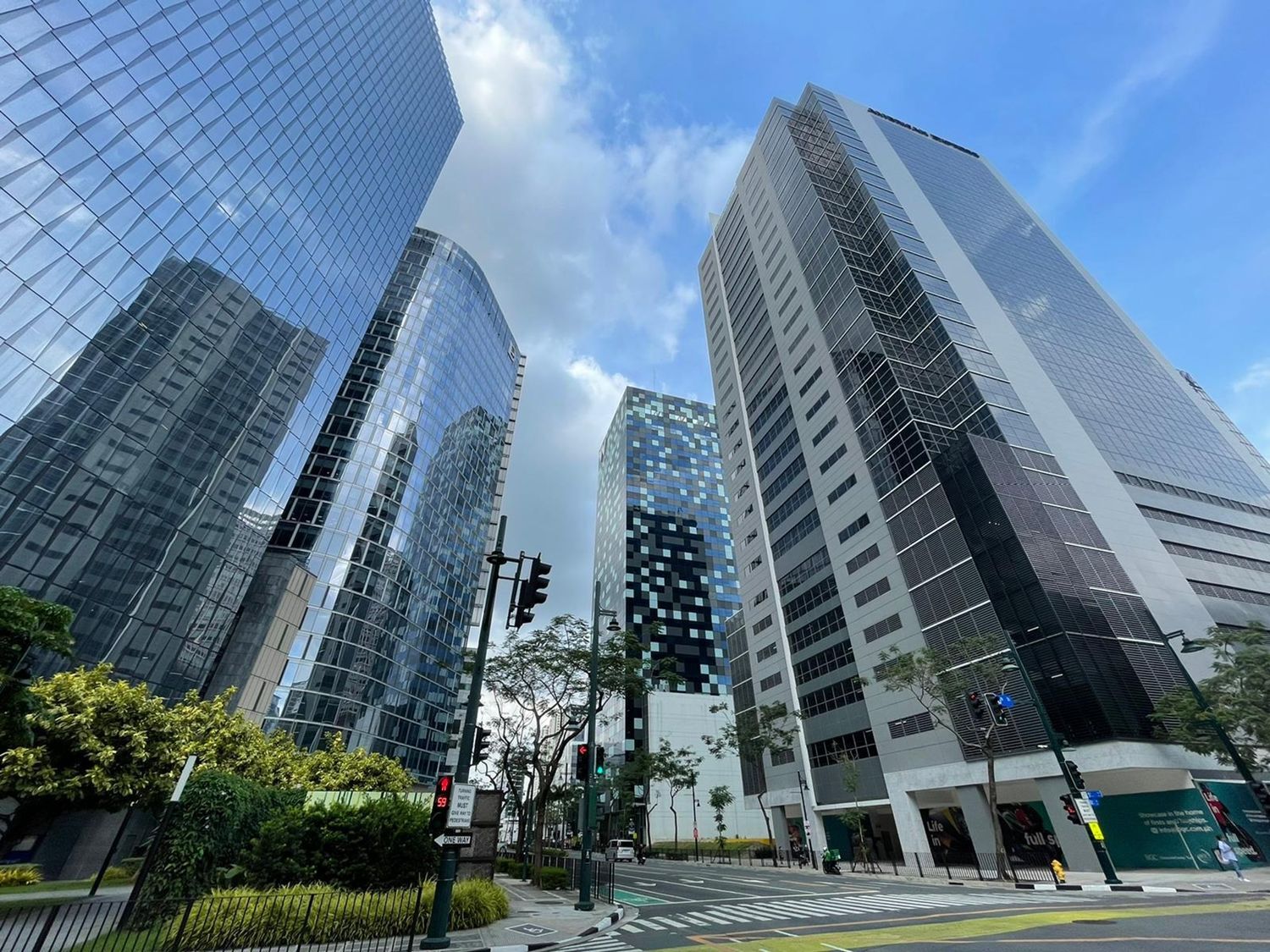
Figure 3 Townscape of BGC: ① High-rise Buildings
Source: Taken by Zenmov Staff
BGC covers an area of 240 hectares, accounting for 5% of the entire Taguig City. As of 2020, the population was 11,912. The use of tricycles and jeepneys, which are typical in the Philippines, is prohibited within the area. As a result, the air is clean, and it maintains a quiet atmosphere that's free from the chaos typical of the Philippines. The roads and sidewalks are well-maintained, and there are office buildings and shopping malls. Security is good, which has led to residences for expatriates from various countries, along with ample parks and plazas (Figure 4).
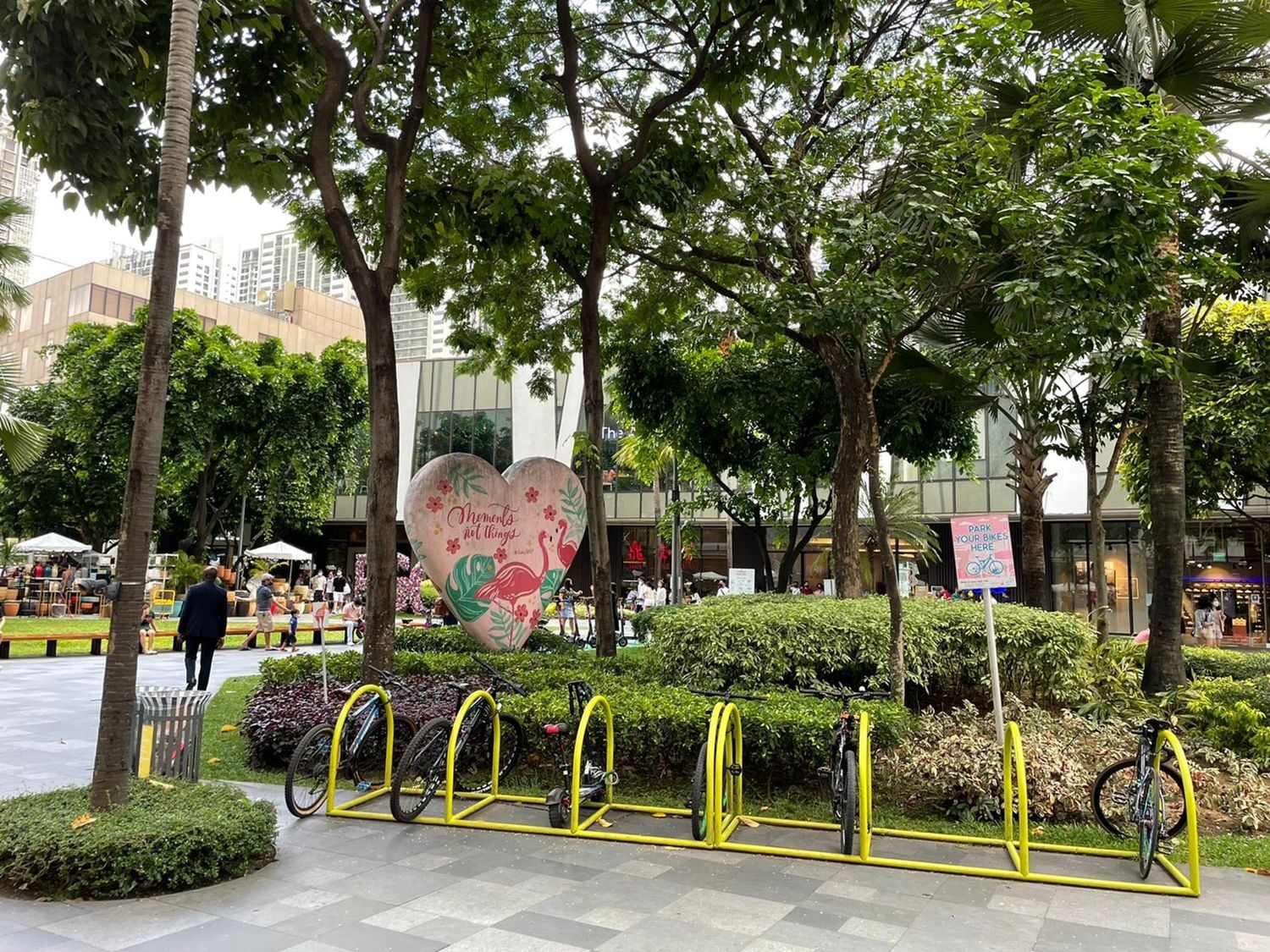
Figure 4 Townscape of BGC: ② Plentiful Green Spaces
Source: Taken by Zenmov Staff
However, one cannot help but feel that BGC is still in the Philippines... and the traffic issue makes this painfully clear. Transportation within the area is by private car, shuttle buses, rental bikes, or on foot, but it usually takes about 10 minutes by car to travel to the nearby business hub of Makati City, which can take up to 40 minutes during peak morning and evening hours.
At Zenmov, which operates MaaS business in Intramuros in Manila City and Pasay City, we often think about what kind of convenient, environmentally friendly, and fashionable transportation services could be designed for the beautiful streets of BGC.
As the Philippines undergoes daily changes, let me share one unchanging view at the end. The sunset over Manila Bay (Video 1). I have visited and stayed in the Philippines countless times, but this view never changes. When I see this sunset, I always feel that I am in the Philippines.
Video 1: Sunset over Manila Bay
Source: Taken by Zenmov Staff
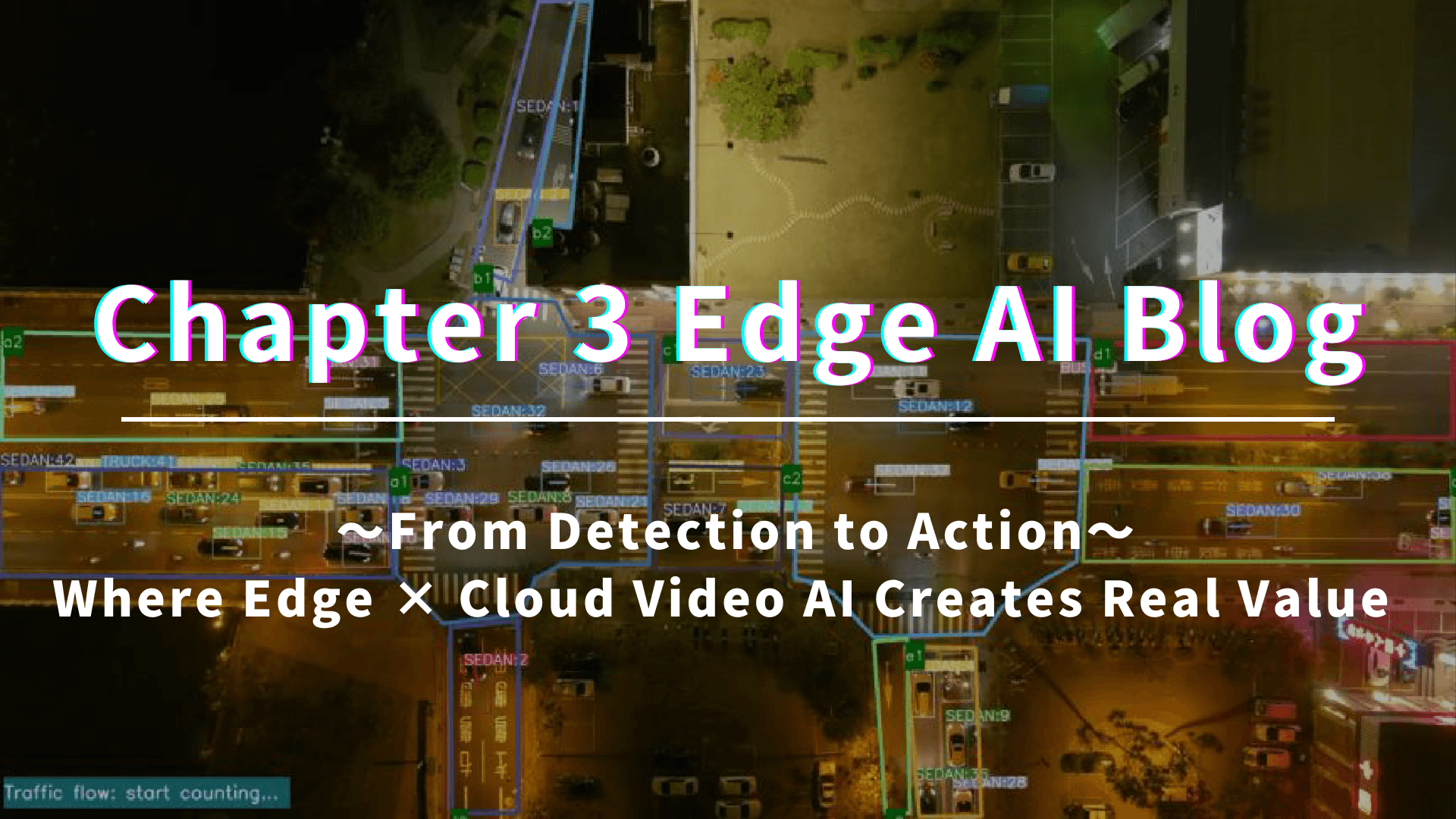
[AI Blog Series Part 3] Connecting Detection → Notification → Improvement. Summary of Use Cases for Edge × Cloud Video AI
【AI Blog Series Episode 3】Connecting Detection, Notification, and Improvement: Summary of Where Edge × Cloud Video AI Can Be Used
In the second episode, we organized the differences between general-purpose PCs (RTX-equipped PCs) and edge AI terminals optimized for on-site use (Jetson-equipped terminals). In this article (Episode 3), we will summarize how to "effectively differentiate their use and manage operations to achieve results" as a continuation. To conclude, by appropriately combining edge/on-premise/cloud according to the on-site requirements, it becomes easier to connect detection to "recording" and recording to "improvement."
Table of Contents
Scenarios of Video AI Use on Site (Representative Use Cases)
What Zenmov Can Provide (Requirement Definition → Introduction → Operation → Improvement)
Summary: Turning "Detection → Recording → Improvement"
1. Scenarios of Video AI Use on Site
Video AI is used to reduce tasks involving "constant human observation" and to quickly find abnormalities or signs. Specifically, it is being applied in the following locations and environments.
(1) Construction Sites / Factories / Plants / Warehouses (Safety and Operational Optimization) (e.g., Overview of Factory, Equipment, or Production Stoppage)
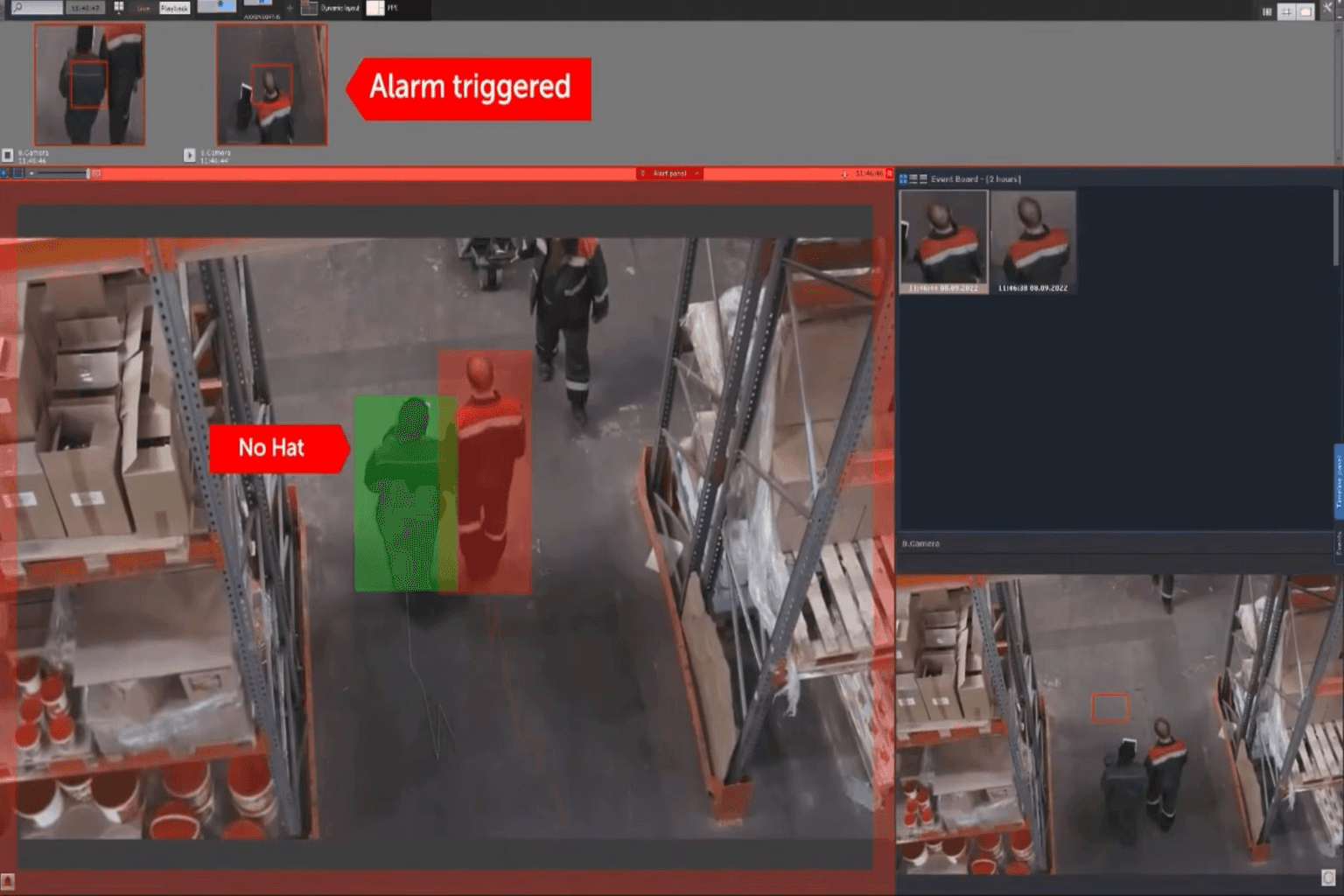
It detects intrusions into hazardous areas, falls, crouching, and non-usage of PPE, assisting in safety measures.
It understands the stagnation or abnormal signs around equipment to prevent production stops and increased response workloads.
It visualizes operational status, which can be used to improve non-stop operations (increase operational rates).
(2) Parking Lots / Multi-story Parking / Bicycle Parking (Visualization of Availability and Congestion)
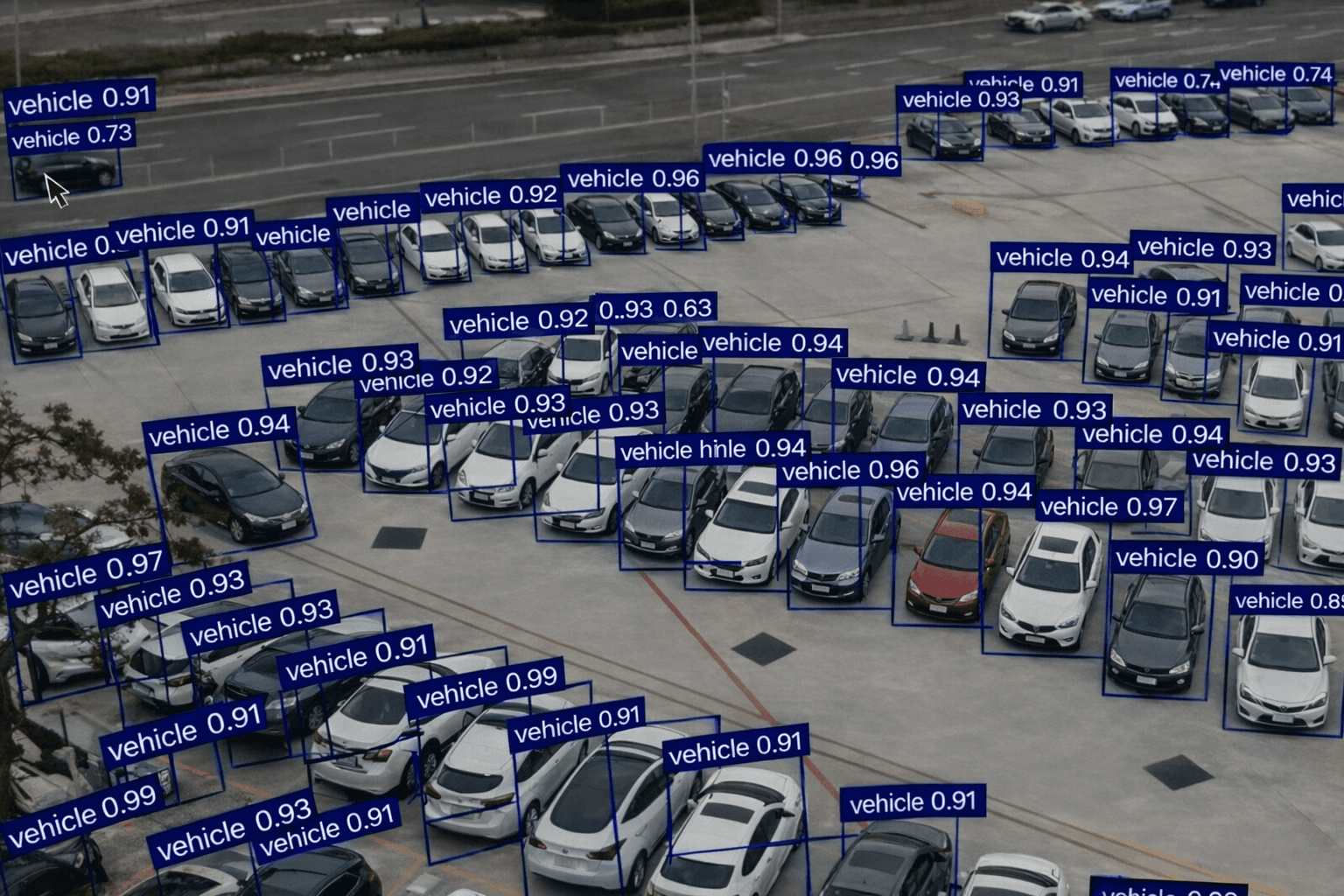
It automatically recognizes availability, congestion, and stays, reflecting it in operational decisions.
It visualizes stay trends and congestion factors, leading to improvements in guidance and layout.
It reflects this information in signage and web guidance, helping to disperse users.
(3) Security / Monitoring / Facility Management (Office Buildings, Commercial Facilities, Schools, Hospitals, Factory Premises, etc.)
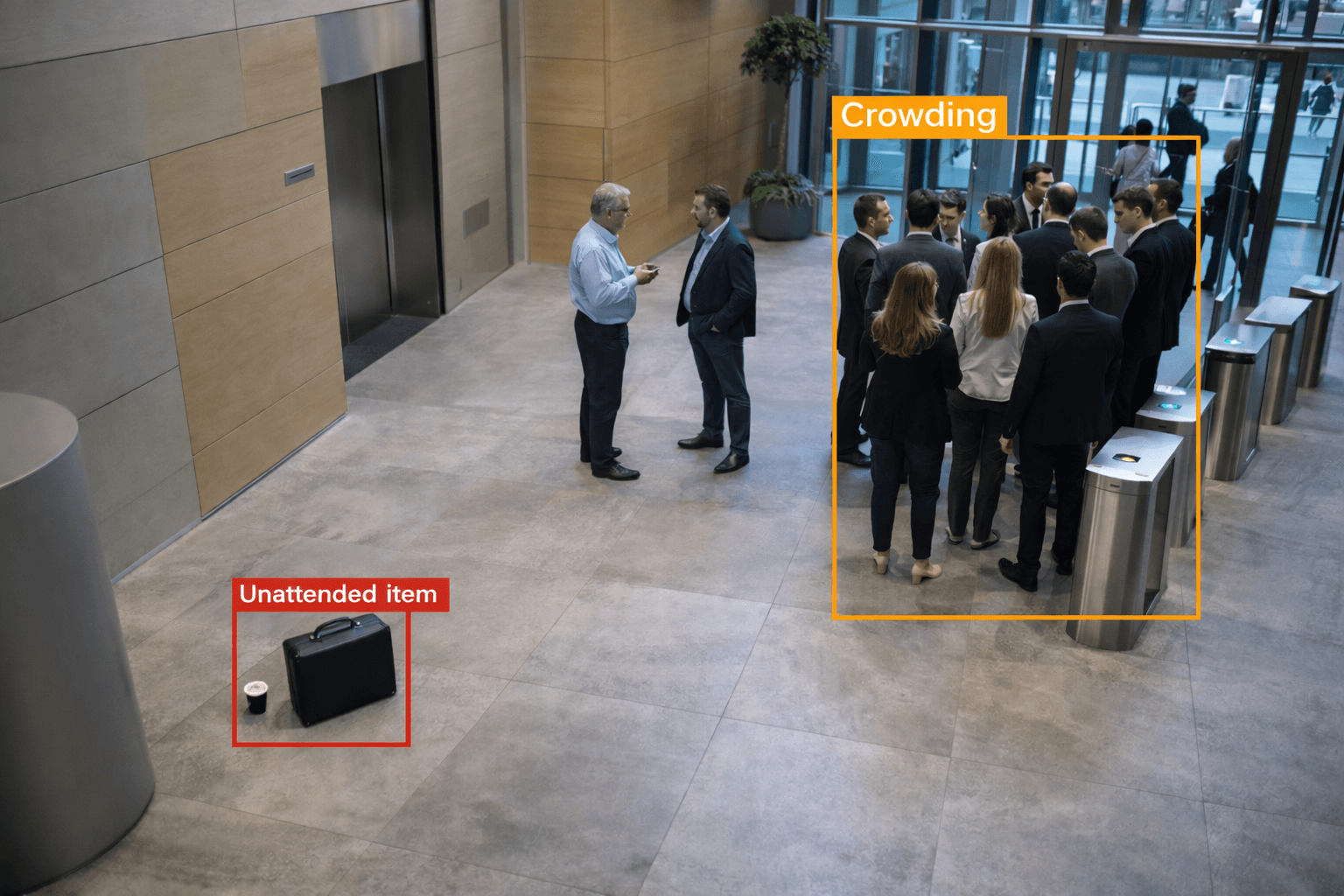
It detects intrusions, suspicious behavior, abandoned items, and stagnation, notifying the responsible personnel.
It visualizes congestion and lines, helping to improve security deployment and flow design.
(4) Logistics Warehouses / Delivery Centers / Yards (Visualization of Safety and Operations)
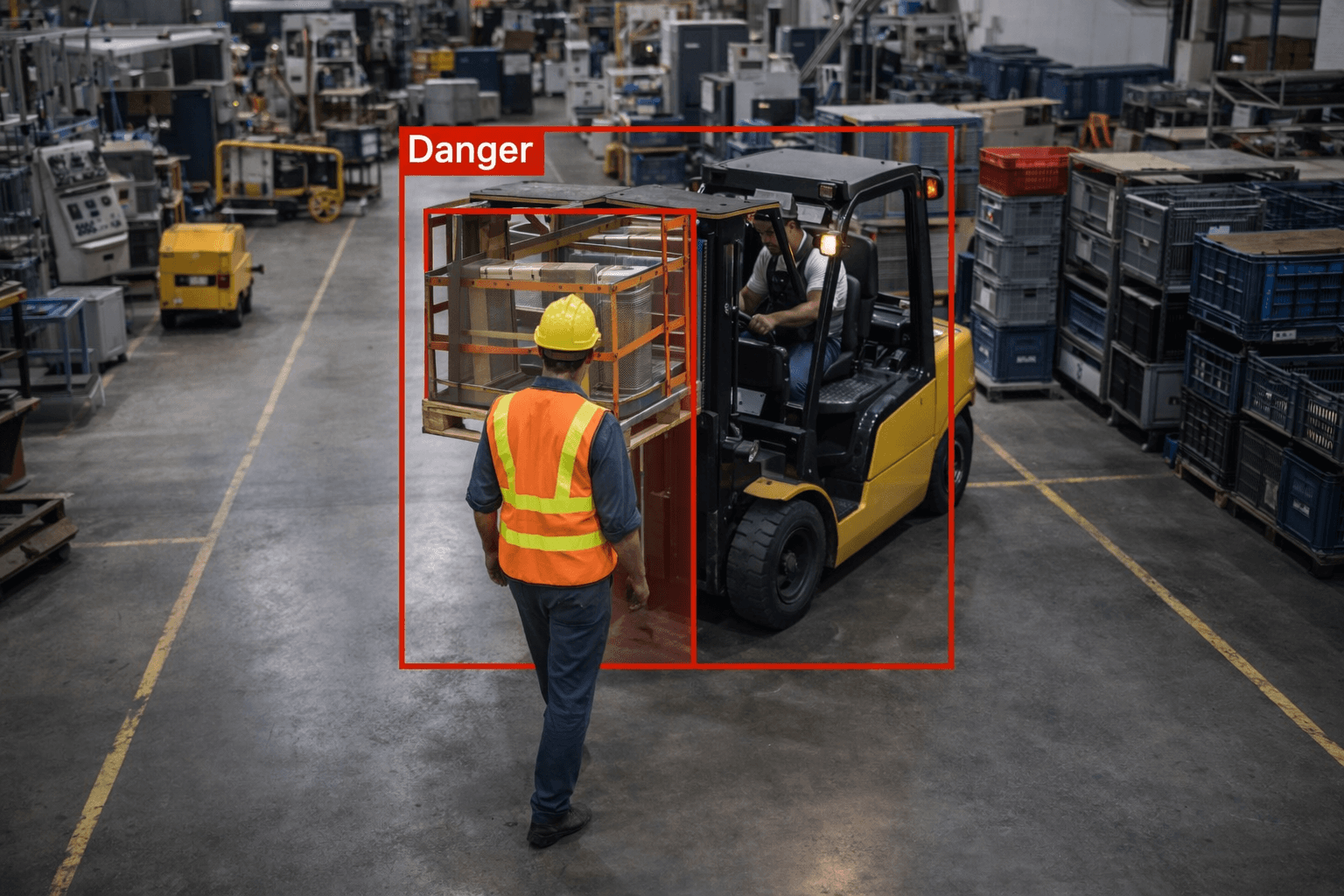
It detects proximity of forklifts and workers, as well as intrusions into hazardous areas, assisting in safety measures.
It understands stagnation, access, and queues in docks and yards, visualizing bottlenecks.
It leads to improvements in layout, procedures, and rules based on recorded data.
(5) Tourist Destinations / Event Venues / Train Stations / Airports (Analysis of Human Flow and Congestion)
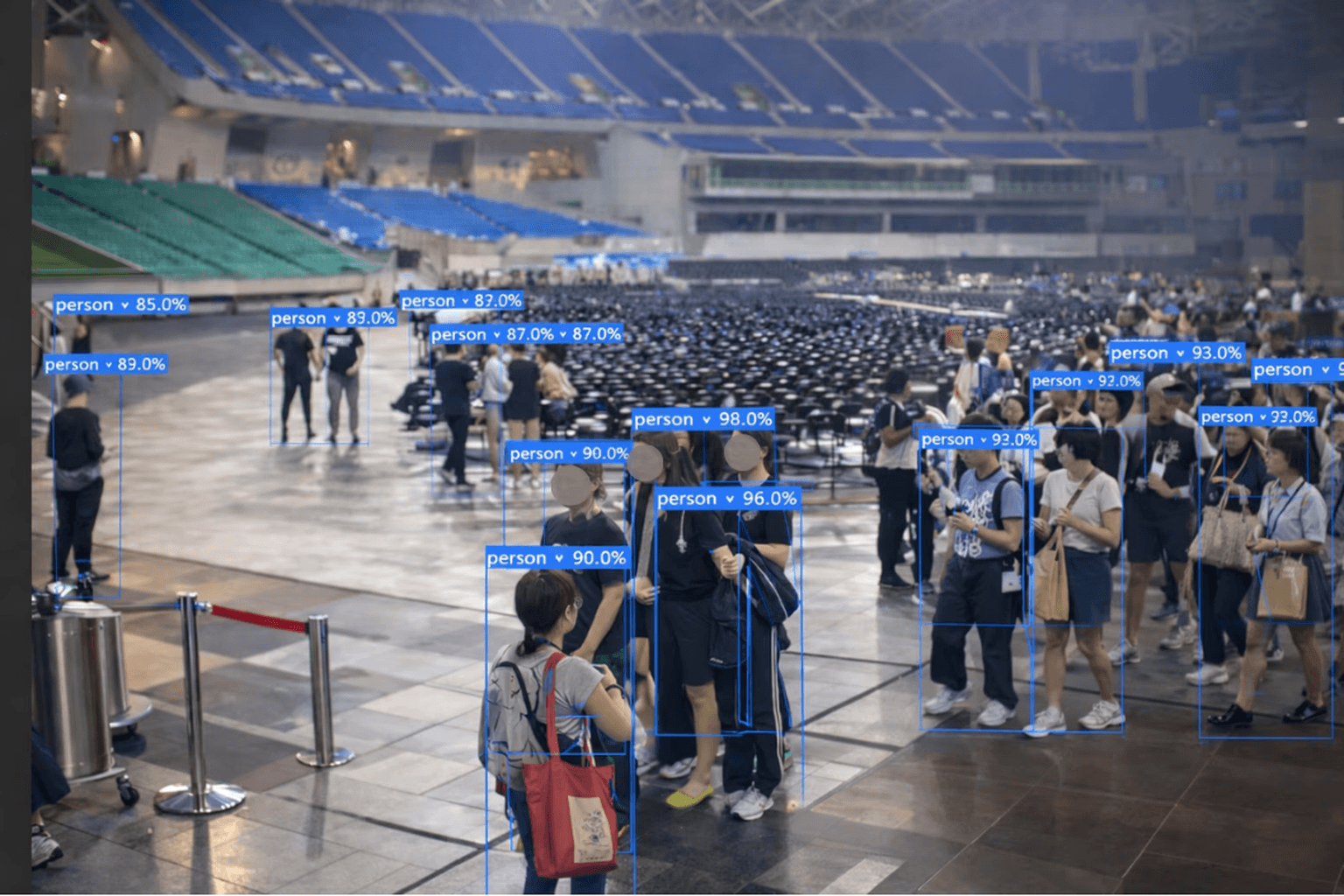
It visualizes congestion levels, flow, and stay duration, optimizing guidance, direction, and staff allocation.
It considers privacy by assuming non-identifying aggregation (anonymization/statistics).
(6) Disaster Prevention / Infrastructure (Factories, Warehouses, Parking Facilities, Roads / Tunnels, etc.)
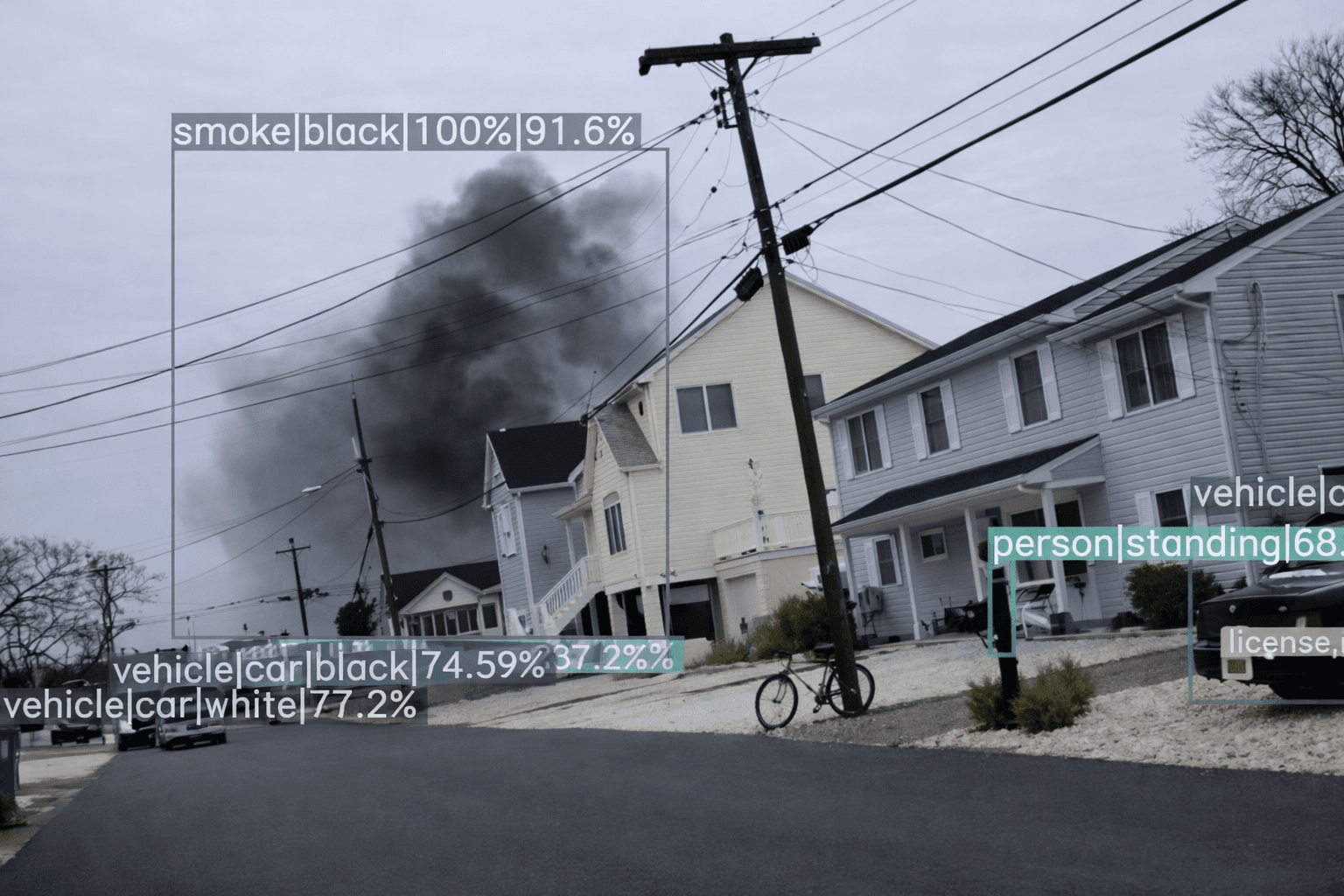
It early detects signs of smoke or flames and supports initial actions (notification, evacuation, firefighting).
It's an area where detection → notification → recording can be automated easily, even at night or in unmanned environments.
(7) Medical / Care (Hospitals, Clinics, Care Facilities, Waiting Rooms / Receptions, etc.)
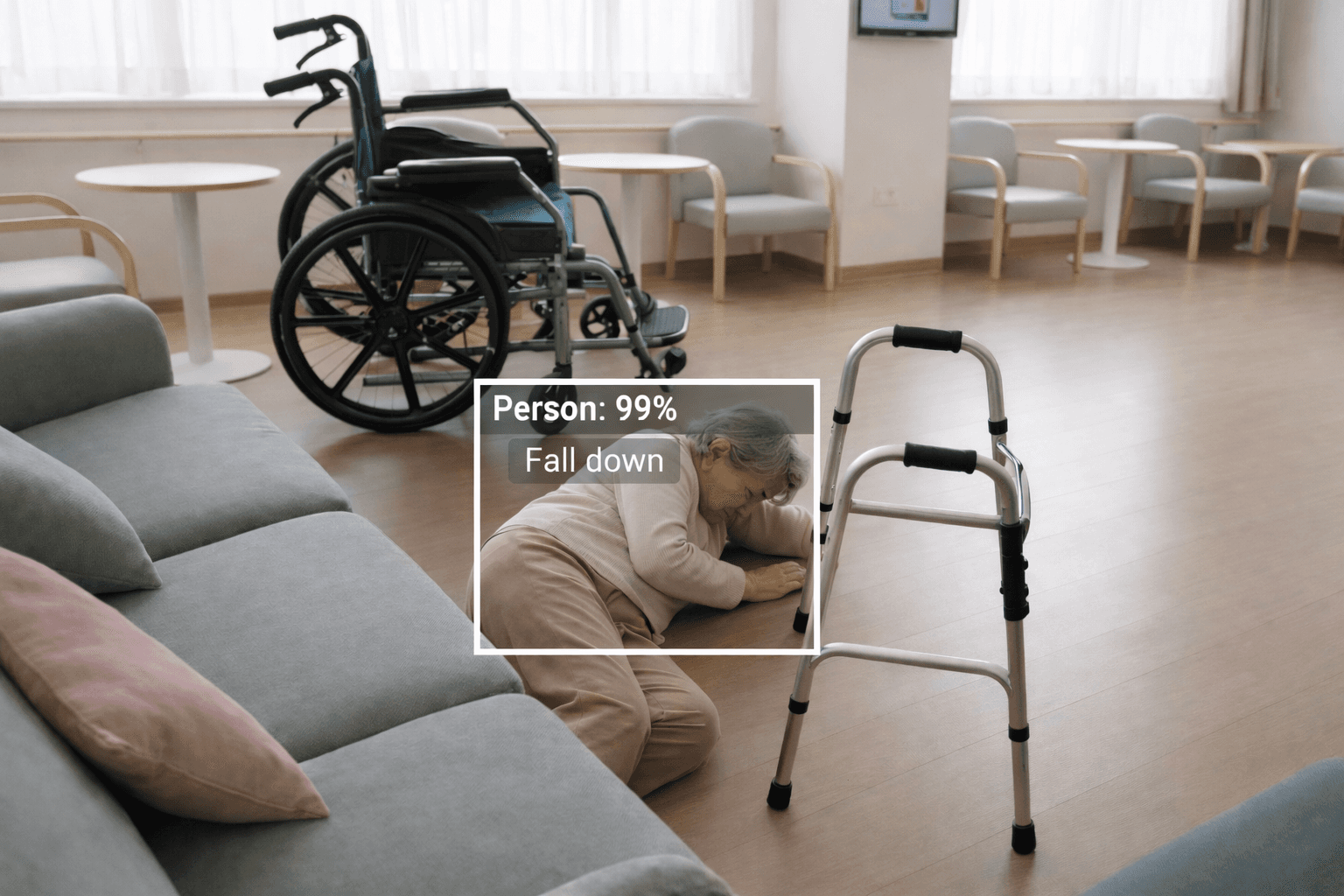
By recognizing signs of falls, bed exits, and wandering, it supports the reduction of monitoring burdens.
It visualizes congestion and stagnation, helping improve guidance and personnel allocation.
It is premised on considerations for privacy and the establishment of operational rules, such as masking and access permissions.
2. What Zenmov Can Provide (Requirement Definition → Introduction → Operation → Improvement)
Zenmov flexibly accommodates any configuration of edge/on-premise/cloud tailored to the site's constraints (network, installation environment, security requirements, etc.) and objectives (immediate notifications, recording saves, cross-site operations, etc.), proposing optimal combinations. It can also offer a setup that allows for centralized understanding and management of information such as terminals, cameras, detection results, and alert histories on a dashboard.
Additionally, it is equipped to support installations and operations in overseas locations (including Taiwan, The Philippines, Malaysia, United Arab Emirates, USA, etc.).
The video AI handled by Zenmov varies not only by "what to detect," but also by requirements for real-time responsiveness, handling of recording, and cross-site operations, resulting in optimal configurations that can be organized into the following three categories.
① Edge (Detecting on site and notifying immediately)
This configuration involves analyzing camera footage on-site, notifying and recording only the necessary results when abnormalities or signs are detected. It can be designed not to send video constantly to external sources, making it easier to suppress delays and data usage, and facilitate immediate responses on-site. This is particularly effective not only at fixed locations but also at “mobile sites” such as in vehicles or portable devices, allowing continued detection and recording in unstable communication environments.

Requirements Suitable for This Setup: Real-time responsiveness is crucial / Flexible or unstable lines / Prefer not to send footage externally (considering privacy)
Use Cases: Safety detection in factories (intrusions, falls, non-usage of PPE, etc.), detecting occupancy and congestion in parking lots, detection of intrusions and stagnation around gates, and detection/recording in public transport and logistics vehicles (event detection during operation and boarding/alighting detection, etc.)
② On-Premise (Establishing Recording, Searching, Permissions Management within the Company Environment)
This is effective when wanting to consolidate recorded footage and events within the company environment, including managing storage duration, viewing permissions, and audit responses.

Requirements Suitable for This Setup: Desire to complete operations within the company network / Strict security and audit requirements / Prioritizing traceability management
Use Cases: Monitoring operations for facilities or factory premises, organizing viewing ranges for stakeholders, confirming footage after incidents, and preventing re-occurrences
③ Cloud (Consolidating Multiple Sites for Unified Operations and Visualization)
This is effective when wanting to consolidate video and events from multiple sites, progressing towards understanding the situation at multiple locations and unifying operational rules.

Requirements Suitable for This Setup: Multiple sites exist / Desiring remote operation / Wanting to manage everything with one system
Use Cases: Integrated monitoring of multiple facilities, situation checks from remote locations, unification of alert response flows
(Note: Positioning of VMS)
The so-called VMS (Video Management System) functions such as recording, searching, permissions management, and multi-site operations enable quick searches of "when, where, and what happened" after accidents or troubles, facilitating sharing between relevant parties and standardization of operational rules.
3. Summary: Turning the Cycle of "Detection → Recording → Improvement"
The value of video AI is not only in finding dangers and anomalies but also in leaving recordings and leading to improvements. By combining a mechanism that allows for real-time awareness (edge inference) with operational foundations such as recording, searching, and permissions management, it makes it easier to turn the cycle of "Detection → Recording → Improvement."
Zenmov designs configurations and operations tailored to on-site requirements, supporting from PoC to launch, operation, and improvement. We would be happy if we could explore ways to produce results together in various locations such as factories, logistics, facility management, tourism, disaster prevention, and medical/care.
Proven Model (Example)
■ AI Detection Model / Detection Targets (Draft of Correction)
Boarding and Alighting Detection | People boarding and alighting from vehicles |
Human Posture Recognition | Recognizing postures such as standing, sitting, or lying down |
Face Recognition | Detecting the presence of a face and whether it is the right person |
Electronic Fence Detection | Detecting entry or exit of people or vehicles into designated areas |
Crowd Detection (Number of People Can Be Defined) | Detected congestion and how many people are gathering |
Human Stagnation (Stay Duration Can Be Set) | People staying in the same place for a long time |
Fall Detection | Detecting a person in a fallen state |
Stalking/Following Detection (Following Behind at the Entrance) | The act of entering while following someone without authentication |
Location Detection and Recording | Coming to or passing a specific place |
Clothing Detection (Detection of Work Clothes, Uniforms, etc.) | Detecting whether workers or users are wearing the specified clothing (uniforms, safety gear) |
Vehicle Fault Detection | Vehicles in a faulty state, such as being stopped and not moving |
Sudden Acceleration | Rapid sudden acceleration of a vehicle |
Reversing | A vehicle moving in the opposite direction |
Ignoring Red Lights | A vehicle entering or passing even with the signal being red |
Fence Over Jumping (Climbing Over Walls) | The act of climbing over walls or fences |
Speed Violation / Speed Measurement (including Section Measurement) | Whether the vehicle's speed exceeds the standard value |
Vehicle Number Recognition | Reading the vehicle's license plate |
Road Accidents | Occurrence of collisions or contact accidents |
Central Line Crossing (Crossing Double Lines) | A vehicle crossing the central regulation line of the lane |
Illegal U-Turn | Performing a U-turn at a prohibited location |
Motorcycle Prohibited Lane Usage | A motorcycle entering or traveling in a designated prohibited lane |
Parallel Parking | Vehicles parked side by side |
U-Turn Detection | A vehicle making a U-turn |
Entering Restricted Areas | The act of people or vehicles entering designated prohibited areas |
Intrusion of Foreign Objects onto Roads | Objects (obstacles) entering the roadway |
Tracking Vehicle Movement Trajectories | Tracking and recording the movement route of vehicles |
Illegal Parking (Red Lines, Yellow Lines, etc.) | Vehicles parked in areas where stopping or parking is prohibited |
Parking at Intersections | Vehicles parked within intersections |
Illegal Left/Right Turns | Prohibited left or right turn actions |
Heat Detection Sensor Detection | Detecting heat (infrared) from people or objects to confirm their presence |
■ AI Functions & Retail Analysis Pack / Function Descriptions
Event Search | Fast searching of recorded footage based on conditions (objects, actions, time, etc.). |
Multi-Camera Face Search | Cross-searching for the same person across multiple camera footage using facial recognition. |
Mask Detection | Determining the presence or absence of a mask from facial imagery. |
Multi-Camera Number Recognition Search | Recognizing and searching license plates via multiple cameras. |
Tag & Track (PTZ Tracking) | Tagging targets for automatic tracking by PTZ cameras. |
AI Person & Vehicle Detection | AI identifies people and vehicles, utilizing alerts and statistics. |
AI Fire & Smoke Detection | AI detects fires and smoke at an early stage. |
People Counting | Automatically measuring visitor counts and congestion levels. |
Heat Maps | Visualizing areas of people staying and movement patterns with color coding. |
Line Detection | Detecting queues and stagnation statuses. |
■ PPE (Personal Protective Equipment) Detection Function
Helmets | Detecting the presence or absence of hard hats. |
High-Visibility Vests | Detecting high-visibility clothing such as fluorescent vests. |
Protective Clothing | Detecting designated work clothes and protective gear. |
■ Human Behavior Analysis
Fall Detection | Detecting a person in a fallen state. |
Hand Raising Detection | Detecting a pose with both hands raised. |
Crouching Action Detection | Detecting a crouched posture. |
Social Distance Violation Detection | Measuring the distance between people and detecting if it is less than a certain distance. |
■ Others
Entry and Exit Management System Integration | Integrating video with door unlocking and entry/exit management. |
Fire & Alarm System Integration | Triggering events in conjunction with fire alarms and warning systems. |
Perimeter Intrusion Detection System Integration | Integrating with perimeter sensors to detect intrusions. |
External Event Integration | Integrating information from external devices like POS with video. |
Face Recognition (Watchlist) | Identifying registered individuals or persons of interest. |
Number Recognition (Watchlist) | Recognizing already registered vehicles or vehicles of interest. |
Custom AI Analysis | Utilizing user-defined AI models. |
Water Level Detection | Detecting changes in water levels. |
Offline Analysis | Executing analysis and search of imported video. |
Multi-Camera Object Tracking | Tracking targets across multiple cameras. Detecting queues and stagnation statuses. |
Similar Search | Searching for people similar to those in photos or videos from footage. |
Data Center Domain Integration | Integrating and managing multiple domains in large-scale environments. |
[AI Blog Series Part 2] Edge AI Devices (with Jetson) and General-Purpose PCs (with RTX) - What are the differences and why do we use them differently?
Edge AI Terminals (Equipped with Jetson) and General-Purpose PCs (Equipped with RTX) — What Are the Differences and Why Use Them Separately?
Edge AI terminals and general-purpose PCs (desktop PCs/laptop PCs) are both broadly defined as "computers". However, their design philosophies, the environments in which they are used, and their areas of expertise differ significantly. This article will clarify the differences (suitability) using NVIDIA's "Jetson" and "RTX" as examples, while explaining why "Edge AI terminals" are chosen.
Table of Contents
First, let's clarify: Edge AI terminals are also a type of "PC".
Differences between Jetson and RTX (suitability)
Strengths of general-purpose PCs equipped with RTX (+ price range)
Reasons why Edge AI terminals are still necessary
Challenges that may arise when using RTX-equipped PCs as substitutes
Reasons why Zenmov × EDGEMATRIX can claim "easy operation".
Summary
Additional Notes: Why NVIDIA is Often Used in Edge AI (CUDA Ecosystem / CUDA Tile)
1. First, let's clarify: Edge AI terminals are also a type of "PC".
Edge AI terminals (Edge PCs, industrial AI terminals, etc.) have the same basic structure as general-purpose PCs in terms of input (camera footage/sensors) → processing (AI inference) → output (notifications/control/storage). However, the term "PC" generally refers to desktop PCs or laptops used in offices or homes, so in this article, we will differentiate by referring to them as "general-purpose PCs (RTX-equipped PCs)" and "edge AI terminals (equipped with Jetson)".
To summarize briefly,
General-Purpose PCs (RTX-equipped PCs): High-performance general PCs capable of handling a wide range of applications designed for stable indoor environments.
Edge AI Terminals (Jetson-equipped terminals): “Application-specific PCs” optimized for field use.
2. Differences between Jetson and RTX
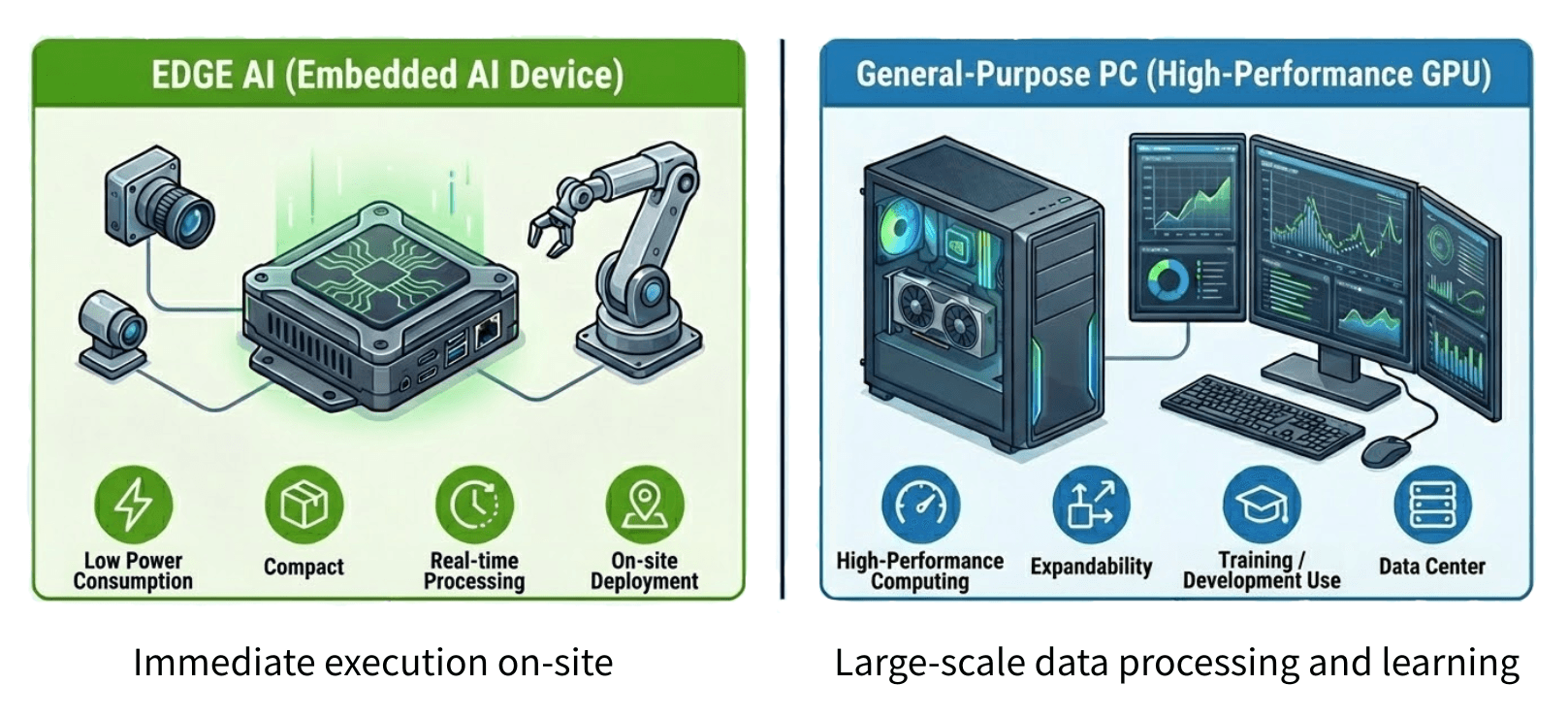
Here, we will discuss NVIDIA products frequently mentioned in the context of video analysis. Jetson is a "compact computer intended for deployment in the field," while RTX is a "high-performance GPU card to be inserted into PCs or servers."
Jetson (for edge)
An edge-focused platform integrating ARM CPU and GPU.
Prioritizes compact size, energy efficiency, and continuous operation (designed for field deployment).
Easily combines with cameras and sensors, facilitating real-time inference on-site.
Often integrated into terminals with environmental resilience (dustproof, vibration-resistant, etc.).
RTX (for general-purpose PCs/servers)
Mainly a discrete GPU (card) used in PCs/servers.
Outstanding GPU performance and cost competitiveness are appealing (wide range of applications).
Can comfortably accommodate "general-purpose applications" such as PC tasks, development environments, and verification.
However, the installation environment is fundamentally indoor (requires power supply, air conditioning, and casing space).
3. Strengths of General-Purpose PCs Equipped with RTX (+ Price Range)
In conclusion, general-purpose PCs equipped with RTX are very attractive in terms of "performance" and "price." Especially in environments suitable for PoC (proof of concept) and operation in air-conditioned server rooms or offices, they become a realistic choice.
Performance: High GPU performance makes it easier to address a wide range, from video analysis to large model validation.
Flexibility: With general-purpose OS (Windows/Linux, etc.), software can be configured freely according to needs.
Cost: Depending on the configuration, there are cases where it can be "cost-effective" if aiming for comparable inference performance.
Can handle regular PC tasks (development, editing, analysis, etc.) on the same device.
〈Price Range Estimate〉 ※ As of 2025
Prices vary significantly based on GPU generation, CPU and memory, casing (industrial or not), and acquisition route (mass-market/BTO/business-use). Here, we will roughly organize the ranges encountered in the domestic market.
Category | Price Range Estimate (New) | Notes |
Desktop PCs equipped with RTX | Approximately 120,000 to 350,000 yen (higher models may exceed 500,000 yen). | Wide range available via BTO/mass-market. Prices fluctuate with GPU generation and additional components. |
Edge PCs equipped with Jetson (typical compact models) | About 200,000 to 400,000 yen. | Many configurations emphasize compactness and energy efficiency. |
Industrial and robust edge PCs equipped with Jetson | Could range from about 300,000 to over 800,000 yen. | Specifications often escalate due to "casing requirements" like dustproof and vibration resistance. |
It is not uncommon that "RTX-equipped PCs appear to be higher performance and cheaper." Nevertheless, edge AI terminals are chosen because the “operational conditions” in the next chapter have a significant influence.
4. Reasons Why Edge AI Terminals Are Still Necessary
In cases where you only need to "run AI," general-purpose PCs are sufficient. For instance, detecting "a car is visible" or "a person passed by" can be processed on an office PC.
On the other hand, edge AI truly demonstrates its value when the following field conditions are met.
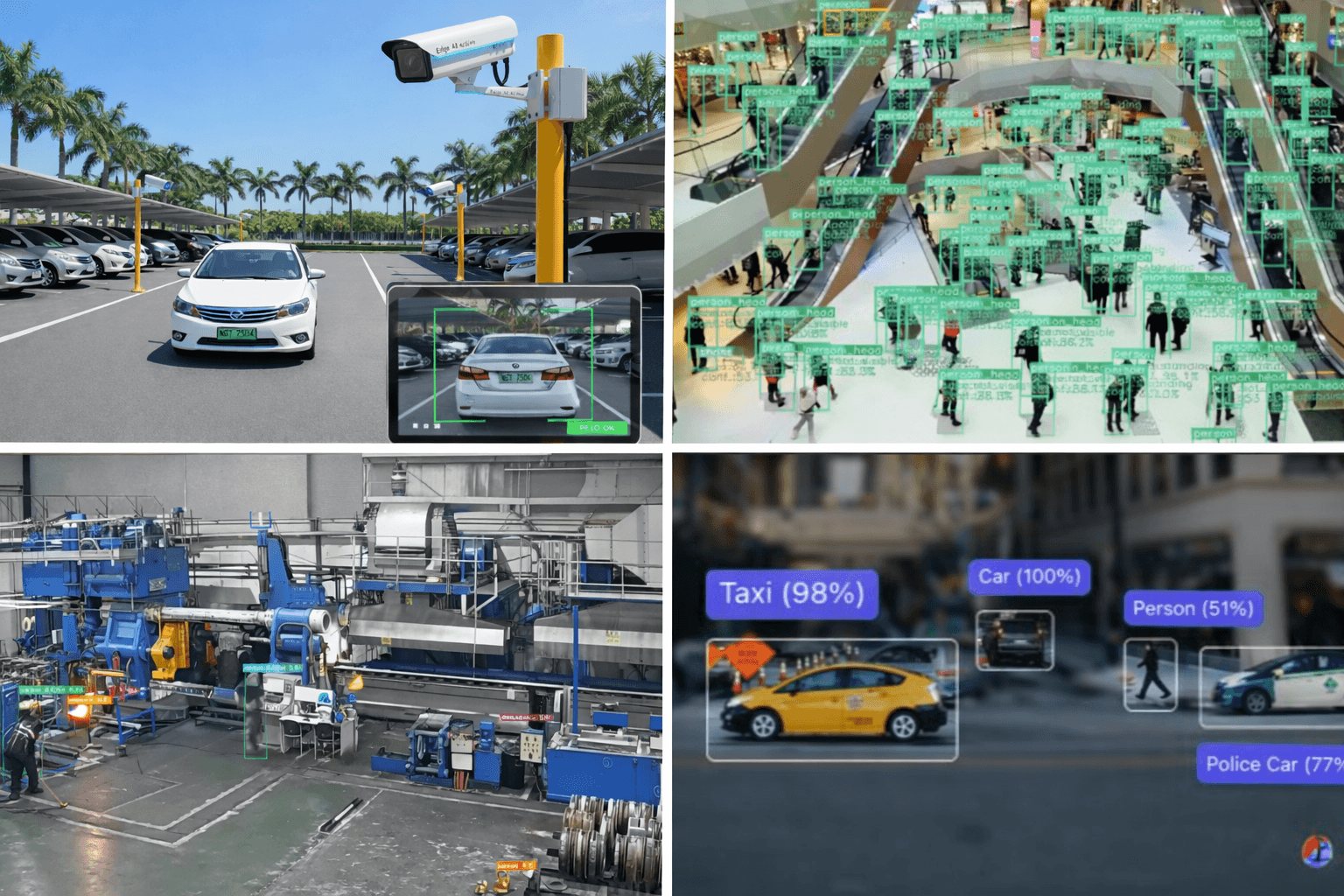
Installed in "settings" like parking lots, factories, stores, roads, and entrances to facilities.
Must continue operating without stopping, 24 hours a day, 365 days a year.
Harsh environments with heat, cold, dust, vibration, etc.
Constraints on power supply or installation space (compact and energy-efficient is crucial).
The edge AI terminal (edge PC) was created to meet these requirements. While edge terminals are also PCs, by specializing in the parts frequently used for AI (like GPUs) and minimizing elements that become unnecessary in the field, they enhance the cost performance and usability of "continuing to run inference."
Next, comparing Jetson and RTX will clarify the differences even more.
5. Challenges Likely to Arise When Using RTX-Equipped PCs as Substitutes
The idea of replacing Jetson with RTX-equipped general-purpose PCs at the site is natural. However, if one tries to meet the “field requirements” that edge AI must fulfill, the following challenges are likely to emerge.
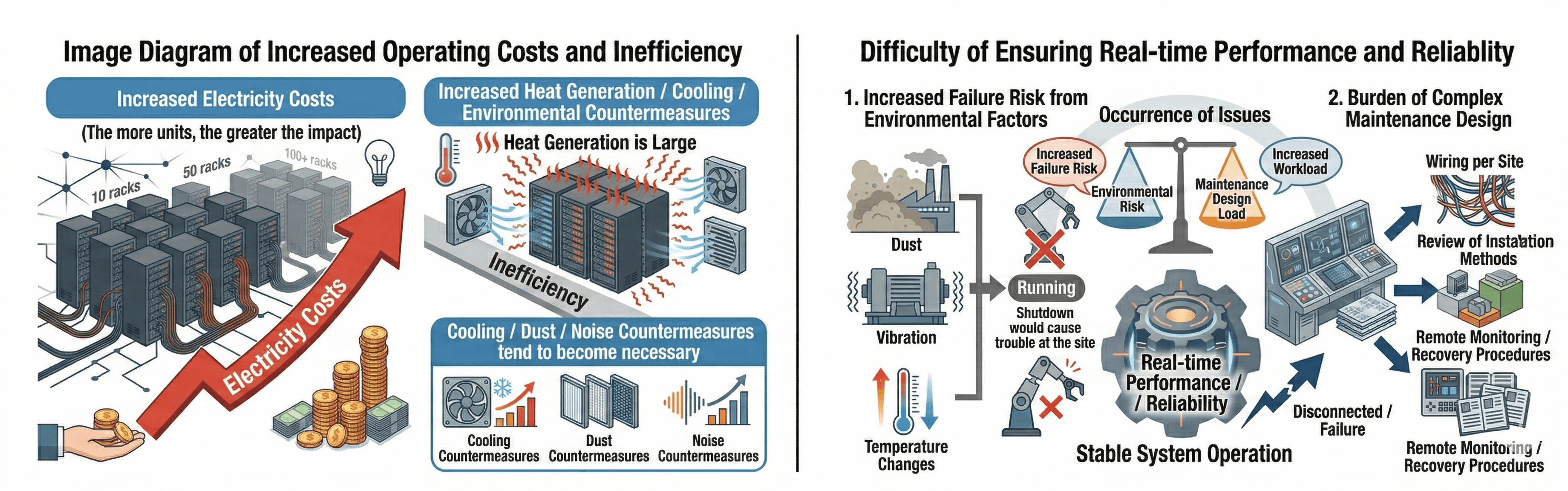
As illustrated above, while RTX-equipped PCs boast high processing performance, it is difficult to maintain continuous 24/7 operation in the field. Additionally, designing from scratch for operations, maintenance, and upkeep can become a heavy burden. The value of edge AI terminals lies in their ability to absorb such burdens “as a product” and facilitate field introductions.
6. Reasons Why Zenmov × EDGEMATRIX Can Claim "Easy Operation"
By now, the question "Why are edge terminals necessary when RTX is often high-performance and cheap?" likely has become clearer. Considering aspects of operations, edge AI terminals are "PCs packaged for AI field operations," significantly altering the burden after installation.
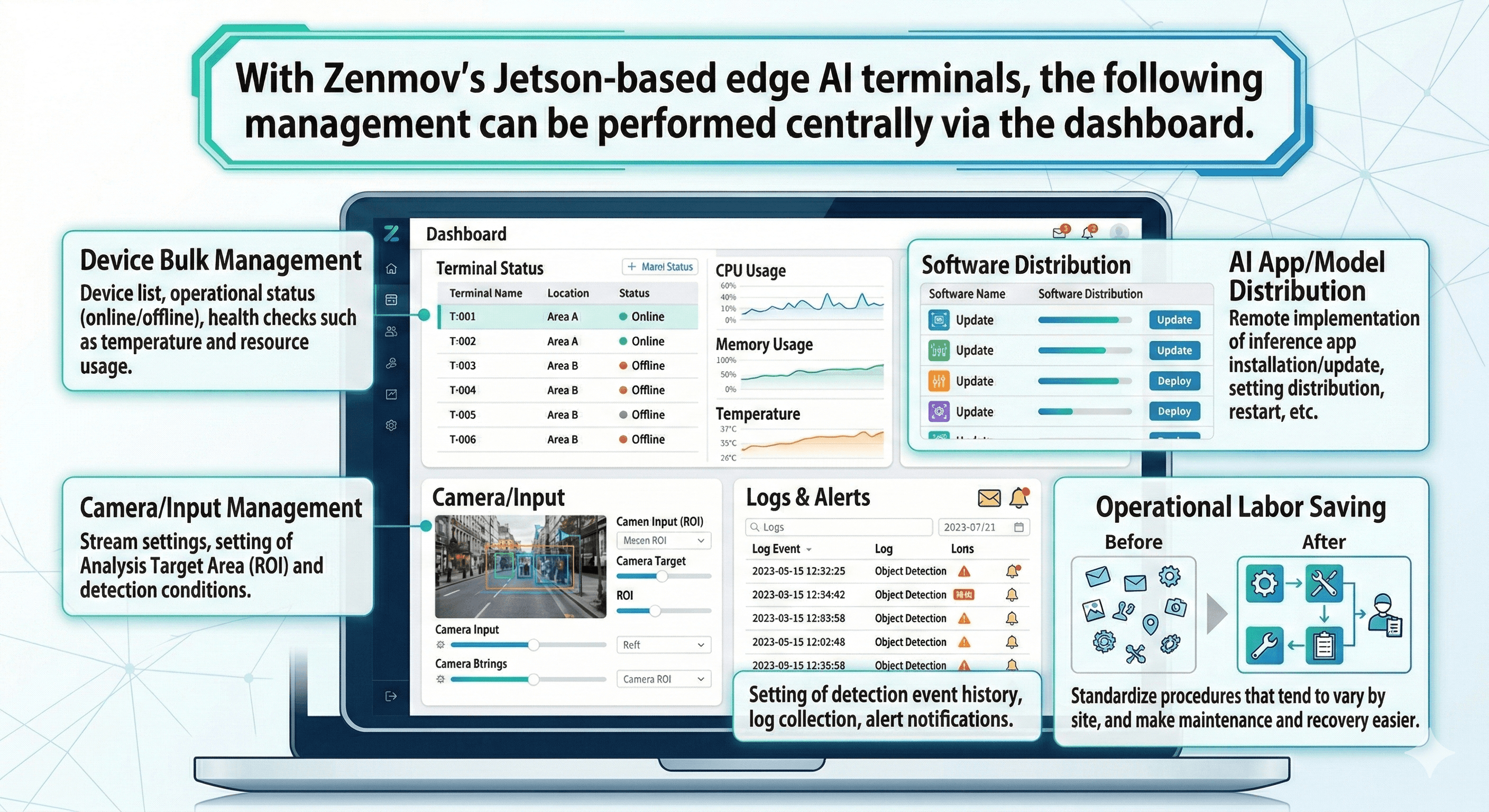
In edge AI terminals based on Jetson handled by Zenmov, the following management tasks can be conducted mainly through a dashboard.
Centralized management of terminals: terminal list, operational status (online/offline), health checks like temperature and resource usage.
Distribution of AI applications/models: Remote implementation of inference app installation/updates, configuration distribution, restarts, etc.
Management of cameras/inputs: Stream settings, target area of analysis (ROI), and detection condition settings.
Alerts/logs: History of detection events, log collection, and alert notification settings.
Streamlining operations: Standardizing procedures that tend to vary across sites, making maintenance and recovery easier.
While it is also possible to aim for similar operations with general-purpose PCs (equipped with RTX), it requires designing "in-house" for monitoring, updating, log collection, and recovery from failures, which increases the operational burden as the scale becomes larger.
7. Summary
General-purpose PCs equipped with RTX offer an excellent balance of performance and price, making them very attractive for PoC or indoor operations. On the other hand, edge AI terminals are designed with "energy efficiency, environmental durability, continuous operation, and remote operation" in mind, providing overall peace of mind and reducing operational burdens for applications that need to "continue running without stopping" in the field.
PoC and indoor verification: RTX-equipped PCs are promising (high performance, flexible, cost-effective).
Continuous operation in the field: Edge AI terminals equipped with Jetson are promising (energy-efficient, environment-resistant, standardized operation).
Additional Notes: Why NVIDIA is Frequently Used in Edge AI (CUDA Ecosystem)
The background behind the frequent use of NVIDIA products in the edge AI field includes not only hardware performance but also the well-established "CUDA ecosystem (development foundation)" that robustly supports development.
CUDA Ecosystem: The parallel computing infrastructure "CUDA" is widely used as a de facto standard in AI/deep learning arenas.
Compatibility with major frameworks: Major frameworks like TensorFlow and PyTorch are optimized for NVIDIA GPUs, making transitions from training to inference easier.
Rich libraries/SDKs: There are abundant application-specific SDKs for image recognition, video processing, inference optimization, robotics, etc., leading to reductions in development time and costs.
As a result, it becomes easier to connect training (server side) and inference (edge side) within the same NVIDIA ecosystem, creating an advantage of clearer forecasts for overall operations.
Recently, developments are also underway to make CUDA more user-friendly for Python users with the introduction of "CUDA Tile (tile-based programming model)" and "cuTile Python" in CUDA Toolkit 13.1.
[AI Blog Series Part 1] What is Edge AI? An Introductory Guide to Understanding the Differences with Cloud in 3 Minutes
What is Edge AI? A Beginner's Guide to Understanding the Differences with the Cloud in 3 Minutes
Recently, the term "Edge AI" has been frequently heard.
However, I think many people wonder, "What is the difference from Cloud AI?" and "In what situations is it used?"
In this article, I will gently explain the mechanisms and benefits of Edge AI so that even those who hear about it for the first time can understand it.
Table of Contents
What does "Edge" mean in Edge AI?
The Two Steps of AI Operation: "Learning" and "Inference"
The Structure of Edge AI: Learning in the Cloud and Inferring on the Ground
Why Edge AI is Gaining Attention: Three Points
Typical Scenarios Where Edge AI is Active
Conclusion
1. What is the "Edge" in Edge AI?
First, let's clarify the meaning of the term.
Edge … the "end of the network," that is, the field side
Edge AI … technology that operates AI on the device side of the site, rather than in the cloud
Standard AI (Cloud AI) works on the premise of:
Send data to the cloud → AI computes in the cloud → Result is returned
This represents a "cloud-centric" way of thinking.
Edge AI, on the other hand, is a way of thinking that does not rely entirely on the cloud but allows as much judgment as possible on-site devices.
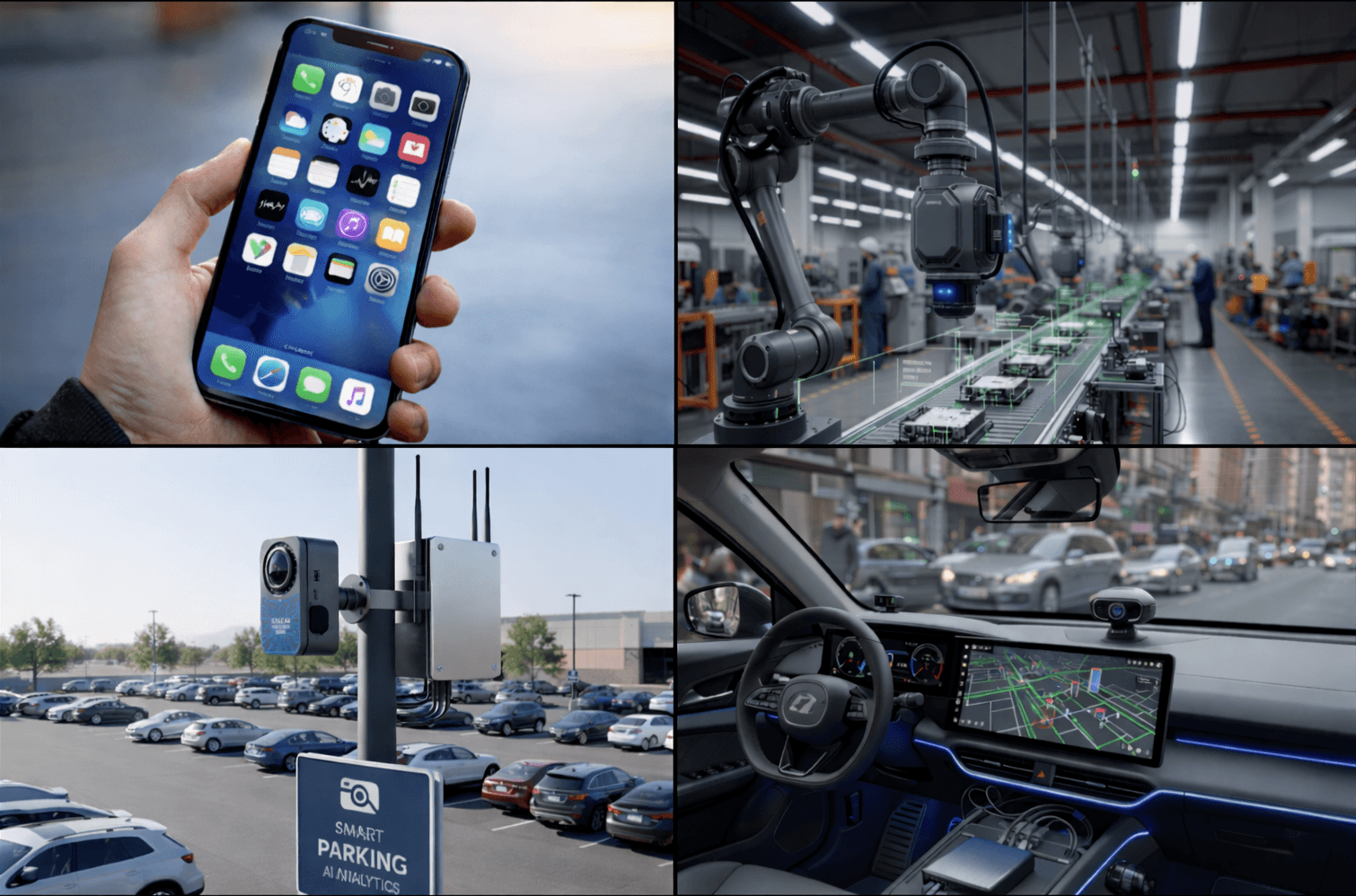
Smartphones
Cameras
In-vehicle devices
Machines on manufacturing lines
The idea is to place AI models within devices that are present on-site and allow them to make judgments there, which is Edge AI.
2. The Two Steps of AI Operation: “Learning” and “Inference”
AI can be broadly divided into two steps.
Learning (Training)
Inference
Cloud AI is generally understood to perform both learning and inference on the cloud side.
On the other hand, Edge AI has a division of roles such that "learning" is done on the cloud side and "inference" is mainly done on-site devices.
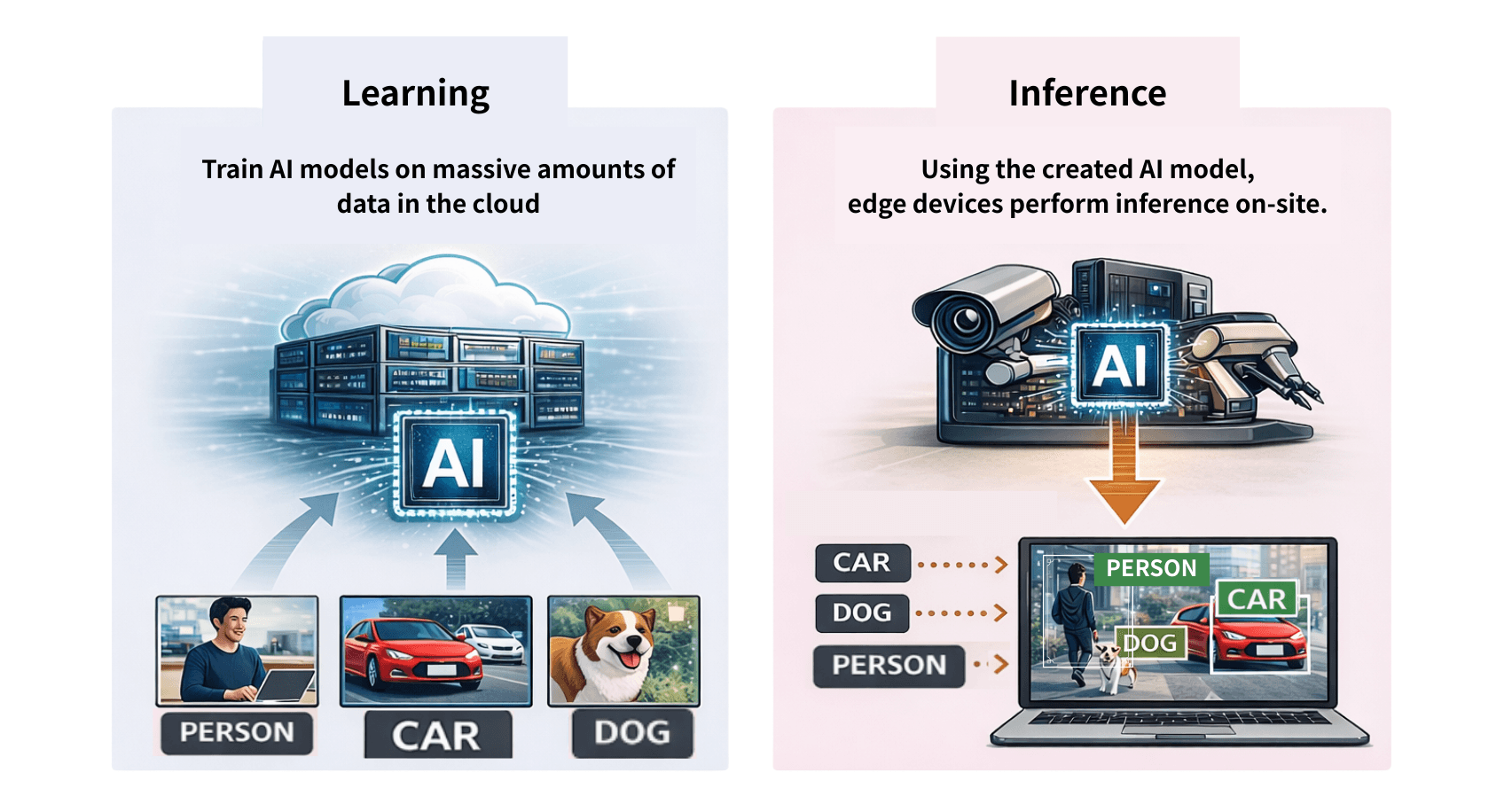
3. The Structure of Edge AI: Learning in the Cloud and Inferring on the Ground
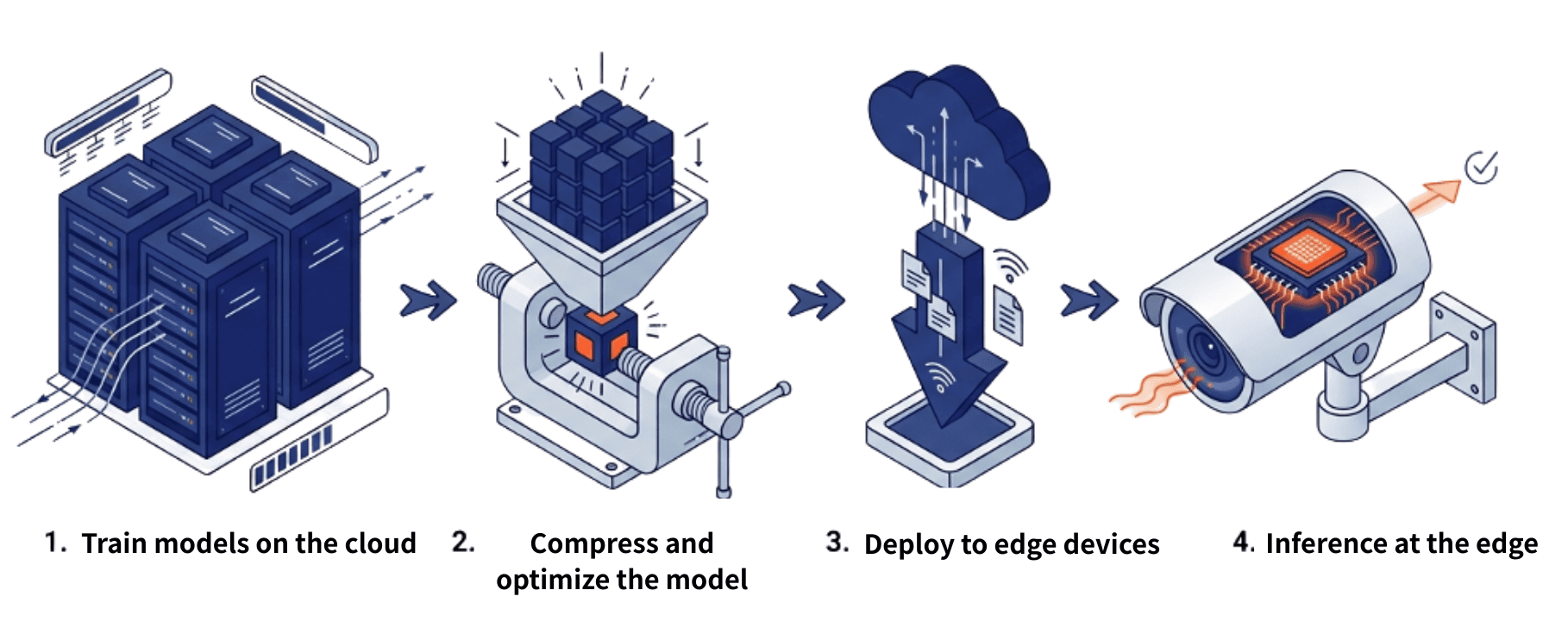
Following the concept of the slides, let me explain the flow of Edge AI in a bit more detail.
Train the model in the cloud (learning)
Compress and lighten the model
Deploy (distribute) to edge devices
Perform inference on-site
4. Why Edge AI is Gaining Attention: Three Points
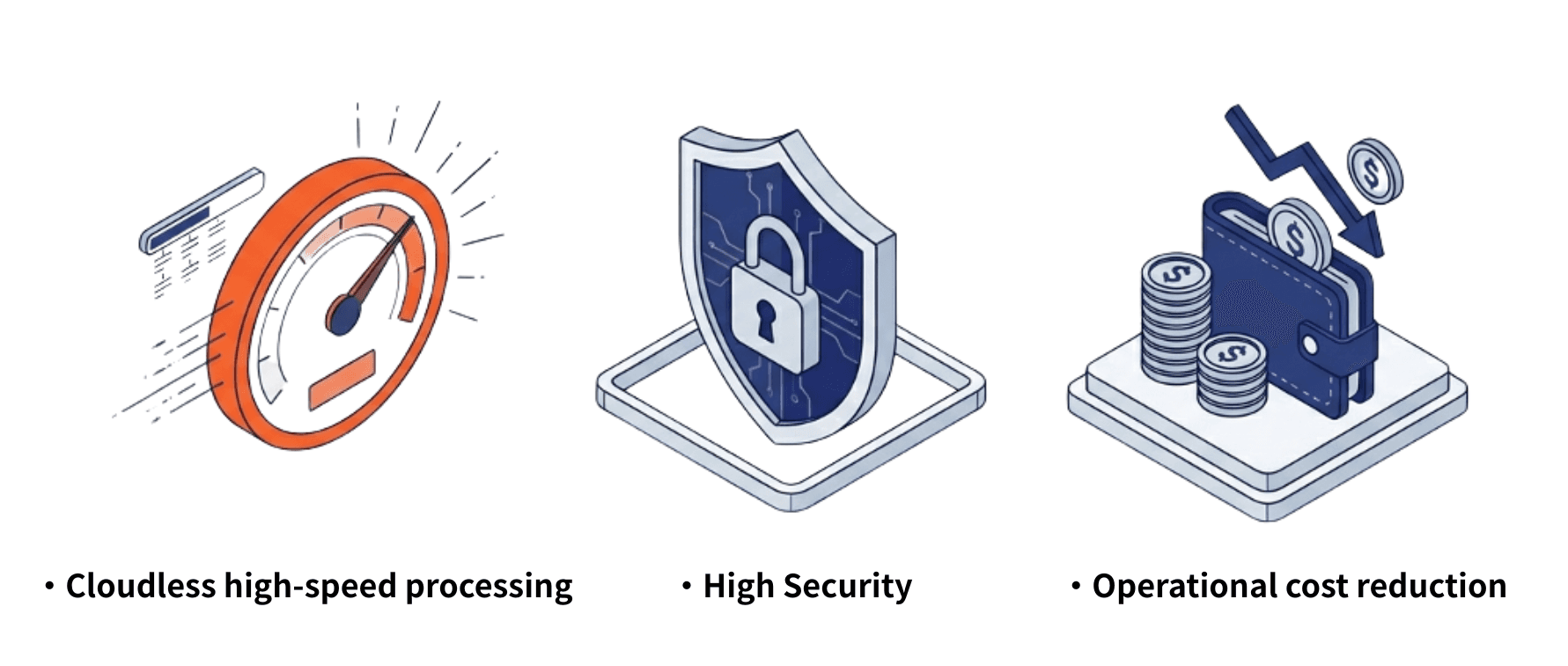
1. Cloudless High-Speed Processing (Real-time processing with minimal delay)
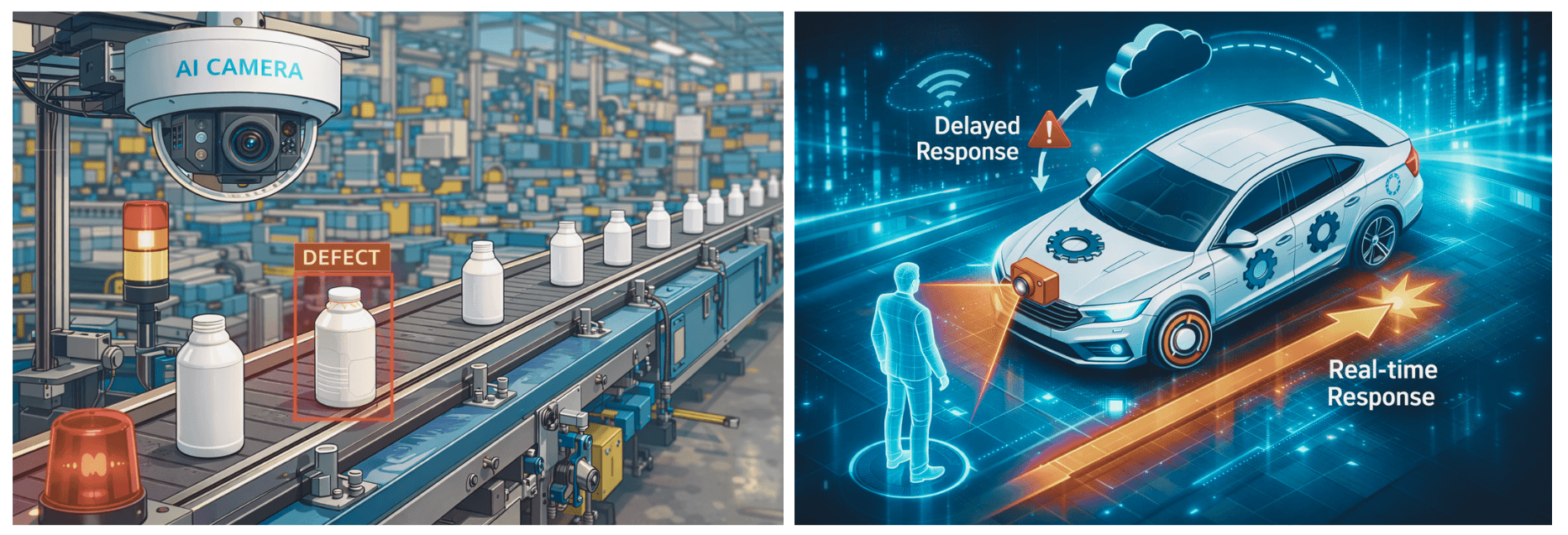
The biggest advantage of Edge AI is its immediacy.
Manufacturing sites
Self-driving cars
If data is sent to the cloud every time,
a time lag of "Sending → Processing → Receiving results" inevitably occurs.
In scenarios where quick judgment is crucial, this delay poses a significant risk.
With Edge AI, since everything can be completed within the device, delays can be minimized.
2. High Security and Improved Privacy
With Edge AI, data containing personal information is not sent to the cloud,
which has the advantage of being able to process data only within the devices.
Facial data used for facial recognition
Detailed operation data of vehicles
Medical and healthcare-related data
By being able to process such sensitive information without exposing it externally, the risk of information leaks and unauthorized access can be reduced.
The approach of "processing as much data as possible on-site without exposing it" will become even more critical in the future.
3. Reduction of Communication Costs
In sites where numerous surveillance cameras and IoT devices are installed, continuing to send all data to the cloud leads to huge communication volumes.
Surveillance cameras operating 24 hours a day, 365 days a year
Numerous sensors installed in factories, warehouses, and buildings
Unstable communication environments such as on ships, in mountainous areas, or remote regions
In such environments, raw data from images or sensors can be processed on the edge, and notifications can be sent only when abnormalities occur, or only the necessary summarized information sent to the cloud, thus significantly reducing communication volume and costs.
5. Typical Scenarios Where Edge AI is Active
Edge AI is active in the following scenarios.
Its value is realized in places where quick and smart judgments are required without relying too much on the cloud.
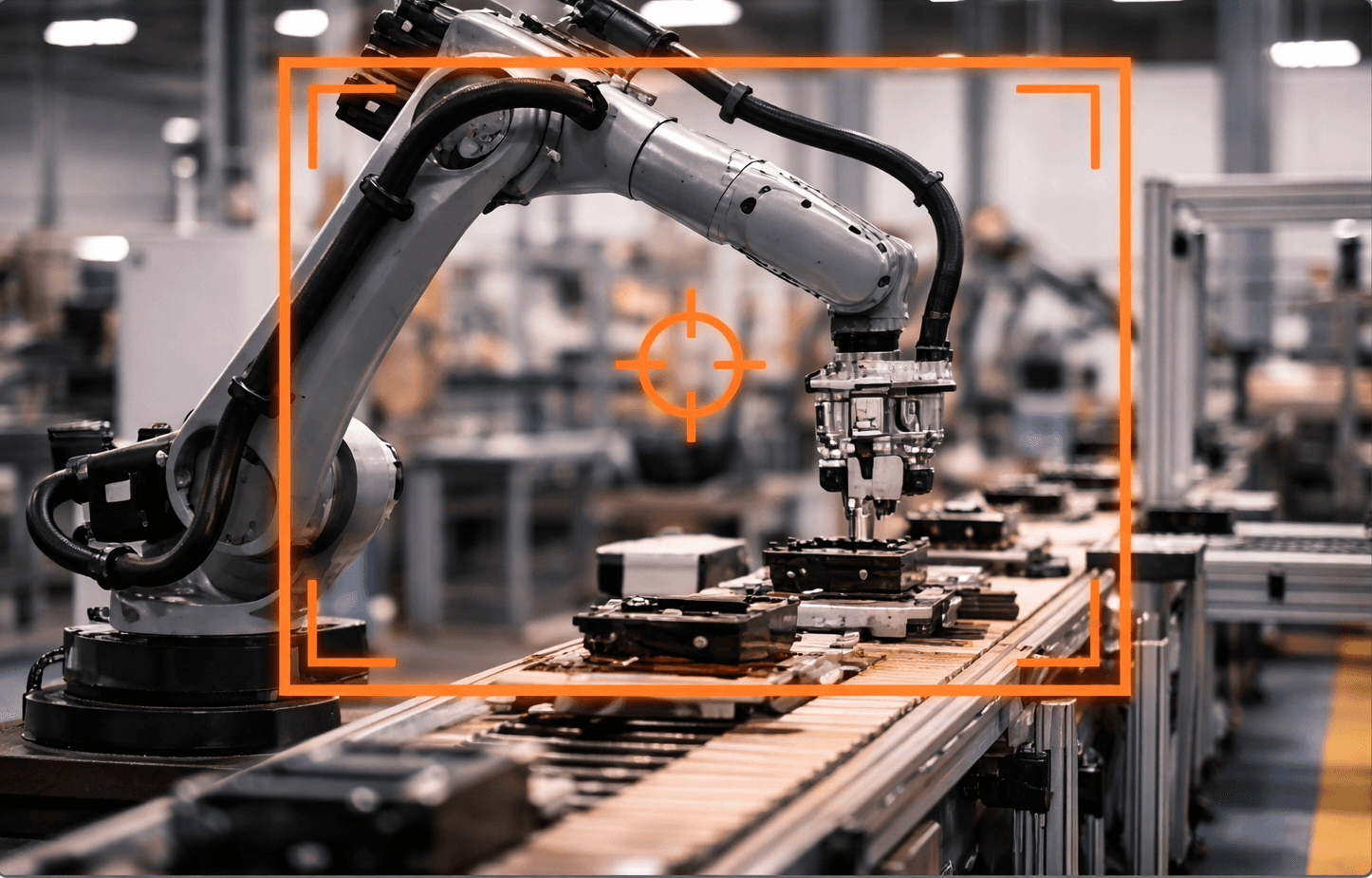
Manufacturing Sites: Defective product detection, line monitoring, worker safety confirmation, etc.
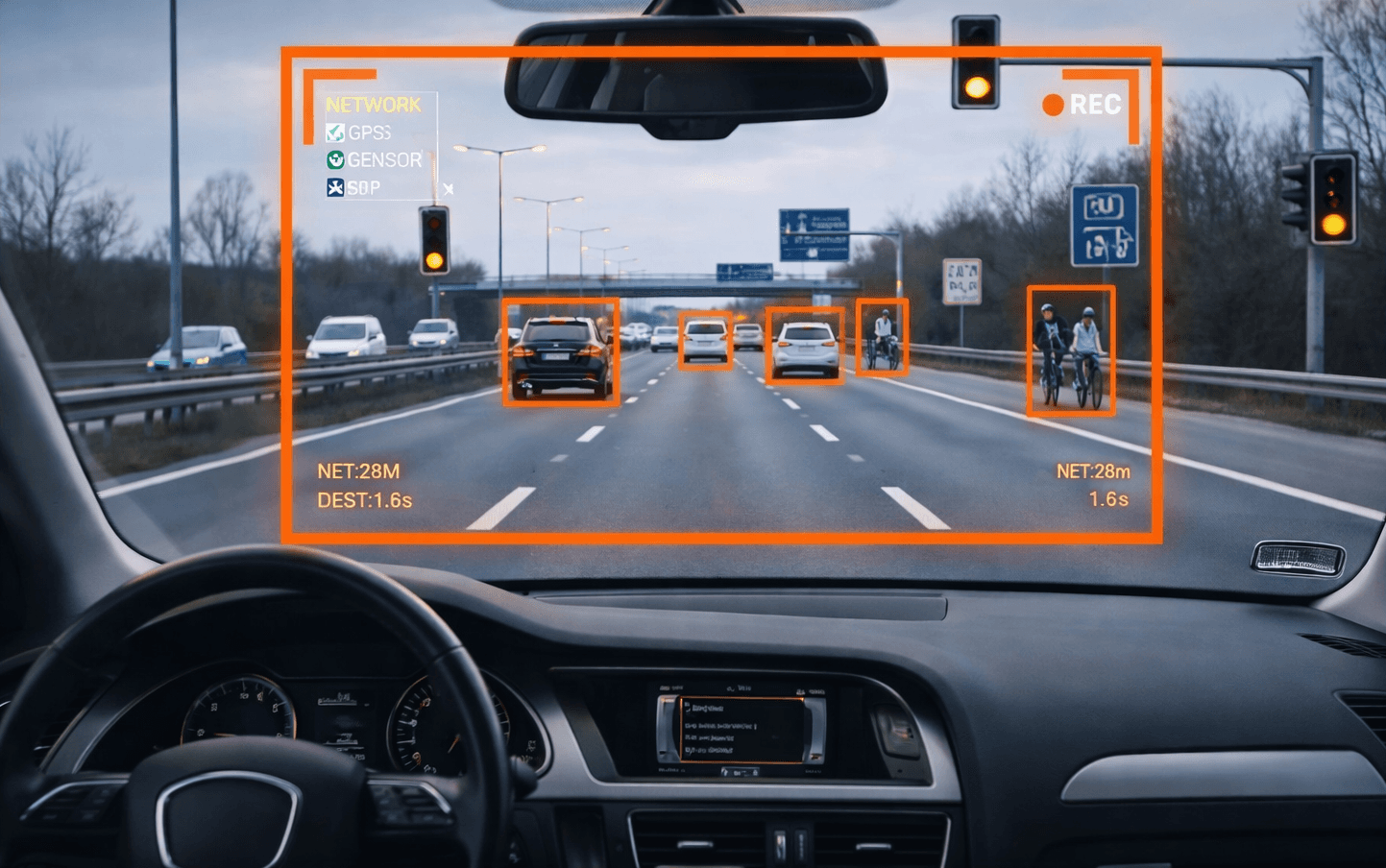
Autonomous Driving and In-Vehicle Systems: Pedestrian detection, distance management, dangerous driving detection, etc.
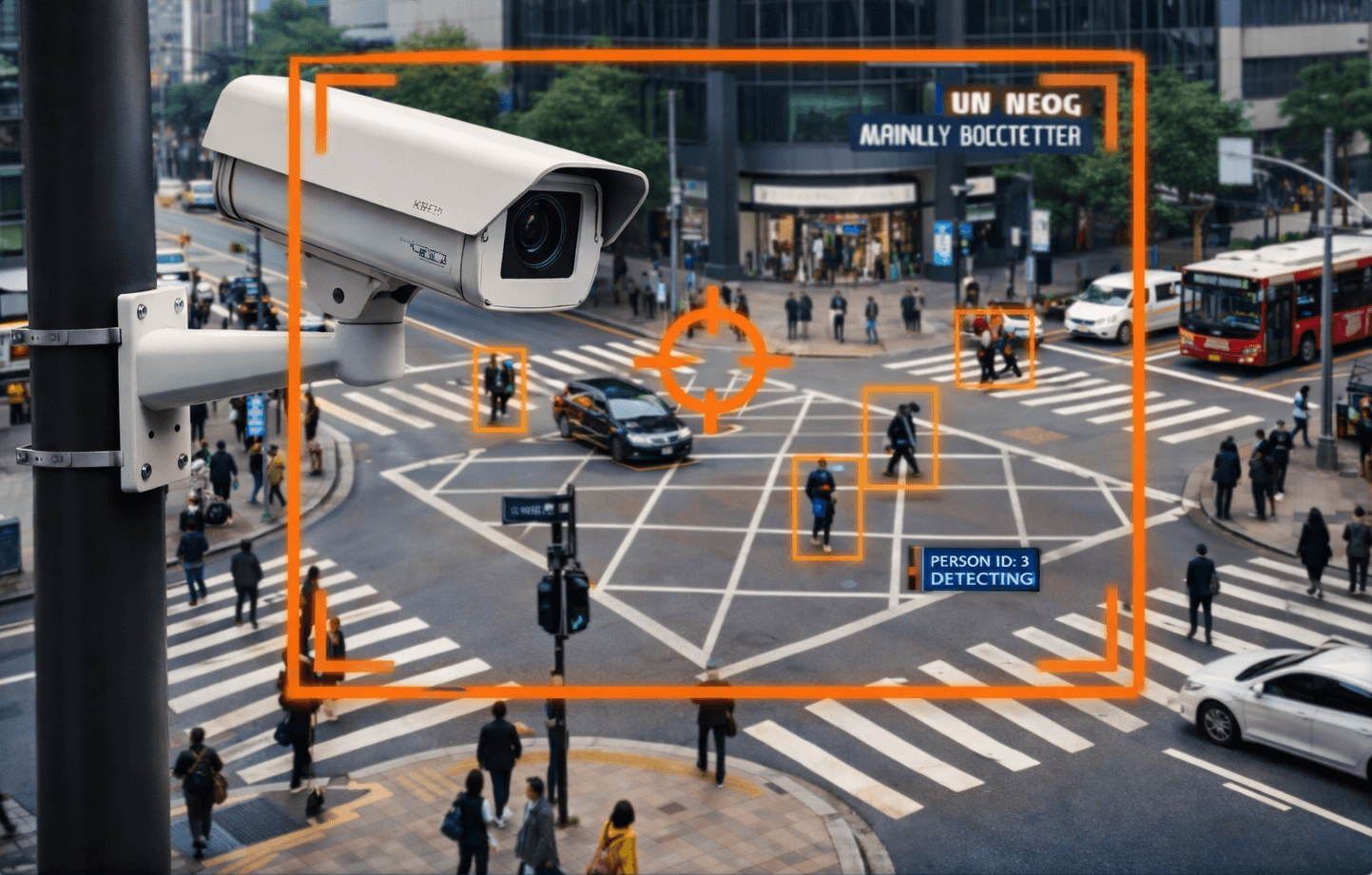
Smart Cities and Infrastructure Monitoring: Visualization of traffic volume and congestion, human flow analysis, detection of danger areas, etc.
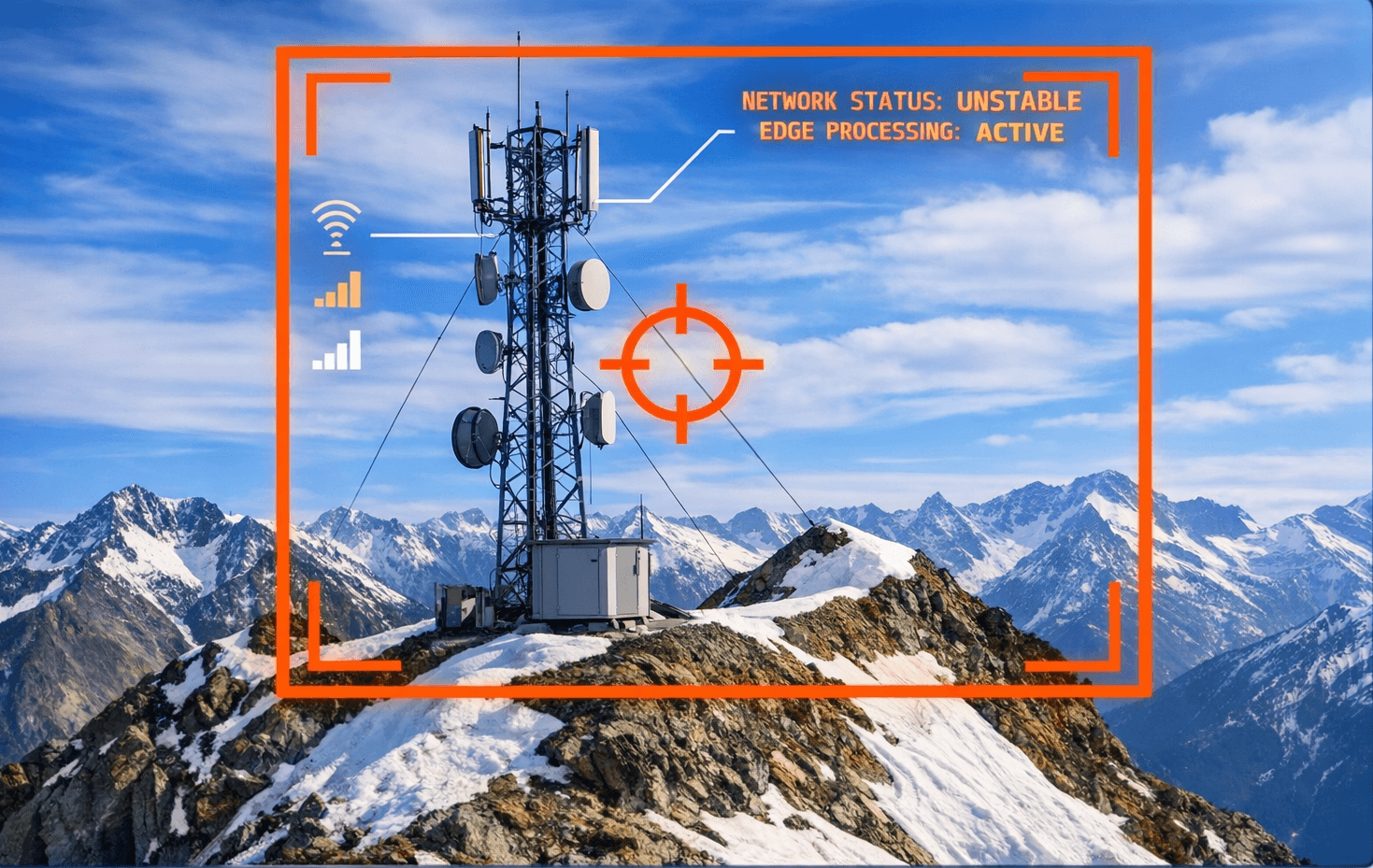
Sites with Unstable Communication: Monitoring of facilities and infrastructure in ships, mountainous areas, and remote regions, etc.
Conclusion: The “Best of Both Worlds” of Cloud and Edge is the Future of AI
To summarize the points:
Edge AI is an AI that performs inference on site devices rather than the cloud
The flow is 【Learning in the Cloud → Lightweight the Model → Deploy to Edge Devices → Perform Inference on Site】
The reasons for its attention are...
Future AI systems will blend mass data learning in the cloud and immediate judgment at the edge, and this combination of Cloud AI and Edge AI will become the mainstream.
We have published a new page that clearly introduces the charm of edge AI.
Zenmov's Edge AI Solutions
➡ Visit the Edge AI Special Page here:https://zenmov.com/edge-ai
Recently attracting attention, "Edge AI" is technology that allows for the realization of both real-time and efficiency by processing data on-site without relying on the cloud.
At Zenmov, we are developing simulation solutions that leverage this Edge AI.
Features of Edge AI
Fast Processing:Active in situations that require immediate judgment, such as traffic monitoring and danger detection
Cost Reduction:Reduces communication volume by only sending necessary data
Flexible Scalability:Easily adaptable with the addition of cameras and sensors
Application Scenarios
Traffic Sector:Detects dangerous driving and illegal parking
Tourism Sector:Utilizes pedestrian flow data to formulate tourism strategies
Industrial Sector:Detects falls and absence of helmets in factories
Value Provided by Zenmov
Installation is completed in a few hours, waterproof and dustproof for outdoor reliability
Data is processed on-site → Ensures privacy protection
Equipped with over 50 AI models, available for use immediately after installation
Edge AI demonstrates immediate effectiveness across various fields such as traffic, tourism, and industry.
Through its implementation, Zenmov contributes to creating a safe and efficient society.
If you're interested, please feel free to contact us!
Zenmov has been featured in Order Navigation's "14 Recommended Development Companies for Location Information (GPS) System Development [2025 Edition]"
Zenmov was introduced in the "14 Recommended Development Companies for GPS System Development - 2025 Edition" by Hōchō Navi
Zenmov Inc. was selected for the feature article "14 Recommended Development Companies for GPS System Development - 2025 Edition" by Hōchō Navi.
Our company, Zenmov, is engaged in the development of GPS/location information systems specialized in the mobility sector under the corporate vision of "Resolving chaotic traffic with IT". We have received high praise for the MaaS-related projects that are in operation both domestically and internationally, as well as for our proprietary SMOC (Smart Mobility Platform).
You can view it from the link below:
https://hnavi.co.jp/knowledge/blog/location-information_companies/
Zenmov handles technology that reproduces and simulates real-world spaces and processes digitally (digital twin).
We have created a demo of a digital twin
We are developing a simulator that incorporates various data related to transportation and urban mobility, visualizing and analyzing current challenges, and detecting future bottlenecks and potential issues by altering traffic flow and movement patterns. This simulator can be flexibly applied to multiple cities and regions, supporting the reproduction of mobility behaviors and the extraction of challenges based on urban characteristics. Furthermore, this analytical foundation is aimed at evolving into a digital twin that reflects the overall situation of the city in real-time, and in the future, we plan to link with edge AI to enable immediate decision-making and feedback control in locations close to the field. It is expected to be widely utilized as infrastructure that enables advanced decision-making support for urban transportation, regardless of whether it is public or private.
*The video is from around Meguro Station.
Zenmov has been featured in BALANCe Magazine's "15 Recommended Development Companies".
Zenmov was featured in BALANCe Magazine's "Top 15 Recommended Development Companies"
In BALANCe Magazine's web feature "Recommended Development Companies for New Services and Business System Development: A Guide to Choosing," our company Zenmov was introduced as a "company strong in development."
You can view it through the link below:
https://balance.bz/magazine/category/system/new-system-development/#Zenmov株式会社
Vietnamese New Graduate Engineer Recruitment Activity Report at Sun Asterisk
Report on the Recruitment Activities for Vietnamese New Graduate Engineers at Sun Asterisk
Sun Asterisk is known as a company that actively promotes the recruitment and development of engineers overseas, particularly in Vietnam.
Through partnerships with top local universities, job fairs, and the development of highly skilled IT personnel who can speak Japanese, the company has implemented a global recruitment strategy, producing numerous talented individuals.
The company has established a comprehensive support system from recruitment to employment in Japan and career development.
Recently, we at Zenmov have been given the opportunity to utilize Sun Asterisk's recruitment program for Vietnamese new graduate IT engineers.
Through this program, we conducted online corporate briefings for many Vietnamese students, receiving applications that exceeded our expectations. After the document screening, we held the first interviews, and the final interviews took place on Saturday, November 29, at Sun Asterisk in Hanoi, Vietnam.
The office of Sun Asterisk features a stylish café counter. Visiting this stylish space was a valuable experience for the recruitment team.
Our CTO Manaka and the business development representative Tokuda participated in the final interviews.
As a result, we decided to hire four outstanding Vietnamese university students as new graduate engineers.
Two of them are scheduled to join Zenmov in November 2025, while the remaining two are set to join in November 2026.
All four will come to Japan after graduating from university and are expected to thrive as engineers at Zenmov.
The four hired will focus on improving their Japanese language skills and acquiring engineering skills during the period leading up to their graduation.
This will enable them to smoothly transition into their roles in Japan.
Additionally, we plan to provide opportunities for them to participate as interns in Zenmov projects while still in school, helping them gain practical experience.
From left to right: Zenmov CTO Manaka, offer recipient Do Thi Thuy Ga, Zenmov Tokuda, and Sun Asterisk's Hirose.
Zenmov will continue to focus on recruiting talented individuals from a global perspective and will work on creating an environment that supports the growth of each employee.
Zenmov, implementation of Series A fundraising and flowering of Dracaena
Zenmov Implements Series A Fundraising and Dracaena Blooming
Zenmov's office faces the Meguro River. Speaking of the Meguro River, it is one of Tokyo's famous cherry blossom spots, but the cherry blossoms have already bloomed, and now we can enjoy the green leaves.
Inside our office, the buds of a certain plant have begun to bloom. This plant is known as the "Dracaena," also referred to as the tree of happiness. Dracaena is a popular houseplant, but its blooming cycle can be short, ranging from 2 to 3 years, and for longer periods, from 5 to 10 years, with no fixed blooming season, making it somewhat whimsical when it comes to flowering (the language of flowers for Dracaena is happiness).
Now, Zenmov has conducted a third-party allocation increase for Series A funding, with Broadleaf Inc. and Yoko Co., Ltd. as the two underwriting companies. With valuable contributions from both companies, we wish to accelerate the technological development and business expansion of our Smart Mobility Platform, our MaaS platform SMOC (Smart Mobility Operation Cloud), and do our utmost to tackle societal transportation challenges… as our representative Tanaka and all employees are committed to this effort.
The blooming of the Dracaena in the office may also be a message of encouragement (and a bit of celebration?) toward Zenmov's next stage... I interpret it positively and of my own accord.
Press Release April 9, 2024 Zenmov Implements Series A Fundraising https://prtimes.jp/main/html/rd/p/000000004.000081602.html
Brunei Scenery - Trying a Jungle Tour (2) -
The Scenery of Brunei - Trying a Jungle Tour (2)
The Scenery of Brunei - Trying a Jungle Tour (1) - This is a continuation of Landscape of Brunei - Let's go on a jungle tour! vol.1.
As you climb a long, long staircase, you reach the towering Belalong Canopy Walkway.
The Canopy Walkway is a famous scenic spot in Brunei that offers a panoramic view of the tropical rainforest, with five interconnected towers standing about 43 meters above the ground.
(Reference: Brunei Tourism Board)
Now, let's go up to the tower.
This is the view from the top of the canopy. It's a stunning view... but first, I might feel a bit dizzy.
Let's also walk along the walkway.
Walking on the Canopy Walkway
It's incredibly high, narrow, and quite thrilling.
From above, the upper walkway looks like this.
As far as the eye can see, the tropical rainforest of Brunei, one of the most diverse ecosystems in the world, expands. Choosing the right time to view the sunrise or sunset over the jungle horizon will also be a wonderful experience.
After the tour, we return to the lodge house for lunchtime.
I would like to introduce Brunei's gourmet food on another occasion.
How was the jungle tour in the Temburong district?
It was a valuable experience captivated by the majestic tropical rainforest of Brunei.
The Scenery of Brunei - Trying a Jungle Tour (1)
Scenery of Brunei - Jungle Tour Experience (1)
Continuation of the landscape of Brunei - Across the Temburong Bridge.
Upon crossing the Temburong Bridge, you will be greeted by the rich nature of the Temburong district.
Temburong is an exclave located at the easternmost part of Brunei, separated by Malaysia. To the south lies Ulu Temburong National Park, with an area of 550 km2 of forested land. Moreover, a vast area of the Temburong district is covered in primary forest, promoting ecotourism that takes advantage of its nature-rich environment. Its biodiversity is among the best in the world, making this naturally abundant environment a significant attraction for Brunei.
The exclave Temburong district
Now, let's head out for the jungle tour at the national park. First, check in at the lodge house!
Welcome to the Jungle Tour
From the tour lodge house (1)
From the tour lodge house (2)
A meal before departing for the jungle tour
Wajid Temburong - Rice steamed with sugar and coconut?
After enjoying a meal, it's time to set off for the tour!
We have arrived at the entrance to the jungle!
Upon passing through the gate, a long suspension bridge awaits you.
After crossing the long suspension bridge, you will encounter a long, long staircase waiting ahead!
The tour continues on.
In the next post, I will introduce the scenery beyond the long staircase. >> To be continued (2)
Scenery of Brunei - Crossing the Temburong Bridge
Brunei Scenery ~ Crossing the Temburong Bridge ~
Running on the Temburong Bridge
I previously introduced the Temburong in "Travel to Brunei Part 4", but I would like to share the actual experience on-site in a few installments as part of the "Brunei Scenery Series".
This bridge connecting the mainland of Brunei and Temburong district is commonly referred to as the Temburong Bridge. Its real name is "Sultan Haji Omar Ali Saifuddien Bridge" and it is said to be named in honor of the 28th Sultan, Omar Ali Saifuddien III, who was the father of the current Prime Minister of Brunei, Hassanal Bolkiah Ibni Omar Ali Saifuddien III.
The bridge spans Brunei Bay and is the longest bridge in Southeast Asia at 30 kilometers in length. It is the only domestic road bridge that directly connects the Temburong district, separated from Brunei Bay by Malaysia, which began construction in 2014 and opened on March 17, 2020, delayed due to the impact of the COVID-19 outbreak.
The Temburong district which is an enclave
Crossing the long Temburong Bridge, you are welcomed by the rich nature of the Temburong district.
Jungle Entrance
Temburong is the easternmost district of Brunei, with Ulu Temburong National Park, a national park with a forested area of 550 km² in the south. Moreover, a vast area of the Temburong district is covered in pristine rainforest, and eco-tourism is developed utilizing this environment blessed by nature. The biodiversity is one of the richest in the world, and this nature-rich environment is also a significant attraction of Brunei.
In the next post, I will share about the jungle tour in the national park that unfolds beyond the Temburong Bridge.
Let's take a bus in Brunei!!
Let's ride the bus in Brunei!!
Mr. Okouchi, who has been taking care of us in Brunei, has created a video, so I will introduce it here as well.
The streets of the Philippines: what changes and what remains the same.
The Streets of the Philippines: Things That Change and Things That Don't
Where do you think these soaring skyscrapers piercing the blue sky are located? (Figure 1)
They are found in a newly developed area of Ayala Triangle Gardens, located in Makati City, the capital of the Philippines and part of Metro Manila. The tower on the right is a 40-story office building, while the left tower is a 24-story five-star hotel. This was taken during a business trip to the Philippines in September 2021 by two staff members from Zenmov amidst the COVID-19 pandemic.
Figure 1 Ayala Triangle Gardens
Source: Taken by Zenmov Staff
When people think of the Philippines, they often have a strong image of it as a poor country with slums... but it is developing every day. The average age of Filipinos is 26, while in Japan, it is 47. The Philippines is a young and rapidly growing country, and each time I visit on business, the cityscape changes.
The 'Ayala' in Ayala Triangle Gardens, which has its skyscrapers, is named after a Philippine conglomerate that operates in various sectors including retail, education, real estate, banking, telecommunications, water infrastructure, renewable energy, electronics, information technology, automobiles, healthcare, management, and BPO.
The real estate division that developed this area is Ayala Land, one of the major developers in the Philippines, and one of the most spotlighted cities in the Philippines is Bonifacio Global City (BGC), located in the northeastern part of Taguig City, adjacent to Makati City (Figure 2). The area that BGC occupies was originally Fort McKinley, a US military base, which was returned to the Philippines in 1949 and renamed Fort Bonifacio. Since 1999, the Bases Conversion and Development Authority (BCDA) has been selling the land for development purposes for office areas, and Ayala Land and Campos Group’s Evergreen Holdings carried out the development. The current townscape of BGC, lined with modern high-rise office buildings, is orderly and beautiful, making one feel disoriented as to where they are (Figure 3).
Figure 2 Location of BGC
Source: OpenStreetMap
Figure 3 Townscape of BGC: ① High-rise Buildings
Source: Taken by Zenmov Staff
BGC covers an area of 240 hectares, accounting for 5% of the entire Taguig City. As of 2020, the population was 11,912. The use of tricycles and jeepneys, which are typical in the Philippines, is prohibited within the area. As a result, the air is clean, and it maintains a quiet atmosphere that's free from the chaos typical of the Philippines. The roads and sidewalks are well-maintained, and there are office buildings and shopping malls. Security is good, which has led to residences for expatriates from various countries, along with ample parks and plazas (Figure 4).
Figure 4 Townscape of BGC: ② Plentiful Green Spaces
Source: Taken by Zenmov Staff
However, one cannot help but feel that BGC is still in the Philippines... and the traffic issue makes this painfully clear. Transportation within the area is by private car, shuttle buses, rental bikes, or on foot, but it usually takes about 10 minutes by car to travel to the nearby business hub of Makati City, which can take up to 40 minutes during peak morning and evening hours.
At Zenmov, which operates MaaS business in Intramuros in Manila City and Pasay City, we often think about what kind of convenient, environmentally friendly, and fashionable transportation services could be designed for the beautiful streets of BGC.
As the Philippines undergoes daily changes, let me share one unchanging view at the end. The sunset over Manila Bay (Video 1). I have visited and stayed in the Philippines countless times, but this view never changes. When I see this sunset, I always feel that I am in the Philippines.
Video 1: Sunset over Manila Bay
Source: Taken by Zenmov Staff

Introduction to tourism in Brunei
Introduction to Brunei Tourism
We have received a tourism video introduction from Mr. Okouchi of SSI, who is accompanying us in Brunei.
This video summarizes the charm of Brunei in a short format, so we would like to introduce it.
If you are interested, please be sure to check the link below.
https://www.bruneitourism.com/
*Mr. Okouchi's YouTube channel is here
[AI Blog Series Part 3] Connecting Detection → Notification → Improvement. Summary of Use Cases for Edge × Cloud Video AI
【AI Blog Series Episode 3】Connecting Detection, Notification, and Improvement: Summary of Where Edge × Cloud Video AI Can Be Used
In the second episode, we organized the differences between general-purpose PCs (RTX-equipped PCs) and edge AI terminals optimized for on-site use (Jetson-equipped terminals). In this article (Episode 3), we will summarize how to "effectively differentiate their use and manage operations to achieve results" as a continuation. To conclude, by appropriately combining edge/on-premise/cloud according to the on-site requirements, it becomes easier to connect detection to "recording" and recording to "improvement."
Table of Contents
Scenarios of Video AI Use on Site (Representative Use Cases)
What Zenmov Can Provide (Requirement Definition → Introduction → Operation → Improvement)
Summary: Turning "Detection → Recording → Improvement"
1. Scenarios of Video AI Use on Site
Video AI is used to reduce tasks involving "constant human observation" and to quickly find abnormalities or signs. Specifically, it is being applied in the following locations and environments.
(1) Construction Sites / Factories / Plants / Warehouses (Safety and Operational Optimization) (e.g., Overview of Factory, Equipment, or Production Stoppage)
It detects intrusions into hazardous areas, falls, crouching, and non-usage of PPE, assisting in safety measures.
It understands the stagnation or abnormal signs around equipment to prevent production stops and increased response workloads.
It visualizes operational status, which can be used to improve non-stop operations (increase operational rates).
(2) Parking Lots / Multi-story Parking / Bicycle Parking (Visualization of Availability and Congestion)
It automatically recognizes availability, congestion, and stays, reflecting it in operational decisions.
It visualizes stay trends and congestion factors, leading to improvements in guidance and layout.
It reflects this information in signage and web guidance, helping to disperse users.
(3) Security / Monitoring / Facility Management (Office Buildings, Commercial Facilities, Schools, Hospitals, Factory Premises, etc.)
It detects intrusions, suspicious behavior, abandoned items, and stagnation, notifying the responsible personnel.
It visualizes congestion and lines, helping to improve security deployment and flow design.
(4) Logistics Warehouses / Delivery Centers / Yards (Visualization of Safety and Operations)
It detects proximity of forklifts and workers, as well as intrusions into hazardous areas, assisting in safety measures.
It understands stagnation, access, and queues in docks and yards, visualizing bottlenecks.
It leads to improvements in layout, procedures, and rules based on recorded data.
(5) Tourist Destinations / Event Venues / Train Stations / Airports (Analysis of Human Flow and Congestion)
It visualizes congestion levels, flow, and stay duration, optimizing guidance, direction, and staff allocation.
It considers privacy by assuming non-identifying aggregation (anonymization/statistics).
(6) Disaster Prevention / Infrastructure (Factories, Warehouses, Parking Facilities, Roads / Tunnels, etc.)
It early detects signs of smoke or flames and supports initial actions (notification, evacuation, firefighting).
It's an area where detection → notification → recording can be automated easily, even at night or in unmanned environments.
(7) Medical / Care (Hospitals, Clinics, Care Facilities, Waiting Rooms / Receptions, etc.)
By recognizing signs of falls, bed exits, and wandering, it supports the reduction of monitoring burdens.
It visualizes congestion and stagnation, helping improve guidance and personnel allocation.
It is premised on considerations for privacy and the establishment of operational rules, such as masking and access permissions.
2. What Zenmov Can Provide (Requirement Definition → Introduction → Operation → Improvement)
Zenmov flexibly accommodates any configuration of edge/on-premise/cloud tailored to the site's constraints (network, installation environment, security requirements, etc.) and objectives (immediate notifications, recording saves, cross-site operations, etc.), proposing optimal combinations. It can also offer a setup that allows for centralized understanding and management of information such as terminals, cameras, detection results, and alert histories on a dashboard.
Additionally, it is equipped to support installations and operations in overseas locations (including Taiwan, The Philippines, Malaysia, United Arab Emirates, USA, etc.).
The video AI handled by Zenmov varies not only by "what to detect," but also by requirements for real-time responsiveness, handling of recording, and cross-site operations, resulting in optimal configurations that can be organized into the following three categories.
① Edge (Detecting on site and notifying immediately)
This configuration involves analyzing camera footage on-site, notifying and recording only the necessary results when abnormalities or signs are detected. It can be designed not to send video constantly to external sources, making it easier to suppress delays and data usage, and facilitate immediate responses on-site. This is particularly effective not only at fixed locations but also at “mobile sites” such as in vehicles or portable devices, allowing continued detection and recording in unstable communication environments.
Requirements Suitable for This Setup: Real-time responsiveness is crucial / Flexible or unstable lines / Prefer not to send footage externally (considering privacy)
Use Cases: Safety detection in factories (intrusions, falls, non-usage of PPE, etc.), detecting occupancy and congestion in parking lots, detection of intrusions and stagnation around gates, and detection/recording in public transport and logistics vehicles (event detection during operation and boarding/alighting detection, etc.)
② On-Premise (Establishing Recording, Searching, Permissions Management within the Company Environment)
This is effective when wanting to consolidate recorded footage and events within the company environment, including managing storage duration, viewing permissions, and audit responses.
Requirements Suitable for This Setup: Desire to complete operations within the company network / Strict security and audit requirements / Prioritizing traceability management
Use Cases: Monitoring operations for facilities or factory premises, organizing viewing ranges for stakeholders, confirming footage after incidents, and preventing re-occurrences
③ Cloud (Consolidating Multiple Sites for Unified Operations and Visualization)
This is effective when wanting to consolidate video and events from multiple sites, progressing towards understanding the situation at multiple locations and unifying operational rules.
Requirements Suitable for This Setup: Multiple sites exist / Desiring remote operation / Wanting to manage everything with one system
Use Cases: Integrated monitoring of multiple facilities, situation checks from remote locations, unification of alert response flows
(Note: Positioning of VMS)
The so-called VMS (Video Management System) functions such as recording, searching, permissions management, and multi-site operations enable quick searches of "when, where, and what happened" after accidents or troubles, facilitating sharing between relevant parties and standardization of operational rules.
3. Summary: Turning the Cycle of "Detection → Recording → Improvement"
The value of video AI is not only in finding dangers and anomalies but also in leaving recordings and leading to improvements. By combining a mechanism that allows for real-time awareness (edge inference) with operational foundations such as recording, searching, and permissions management, it makes it easier to turn the cycle of "Detection → Recording → Improvement."
Zenmov designs configurations and operations tailored to on-site requirements, supporting from PoC to launch, operation, and improvement. We would be happy if we could explore ways to produce results together in various locations such as factories, logistics, facility management, tourism, disaster prevention, and medical/care.
Proven Model (Example)
■ AI Detection Model / Detection Targets (Draft of Correction)
Boarding and Alighting Detection | People boarding and alighting from vehicles |
Human Posture Recognition | Recognizing postures such as standing, sitting, or lying down |
Face Recognition | Detecting the presence of a face and whether it is the right person |
Electronic Fence Detection | Detecting entry or exit of people or vehicles into designated areas |
Crowd Detection (Number of People Can Be Defined) | Detected congestion and how many people are gathering |
Human Stagnation (Stay Duration Can Be Set) | People staying in the same place for a long time |
Fall Detection | Detecting a person in a fallen state |
Stalking/Following Detection (Following Behind at the Entrance) | The act of entering while following someone without authentication |
Location Detection and Recording | Coming to or passing a specific place |
Clothing Detection (Detection of Work Clothes, Uniforms, etc.) | Detecting whether workers or users are wearing the specified clothing (uniforms, safety gear) |
Vehicle Fault Detection | Vehicles in a faulty state, such as being stopped and not moving |
Sudden Acceleration | Rapid sudden acceleration of a vehicle |
Reversing | A vehicle moving in the opposite direction |
Ignoring Red Lights | A vehicle entering or passing even with the signal being red |
Fence Over Jumping (Climbing Over Walls) | The act of climbing over walls or fences |
Speed Violation / Speed Measurement (including Section Measurement) | Whether the vehicle's speed exceeds the standard value |
Vehicle Number Recognition | Reading the vehicle's license plate |
Road Accidents | Occurrence of collisions or contact accidents |
Central Line Crossing (Crossing Double Lines) | A vehicle crossing the central regulation line of the lane |
Illegal U-Turn | Performing a U-turn at a prohibited location |
Motorcycle Prohibited Lane Usage | A motorcycle entering or traveling in a designated prohibited lane |
Parallel Parking | Vehicles parked side by side |
U-Turn Detection | A vehicle making a U-turn |
Entering Restricted Areas | The act of people or vehicles entering designated prohibited areas |
Intrusion of Foreign Objects onto Roads | Objects (obstacles) entering the roadway |
Tracking Vehicle Movement Trajectories | Tracking and recording the movement route of vehicles |
Illegal Parking (Red Lines, Yellow Lines, etc.) | Vehicles parked in areas where stopping or parking is prohibited |
Parking at Intersections | Vehicles parked within intersections |
Illegal Left/Right Turns | Prohibited left or right turn actions |
Heat Detection Sensor Detection | Detecting heat (infrared) from people or objects to confirm their presence |
■ AI Functions & Retail Analysis Pack / Function Descriptions
Event Search | Fast searching of recorded footage based on conditions (objects, actions, time, etc.). |
Multi-Camera Face Search | Cross-searching for the same person across multiple camera footage using facial recognition. |
Mask Detection | Determining the presence or absence of a mask from facial imagery. |
Multi-Camera Number Recognition Search | Recognizing and searching license plates via multiple cameras. |
Tag & Track (PTZ Tracking) | Tagging targets for automatic tracking by PTZ cameras. |
AI Person & Vehicle Detection | AI identifies people and vehicles, utilizing alerts and statistics. |
AI Fire & Smoke Detection | AI detects fires and smoke at an early stage. |
People Counting | Automatically measuring visitor counts and congestion levels. |
Heat Maps | Visualizing areas of people staying and movement patterns with color coding. |
Line Detection | Detecting queues and stagnation statuses. |
■ PPE (Personal Protective Equipment) Detection Function
Helmets | Detecting the presence or absence of hard hats. |
High-Visibility Vests | Detecting high-visibility clothing such as fluorescent vests. |
Protective Clothing | Detecting designated work clothes and protective gear. |
■ Human Behavior Analysis
Fall Detection | Detecting a person in a fallen state. |
Hand Raising Detection | Detecting a pose with both hands raised. |
Crouching Action Detection | Detecting a crouched posture. |
Social Distance Violation Detection | Measuring the distance between people and detecting if it is less than a certain distance. |
■ Others
Entry and Exit Management System Integration | Integrating video with door unlocking and entry/exit management. |
Fire & Alarm System Integration | Triggering events in conjunction with fire alarms and warning systems. |
Perimeter Intrusion Detection System Integration | Integrating with perimeter sensors to detect intrusions. |
External Event Integration | Integrating information from external devices like POS with video. |
Face Recognition (Watchlist) | Identifying registered individuals or persons of interest. |
Number Recognition (Watchlist) | Recognizing already registered vehicles or vehicles of interest. |
Custom AI Analysis | Utilizing user-defined AI models. |
Water Level Detection | Detecting changes in water levels. |
Offline Analysis | Executing analysis and search of imported video. |
Multi-Camera Object Tracking | Tracking targets across multiple cameras. Detecting queues and stagnation statuses. |
Similar Search | Searching for people similar to those in photos or videos from footage. |
Data Center Domain Integration | Integrating and managing multiple domains in large-scale environments. |
[AI Blog Series Part 2] Edge AI Devices (with Jetson) and General-Purpose PCs (with RTX) - What are the differences and why do we use them differently?
Edge AI Terminals (Equipped with Jetson) and General-Purpose PCs (Equipped with RTX) — What Are the Differences and Why Use Them Separately?
Edge AI terminals and general-purpose PCs (desktop PCs/laptop PCs) are both broadly defined as "computers". However, their design philosophies, the environments in which they are used, and their areas of expertise differ significantly. This article will clarify the differences (suitability) using NVIDIA's "Jetson" and "RTX" as examples, while explaining why "Edge AI terminals" are chosen.
Table of Contents
First, let's clarify: Edge AI terminals are also a type of "PC".
Differences between Jetson and RTX (suitability)
Strengths of general-purpose PCs equipped with RTX (+ price range)
Reasons why Edge AI terminals are still necessary
Challenges that may arise when using RTX-equipped PCs as substitutes
Reasons why Zenmov × EDGEMATRIX can claim "easy operation".
Summary
Additional Notes: Why NVIDIA is Often Used in Edge AI (CUDA Ecosystem / CUDA Tile)
1. First, let's clarify: Edge AI terminals are also a type of "PC".
Edge AI terminals (Edge PCs, industrial AI terminals, etc.) have the same basic structure as general-purpose PCs in terms of input (camera footage/sensors) → processing (AI inference) → output (notifications/control/storage). However, the term "PC" generally refers to desktop PCs or laptops used in offices or homes, so in this article, we will differentiate by referring to them as "general-purpose PCs (RTX-equipped PCs)" and "edge AI terminals (equipped with Jetson)".
To summarize briefly,
General-Purpose PCs (RTX-equipped PCs): High-performance general PCs capable of handling a wide range of applications designed for stable indoor environments.
Edge AI Terminals (Jetson-equipped terminals): “Application-specific PCs” optimized for field use.
2. Differences between Jetson and RTX
Here, we will discuss NVIDIA products frequently mentioned in the context of video analysis. Jetson is a "compact computer intended for deployment in the field," while RTX is a "high-performance GPU card to be inserted into PCs or servers."
Jetson (for edge)
An edge-focused platform integrating ARM CPU and GPU.
Prioritizes compact size, energy efficiency, and continuous operation (designed for field deployment).
Easily combines with cameras and sensors, facilitating real-time inference on-site.
Often integrated into terminals with environmental resilience (dustproof, vibration-resistant, etc.).
RTX (for general-purpose PCs/servers)
Mainly a discrete GPU (card) used in PCs/servers.
Outstanding GPU performance and cost competitiveness are appealing (wide range of applications).
Can comfortably accommodate "general-purpose applications" such as PC tasks, development environments, and verification.
However, the installation environment is fundamentally indoor (requires power supply, air conditioning, and casing space).
3. Strengths of General-Purpose PCs Equipped with RTX (+ Price Range)
In conclusion, general-purpose PCs equipped with RTX are very attractive in terms of "performance" and "price." Especially in environments suitable for PoC (proof of concept) and operation in air-conditioned server rooms or offices, they become a realistic choice.
Performance: High GPU performance makes it easier to address a wide range, from video analysis to large model validation.
Flexibility: With general-purpose OS (Windows/Linux, etc.), software can be configured freely according to needs.
Cost: Depending on the configuration, there are cases where it can be "cost-effective" if aiming for comparable inference performance.
Can handle regular PC tasks (development, editing, analysis, etc.) on the same device.
〈Price Range Estimate〉 ※ As of 2025
Prices vary significantly based on GPU generation, CPU and memory, casing (industrial or not), and acquisition route (mass-market/BTO/business-use). Here, we will roughly organize the ranges encountered in the domestic market.
Category | Price Range Estimate (New) | Notes |
Desktop PCs equipped with RTX | Approximately 120,000 to 350,000 yen (higher models may exceed 500,000 yen). | Wide range available via BTO/mass-market. Prices fluctuate with GPU generation and additional components. |
Edge PCs equipped with Jetson (typical compact models) | About 200,000 to 400,000 yen. | Many configurations emphasize compactness and energy efficiency. |
Industrial and robust edge PCs equipped with Jetson | Could range from about 300,000 to over 800,000 yen. | Specifications often escalate due to "casing requirements" like dustproof and vibration resistance. |
It is not uncommon that "RTX-equipped PCs appear to be higher performance and cheaper." Nevertheless, edge AI terminals are chosen because the “operational conditions” in the next chapter have a significant influence.
4. Reasons Why Edge AI Terminals Are Still Necessary
In cases where you only need to "run AI," general-purpose PCs are sufficient. For instance, detecting "a car is visible" or "a person passed by" can be processed on an office PC.
On the other hand, edge AI truly demonstrates its value when the following field conditions are met.
Installed in "settings" like parking lots, factories, stores, roads, and entrances to facilities.
Must continue operating without stopping, 24 hours a day, 365 days a year.
Harsh environments with heat, cold, dust, vibration, etc.
Constraints on power supply or installation space (compact and energy-efficient is crucial).
The edge AI terminal (edge PC) was created to meet these requirements. While edge terminals are also PCs, by specializing in the parts frequently used for AI (like GPUs) and minimizing elements that become unnecessary in the field, they enhance the cost performance and usability of "continuing to run inference."
Next, comparing Jetson and RTX will clarify the differences even more.
5. Challenges Likely to Arise When Using RTX-Equipped PCs as Substitutes
The idea of replacing Jetson with RTX-equipped general-purpose PCs at the site is natural. However, if one tries to meet the “field requirements” that edge AI must fulfill, the following challenges are likely to emerge.
As illustrated above, while RTX-equipped PCs boast high processing performance, it is difficult to maintain continuous 24/7 operation in the field. Additionally, designing from scratch for operations, maintenance, and upkeep can become a heavy burden. The value of edge AI terminals lies in their ability to absorb such burdens “as a product” and facilitate field introductions.
6. Reasons Why Zenmov × EDGEMATRIX Can Claim "Easy Operation"
By now, the question "Why are edge terminals necessary when RTX is often high-performance and cheap?" likely has become clearer. Considering aspects of operations, edge AI terminals are "PCs packaged for AI field operations," significantly altering the burden after installation.
In edge AI terminals based on Jetson handled by Zenmov, the following management tasks can be conducted mainly through a dashboard.
Centralized management of terminals: terminal list, operational status (online/offline), health checks like temperature and resource usage.
Distribution of AI applications/models: Remote implementation of inference app installation/updates, configuration distribution, restarts, etc.
Management of cameras/inputs: Stream settings, target area of analysis (ROI), and detection condition settings.
Alerts/logs: History of detection events, log collection, and alert notification settings.
Streamlining operations: Standardizing procedures that tend to vary across sites, making maintenance and recovery easier.
While it is also possible to aim for similar operations with general-purpose PCs (equipped with RTX), it requires designing "in-house" for monitoring, updating, log collection, and recovery from failures, which increases the operational burden as the scale becomes larger.
7. Summary
General-purpose PCs equipped with RTX offer an excellent balance of performance and price, making them very attractive for PoC or indoor operations. On the other hand, edge AI terminals are designed with "energy efficiency, environmental durability, continuous operation, and remote operation" in mind, providing overall peace of mind and reducing operational burdens for applications that need to "continue running without stopping" in the field.
PoC and indoor verification: RTX-equipped PCs are promising (high performance, flexible, cost-effective).
Continuous operation in the field: Edge AI terminals equipped with Jetson are promising (energy-efficient, environment-resistant, standardized operation).
Additional Notes: Why NVIDIA is Frequently Used in Edge AI (CUDA Ecosystem)
The background behind the frequent use of NVIDIA products in the edge AI field includes not only hardware performance but also the well-established "CUDA ecosystem (development foundation)" that robustly supports development.
CUDA Ecosystem: The parallel computing infrastructure "CUDA" is widely used as a de facto standard in AI/deep learning arenas.
Compatibility with major frameworks: Major frameworks like TensorFlow and PyTorch are optimized for NVIDIA GPUs, making transitions from training to inference easier.
Rich libraries/SDKs: There are abundant application-specific SDKs for image recognition, video processing, inference optimization, robotics, etc., leading to reductions in development time and costs.
As a result, it becomes easier to connect training (server side) and inference (edge side) within the same NVIDIA ecosystem, creating an advantage of clearer forecasts for overall operations.
Recently, developments are also underway to make CUDA more user-friendly for Python users with the introduction of "CUDA Tile (tile-based programming model)" and "cuTile Python" in CUDA Toolkit 13.1.
[AI Blog Series Part 1] What is Edge AI? An Introductory Guide to Understanding the Differences with Cloud in 3 Minutes
What is Edge AI? A Beginner's Guide to Understanding the Differences with the Cloud in 3 Minutes
Recently, the term "Edge AI" has been frequently heard.
However, I think many people wonder, "What is the difference from Cloud AI?" and "In what situations is it used?"
In this article, I will gently explain the mechanisms and benefits of Edge AI so that even those who hear about it for the first time can understand it.
Table of Contents
What does "Edge" mean in Edge AI?
The Two Steps of AI Operation: "Learning" and "Inference"
The Structure of Edge AI: Learning in the Cloud and Inferring on the Ground
Why Edge AI is Gaining Attention: Three Points
Typical Scenarios Where Edge AI is Active
Conclusion
1. What is the "Edge" in Edge AI?
First, let's clarify the meaning of the term.
Edge … the "end of the network," that is, the field side
Edge AI … technology that operates AI on the device side of the site, rather than in the cloud
Standard AI (Cloud AI) works on the premise of:
Send data to the cloud → AI computes in the cloud → Result is returned
This represents a "cloud-centric" way of thinking.
Edge AI, on the other hand, is a way of thinking that does not rely entirely on the cloud but allows as much judgment as possible on-site devices.
Smartphones
Cameras
In-vehicle devices
Machines on manufacturing lines
The idea is to place AI models within devices that are present on-site and allow them to make judgments there, which is Edge AI.
2. The Two Steps of AI Operation: “Learning” and “Inference”
AI can be broadly divided into two steps.
Learning (Training)
Inference
Cloud AI is generally understood to perform both learning and inference on the cloud side.
On the other hand, Edge AI has a division of roles such that "learning" is done on the cloud side and "inference" is mainly done on-site devices.
3. The Structure of Edge AI: Learning in the Cloud and Inferring on the Ground
Following the concept of the slides, let me explain the flow of Edge AI in a bit more detail.
Train the model in the cloud (learning)
Compress and lighten the model
Deploy (distribute) to edge devices
Perform inference on-site
4. Why Edge AI is Gaining Attention: Three Points
1. Cloudless High-Speed Processing (Real-time processing with minimal delay)
The biggest advantage of Edge AI is its immediacy.
Manufacturing sites
Self-driving cars
If data is sent to the cloud every time,
a time lag of "Sending → Processing → Receiving results" inevitably occurs.
In scenarios where quick judgment is crucial, this delay poses a significant risk.
With Edge AI, since everything can be completed within the device, delays can be minimized.
2. High Security and Improved Privacy
With Edge AI, data containing personal information is not sent to the cloud,
which has the advantage of being able to process data only within the devices.
Facial data used for facial recognition
Detailed operation data of vehicles
Medical and healthcare-related data
By being able to process such sensitive information without exposing it externally, the risk of information leaks and unauthorized access can be reduced.
The approach of "processing as much data as possible on-site without exposing it" will become even more critical in the future.
3. Reduction of Communication Costs
In sites where numerous surveillance cameras and IoT devices are installed, continuing to send all data to the cloud leads to huge communication volumes.
Surveillance cameras operating 24 hours a day, 365 days a year
Numerous sensors installed in factories, warehouses, and buildings
Unstable communication environments such as on ships, in mountainous areas, or remote regions
In such environments, raw data from images or sensors can be processed on the edge, and notifications can be sent only when abnormalities occur, or only the necessary summarized information sent to the cloud, thus significantly reducing communication volume and costs.
5. Typical Scenarios Where Edge AI is Active
Edge AI is active in the following scenarios.
Its value is realized in places where quick and smart judgments are required without relying too much on the cloud.
Manufacturing Sites: Defective product detection, line monitoring, worker safety confirmation, etc.
Autonomous Driving and In-Vehicle Systems: Pedestrian detection, distance management, dangerous driving detection, etc.
Smart Cities and Infrastructure Monitoring: Visualization of traffic volume and congestion, human flow analysis, detection of danger areas, etc.
Sites with Unstable Communication: Monitoring of facilities and infrastructure in ships, mountainous areas, and remote regions, etc.
Conclusion: The “Best of Both Worlds” of Cloud and Edge is the Future of AI
To summarize the points:
Edge AI is an AI that performs inference on site devices rather than the cloud
The flow is 【Learning in the Cloud → Lightweight the Model → Deploy to Edge Devices → Perform Inference on Site】
The reasons for its attention are...
Future AI systems will blend mass data learning in the cloud and immediate judgment at the edge, and this combination of Cloud AI and Edge AI will become the mainstream.
[Media Coverage] Our "Digital Key" was featured in the May 2025 issue of 'Aftermarket'.
[Media Coverage] Our 'Digital Key' has been featured in the May 2025 issue of 'Aftermarket'
We are pleased to announce that an article about our initiative, the 'Digital Key', has been published in the May 2025 issue of the industry magazine 'Aftermarket'. It covers a wide range of topics including practical use cases, operational benefits, and future expansion possibilities.
Main Points of the Coverage
Locking/Unlocking/Starting with just a smartphone
Flexible management of permissions and deadlines, and log visualization
Integration with reservation and vehicle management systems
Optimization of operations through IoT linkage
Diverse utilization scenarios
Value Brought to the Field
Reduction of manpower and dependence on individuals: Reducing operations such as key storage, handover, and collection
Prevention of unauthorized use: Ensuring transparency through permission design and usage logs
Improvement of customer experience: Smooth initiation of use without face-to-face interaction, minimizing queues and paperwork
We have published a new page that clearly introduces the charm of edge AI.
Zenmov's Edge AI Solutions
➡ Visit the Edge AI Special Page here:https://zenmov.com/edge-ai
Recently attracting attention, "Edge AI" is technology that allows for the realization of both real-time and efficiency by processing data on-site without relying on the cloud.
At Zenmov, we are developing simulation solutions that leverage this Edge AI.
Features of Edge AI
Fast Processing:Active in situations that require immediate judgment, such as traffic monitoring and danger detection
Cost Reduction:Reduces communication volume by only sending necessary data
Flexible Scalability:Easily adaptable with the addition of cameras and sensors
Application Scenarios
Traffic Sector:Detects dangerous driving and illegal parking
Tourism Sector:Utilizes pedestrian flow data to formulate tourism strategies
Industrial Sector:Detects falls and absence of helmets in factories
Value Provided by Zenmov
Installation is completed in a few hours, waterproof and dustproof for outdoor reliability
Data is processed on-site → Ensures privacy protection
Equipped with over 50 AI models, available for use immediately after installation
Edge AI demonstrates immediate effectiveness across various fields such as traffic, tourism, and industry.
Through its implementation, Zenmov contributes to creating a safe and efficient society.
If you're interested, please feel free to contact us!
Zenmov has been featured in Order Navigation's "14 Recommended Development Companies for Location Information (GPS) System Development [2025 Edition]"
Zenmov was introduced in the "14 Recommended Development Companies for GPS System Development - 2025 Edition" by Hōchō Navi
Zenmov Inc. was selected for the feature article "14 Recommended Development Companies for GPS System Development - 2025 Edition" by Hōchō Navi.
Our company, Zenmov, is engaged in the development of GPS/location information systems specialized in the mobility sector under the corporate vision of "Resolving chaotic traffic with IT". We have received high praise for the MaaS-related projects that are in operation both domestically and internationally, as well as for our proprietary SMOC (Smart Mobility Platform).
You can view it from the link below:
https://hnavi.co.jp/knowledge/blog/location-information_companies/
Zenmov handles technology that reproduces and simulates real-world spaces and processes digitally (digital twin).
We have created a demo of a digital twin
We are developing a simulator that incorporates various data related to transportation and urban mobility, visualizing and analyzing current challenges, and detecting future bottlenecks and potential issues by altering traffic flow and movement patterns. This simulator can be flexibly applied to multiple cities and regions, supporting the reproduction of mobility behaviors and the extraction of challenges based on urban characteristics. Furthermore, this analytical foundation is aimed at evolving into a digital twin that reflects the overall situation of the city in real-time, and in the future, we plan to link with edge AI to enable immediate decision-making and feedback control in locations close to the field. It is expected to be widely utilized as infrastructure that enables advanced decision-making support for urban transportation, regardless of whether it is public or private.
*The video is from around Meguro Station.
Zenmov has been featured in BALANCe Magazine's "15 Recommended Development Companies".
Zenmov was featured in BALANCe Magazine's "Top 15 Recommended Development Companies"
In BALANCe Magazine's web feature "Recommended Development Companies for New Services and Business System Development: A Guide to Choosing," our company Zenmov was introduced as a "company strong in development."
You can view it through the link below:
https://balance.bz/magazine/category/system/new-system-development/#Zenmov株式会社
Vietnamese New Graduate Engineer Recruitment Activity Report at Sun Asterisk
Report on the Recruitment Activities for Vietnamese New Graduate Engineers at Sun Asterisk
Sun Asterisk is known as a company that actively promotes the recruitment and development of engineers overseas, particularly in Vietnam.
Through partnerships with top local universities, job fairs, and the development of highly skilled IT personnel who can speak Japanese, the company has implemented a global recruitment strategy, producing numerous talented individuals.
The company has established a comprehensive support system from recruitment to employment in Japan and career development.
Recently, we at Zenmov have been given the opportunity to utilize Sun Asterisk's recruitment program for Vietnamese new graduate IT engineers.
Through this program, we conducted online corporate briefings for many Vietnamese students, receiving applications that exceeded our expectations. After the document screening, we held the first interviews, and the final interviews took place on Saturday, November 29, at Sun Asterisk in Hanoi, Vietnam.
The office of Sun Asterisk features a stylish café counter. Visiting this stylish space was a valuable experience for the recruitment team.
Our CTO Manaka and the business development representative Tokuda participated in the final interviews.
As a result, we decided to hire four outstanding Vietnamese university students as new graduate engineers.
Two of them are scheduled to join Zenmov in November 2025, while the remaining two are set to join in November 2026.
All four will come to Japan after graduating from university and are expected to thrive as engineers at Zenmov.
The four hired will focus on improving their Japanese language skills and acquiring engineering skills during the period leading up to their graduation.
This will enable them to smoothly transition into their roles in Japan.
Additionally, we plan to provide opportunities for them to participate as interns in Zenmov projects while still in school, helping them gain practical experience.
From left to right: Zenmov CTO Manaka, offer recipient Do Thi Thuy Ga, Zenmov Tokuda, and Sun Asterisk's Hirose.
Zenmov will continue to focus on recruiting talented individuals from a global perspective and will work on creating an environment that supports the growth of each employee.
Zenmov, implementation of Series A fundraising and flowering of Dracaena
Zenmov Implements Series A Fundraising and Dracaena Blooming
Zenmov's office faces the Meguro River. Speaking of the Meguro River, it is one of Tokyo's famous cherry blossom spots, but the cherry blossoms have already bloomed, and now we can enjoy the green leaves.
Inside our office, the buds of a certain plant have begun to bloom. This plant is known as the "Dracaena," also referred to as the tree of happiness. Dracaena is a popular houseplant, but its blooming cycle can be short, ranging from 2 to 3 years, and for longer periods, from 5 to 10 years, with no fixed blooming season, making it somewhat whimsical when it comes to flowering (the language of flowers for Dracaena is happiness).
Now, Zenmov has conducted a third-party allocation increase for Series A funding, with Broadleaf Inc. and Yoko Co., Ltd. as the two underwriting companies. With valuable contributions from both companies, we wish to accelerate the technological development and business expansion of our Smart Mobility Platform, our MaaS platform SMOC (Smart Mobility Operation Cloud), and do our utmost to tackle societal transportation challenges… as our representative Tanaka and all employees are committed to this effort.
The blooming of the Dracaena in the office may also be a message of encouragement (and a bit of celebration?) toward Zenmov's next stage... I interpret it positively and of my own accord.
Press Release April 9, 2024 Zenmov Implements Series A Fundraising https://prtimes.jp/main/html/rd/p/000000004.000081602.html
Brunei Scenery - Trying a Jungle Tour (2) -
The Scenery of Brunei - Trying a Jungle Tour (2)
The Scenery of Brunei - Trying a Jungle Tour (1) - This is a continuation of Landscape of Brunei - Let's go on a jungle tour! vol.1.
As you climb a long, long staircase, you reach the towering Belalong Canopy Walkway.
The Canopy Walkway is a famous scenic spot in Brunei that offers a panoramic view of the tropical rainforest, with five interconnected towers standing about 43 meters above the ground.
(Reference: Brunei Tourism Board)
Now, let's go up to the tower.
This is the view from the top of the canopy. It's a stunning view... but first, I might feel a bit dizzy.
Let's also walk along the walkway.
Walking on the Canopy Walkway
It's incredibly high, narrow, and quite thrilling.
From above, the upper walkway looks like this.
As far as the eye can see, the tropical rainforest of Brunei, one of the most diverse ecosystems in the world, expands. Choosing the right time to view the sunrise or sunset over the jungle horizon will also be a wonderful experience.
After the tour, we return to the lodge house for lunchtime.
I would like to introduce Brunei's gourmet food on another occasion.
How was the jungle tour in the Temburong district?
It was a valuable experience captivated by the majestic tropical rainforest of Brunei.
The Scenery of Brunei - Trying a Jungle Tour (1)
Scenery of Brunei - Jungle Tour Experience (1)
Continuation of the landscape of Brunei - Across the Temburong Bridge.
Upon crossing the Temburong Bridge, you will be greeted by the rich nature of the Temburong district.
Temburong is an exclave located at the easternmost part of Brunei, separated by Malaysia. To the south lies Ulu Temburong National Park, with an area of 550 km2 of forested land. Moreover, a vast area of the Temburong district is covered in primary forest, promoting ecotourism that takes advantage of its nature-rich environment. Its biodiversity is among the best in the world, making this naturally abundant environment a significant attraction for Brunei.
The exclave Temburong district
Now, let's head out for the jungle tour at the national park. First, check in at the lodge house!
Welcome to the Jungle Tour
From the tour lodge house (1)
From the tour lodge house (2)
A meal before departing for the jungle tour
Wajid Temburong - Rice steamed with sugar and coconut?
After enjoying a meal, it's time to set off for the tour!
We have arrived at the entrance to the jungle!
Upon passing through the gate, a long suspension bridge awaits you.
After crossing the long suspension bridge, you will encounter a long, long staircase waiting ahead!
The tour continues on.
In the next post, I will introduce the scenery beyond the long staircase. >> To be continued (2)
Scenery of Brunei - Crossing the Temburong Bridge
Brunei Scenery ~ Crossing the Temburong Bridge ~
Running on the Temburong Bridge
I previously introduced the Temburong in "Travel to Brunei Part 4", but I would like to share the actual experience on-site in a few installments as part of the "Brunei Scenery Series".
This bridge connecting the mainland of Brunei and Temburong district is commonly referred to as the Temburong Bridge. Its real name is "Sultan Haji Omar Ali Saifuddien Bridge" and it is said to be named in honor of the 28th Sultan, Omar Ali Saifuddien III, who was the father of the current Prime Minister of Brunei, Hassanal Bolkiah Ibni Omar Ali Saifuddien III.
The bridge spans Brunei Bay and is the longest bridge in Southeast Asia at 30 kilometers in length. It is the only domestic road bridge that directly connects the Temburong district, separated from Brunei Bay by Malaysia, which began construction in 2014 and opened on March 17, 2020, delayed due to the impact of the COVID-19 outbreak.
The Temburong district which is an enclave
Crossing the long Temburong Bridge, you are welcomed by the rich nature of the Temburong district.
Jungle Entrance
Temburong is the easternmost district of Brunei, with Ulu Temburong National Park, a national park with a forested area of 550 km² in the south. Moreover, a vast area of the Temburong district is covered in pristine rainforest, and eco-tourism is developed utilizing this environment blessed by nature. The biodiversity is one of the richest in the world, and this nature-rich environment is also a significant attraction of Brunei.
In the next post, I will share about the jungle tour in the national park that unfolds beyond the Temburong Bridge.
Let's take a bus in Brunei!!
Let's ride the bus in Brunei!!
Mr. Okouchi, who has been taking care of us in Brunei, has created a video, so I will introduce it here as well.
The streets of the Philippines: what changes and what remains the same.
The Streets of the Philippines: Things That Change and Things That Don't
Where do you think these soaring skyscrapers piercing the blue sky are located? (Figure 1)
They are found in a newly developed area of Ayala Triangle Gardens, located in Makati City, the capital of the Philippines and part of Metro Manila. The tower on the right is a 40-story office building, while the left tower is a 24-story five-star hotel. This was taken during a business trip to the Philippines in September 2021 by two staff members from Zenmov amidst the COVID-19 pandemic.
Figure 1 Ayala Triangle Gardens
Source: Taken by Zenmov Staff
When people think of the Philippines, they often have a strong image of it as a poor country with slums... but it is developing every day. The average age of Filipinos is 26, while in Japan, it is 47. The Philippines is a young and rapidly growing country, and each time I visit on business, the cityscape changes.
The 'Ayala' in Ayala Triangle Gardens, which has its skyscrapers, is named after a Philippine conglomerate that operates in various sectors including retail, education, real estate, banking, telecommunications, water infrastructure, renewable energy, electronics, information technology, automobiles, healthcare, management, and BPO.
The real estate division that developed this area is Ayala Land, one of the major developers in the Philippines, and one of the most spotlighted cities in the Philippines is Bonifacio Global City (BGC), located in the northeastern part of Taguig City, adjacent to Makati City (Figure 2). The area that BGC occupies was originally Fort McKinley, a US military base, which was returned to the Philippines in 1949 and renamed Fort Bonifacio. Since 1999, the Bases Conversion and Development Authority (BCDA) has been selling the land for development purposes for office areas, and Ayala Land and Campos Group’s Evergreen Holdings carried out the development. The current townscape of BGC, lined with modern high-rise office buildings, is orderly and beautiful, making one feel disoriented as to where they are (Figure 3).
Figure 2 Location of BGC
Source: OpenStreetMap
Figure 3 Townscape of BGC: ① High-rise Buildings
Source: Taken by Zenmov Staff
BGC covers an area of 240 hectares, accounting for 5% of the entire Taguig City. As of 2020, the population was 11,912. The use of tricycles and jeepneys, which are typical in the Philippines, is prohibited within the area. As a result, the air is clean, and it maintains a quiet atmosphere that's free from the chaos typical of the Philippines. The roads and sidewalks are well-maintained, and there are office buildings and shopping malls. Security is good, which has led to residences for expatriates from various countries, along with ample parks and plazas (Figure 4).
Figure 4 Townscape of BGC: ② Plentiful Green Spaces
Source: Taken by Zenmov Staff
However, one cannot help but feel that BGC is still in the Philippines... and the traffic issue makes this painfully clear. Transportation within the area is by private car, shuttle buses, rental bikes, or on foot, but it usually takes about 10 minutes by car to travel to the nearby business hub of Makati City, which can take up to 40 minutes during peak morning and evening hours.
At Zenmov, which operates MaaS business in Intramuros in Manila City and Pasay City, we often think about what kind of convenient, environmentally friendly, and fashionable transportation services could be designed for the beautiful streets of BGC.
As the Philippines undergoes daily changes, let me share one unchanging view at the end. The sunset over Manila Bay (Video 1). I have visited and stayed in the Philippines countless times, but this view never changes. When I see this sunset, I always feel that I am in the Philippines.
Video 1: Sunset over Manila Bay
Source: Taken by Zenmov Staff
Introduction to tourism in Brunei
Introduction to Brunei Tourism
We have received a tourism video introduction from Mr. Okouchi of SSI, who is accompanying us in Brunei.
This video summarizes the charm of Brunei in a short format, so we would like to introduce it.
If you are interested, please be sure to check the link below.
https://www.bruneitourism.com/
*Mr. Okouchi's YouTube channel is here
[AI Blog Series Part 3] Connecting Detection → Notification → Improvement. Summary of Use Cases for Edge × Cloud Video AI
【AI Blog Series Episode 3】Connecting Detection, Notification, and Improvement: Summary of Where Edge × Cloud Video AI Can Be Used
In the second episode, we organized the differences between general-purpose PCs (RTX-equipped PCs) and edge AI terminals optimized for on-site use (Jetson-equipped terminals). In this article (Episode 3), we will summarize how to "effectively differentiate their use and manage operations to achieve results" as a continuation. To conclude, by appropriately combining edge/on-premise/cloud according to the on-site requirements, it becomes easier to connect detection to "recording" and recording to "improvement."
Table of Contents
Scenarios of Video AI Use on Site (Representative Use Cases)
What Zenmov Can Provide (Requirement Definition → Introduction → Operation → Improvement)
Summary: Turning "Detection → Recording → Improvement"
1. Scenarios of Video AI Use on Site
Video AI is used to reduce tasks involving "constant human observation" and to quickly find abnormalities or signs. Specifically, it is being applied in the following locations and environments.
(1) Construction Sites / Factories / Plants / Warehouses (Safety and Operational Optimization) (e.g., Overview of Factory, Equipment, or Production Stoppage)
It detects intrusions into hazardous areas, falls, crouching, and non-usage of PPE, assisting in safety measures.
It understands the stagnation or abnormal signs around equipment to prevent production stops and increased response workloads.
It visualizes operational status, which can be used to improve non-stop operations (increase operational rates).
(2) Parking Lots / Multi-story Parking / Bicycle Parking (Visualization of Availability and Congestion)
It automatically recognizes availability, congestion, and stays, reflecting it in operational decisions.
It visualizes stay trends and congestion factors, leading to improvements in guidance and layout.
It reflects this information in signage and web guidance, helping to disperse users.
(3) Security / Monitoring / Facility Management (Office Buildings, Commercial Facilities, Schools, Hospitals, Factory Premises, etc.)
It detects intrusions, suspicious behavior, abandoned items, and stagnation, notifying the responsible personnel.
It visualizes congestion and lines, helping to improve security deployment and flow design.
(4) Logistics Warehouses / Delivery Centers / Yards (Visualization of Safety and Operations)
It detects proximity of forklifts and workers, as well as intrusions into hazardous areas, assisting in safety measures.
It understands stagnation, access, and queues in docks and yards, visualizing bottlenecks.
It leads to improvements in layout, procedures, and rules based on recorded data.
(5) Tourist Destinations / Event Venues / Train Stations / Airports (Analysis of Human Flow and Congestion)
It visualizes congestion levels, flow, and stay duration, optimizing guidance, direction, and staff allocation.
It considers privacy by assuming non-identifying aggregation (anonymization/statistics).
(6) Disaster Prevention / Infrastructure (Factories, Warehouses, Parking Facilities, Roads / Tunnels, etc.)
It early detects signs of smoke or flames and supports initial actions (notification, evacuation, firefighting).
It's an area where detection → notification → recording can be automated easily, even at night or in unmanned environments.
(7) Medical / Care (Hospitals, Clinics, Care Facilities, Waiting Rooms / Receptions, etc.)
By recognizing signs of falls, bed exits, and wandering, it supports the reduction of monitoring burdens.
It visualizes congestion and stagnation, helping improve guidance and personnel allocation.
It is premised on considerations for privacy and the establishment of operational rules, such as masking and access permissions.
2. What Zenmov Can Provide (Requirement Definition → Introduction → Operation → Improvement)
Zenmov flexibly accommodates any configuration of edge/on-premise/cloud tailored to the site's constraints (network, installation environment, security requirements, etc.) and objectives (immediate notifications, recording saves, cross-site operations, etc.), proposing optimal combinations. It can also offer a setup that allows for centralized understanding and management of information such as terminals, cameras, detection results, and alert histories on a dashboard.
Additionally, it is equipped to support installations and operations in overseas locations (including Taiwan, The Philippines, Malaysia, United Arab Emirates, USA, etc.).
The video AI handled by Zenmov varies not only by "what to detect," but also by requirements for real-time responsiveness, handling of recording, and cross-site operations, resulting in optimal configurations that can be organized into the following three categories.
① Edge (Detecting on site and notifying immediately)
This configuration involves analyzing camera footage on-site, notifying and recording only the necessary results when abnormalities or signs are detected. It can be designed not to send video constantly to external sources, making it easier to suppress delays and data usage, and facilitate immediate responses on-site. This is particularly effective not only at fixed locations but also at “mobile sites” such as in vehicles or portable devices, allowing continued detection and recording in unstable communication environments.
Requirements Suitable for This Setup: Real-time responsiveness is crucial / Flexible or unstable lines / Prefer not to send footage externally (considering privacy)
Use Cases: Safety detection in factories (intrusions, falls, non-usage of PPE, etc.), detecting occupancy and congestion in parking lots, detection of intrusions and stagnation around gates, and detection/recording in public transport and logistics vehicles (event detection during operation and boarding/alighting detection, etc.)
② On-Premise (Establishing Recording, Searching, Permissions Management within the Company Environment)
This is effective when wanting to consolidate recorded footage and events within the company environment, including managing storage duration, viewing permissions, and audit responses.
Requirements Suitable for This Setup: Desire to complete operations within the company network / Strict security and audit requirements / Prioritizing traceability management
Use Cases: Monitoring operations for facilities or factory premises, organizing viewing ranges for stakeholders, confirming footage after incidents, and preventing re-occurrences
③ Cloud (Consolidating Multiple Sites for Unified Operations and Visualization)
This is effective when wanting to consolidate video and events from multiple sites, progressing towards understanding the situation at multiple locations and unifying operational rules.
Requirements Suitable for This Setup: Multiple sites exist / Desiring remote operation / Wanting to manage everything with one system
Use Cases: Integrated monitoring of multiple facilities, situation checks from remote locations, unification of alert response flows
(Note: Positioning of VMS)
The so-called VMS (Video Management System) functions such as recording, searching, permissions management, and multi-site operations enable quick searches of "when, where, and what happened" after accidents or troubles, facilitating sharing between relevant parties and standardization of operational rules.
3. Summary: Turning the Cycle of "Detection → Recording → Improvement"
The value of video AI is not only in finding dangers and anomalies but also in leaving recordings and leading to improvements. By combining a mechanism that allows for real-time awareness (edge inference) with operational foundations such as recording, searching, and permissions management, it makes it easier to turn the cycle of "Detection → Recording → Improvement."
Zenmov designs configurations and operations tailored to on-site requirements, supporting from PoC to launch, operation, and improvement. We would be happy if we could explore ways to produce results together in various locations such as factories, logistics, facility management, tourism, disaster prevention, and medical/care.
Proven Model (Example)
■ AI Detection Model / Detection Targets (Draft of Correction)
Boarding and Alighting Detection | People boarding and alighting from vehicles |
Human Posture Recognition | Recognizing postures such as standing, sitting, or lying down |
Face Recognition | Detecting the presence of a face and whether it is the right person |
Electronic Fence Detection | Detecting entry or exit of people or vehicles into designated areas |
Crowd Detection (Number of People Can Be Defined) | Detected congestion and how many people are gathering |
Human Stagnation (Stay Duration Can Be Set) | People staying in the same place for a long time |
Fall Detection | Detecting a person in a fallen state |
Stalking/Following Detection (Following Behind at the Entrance) | The act of entering while following someone without authentication |
Location Detection and Recording | Coming to or passing a specific place |
Clothing Detection (Detection of Work Clothes, Uniforms, etc.) | Detecting whether workers or users are wearing the specified clothing (uniforms, safety gear) |
Vehicle Fault Detection | Vehicles in a faulty state, such as being stopped and not moving |
Sudden Acceleration | Rapid sudden acceleration of a vehicle |
Reversing | A vehicle moving in the opposite direction |
Ignoring Red Lights | A vehicle entering or passing even with the signal being red |
Fence Over Jumping (Climbing Over Walls) | The act of climbing over walls or fences |
Speed Violation / Speed Measurement (including Section Measurement) | Whether the vehicle's speed exceeds the standard value |
Vehicle Number Recognition | Reading the vehicle's license plate |
Road Accidents | Occurrence of collisions or contact accidents |
Central Line Crossing (Crossing Double Lines) | A vehicle crossing the central regulation line of the lane |
Illegal U-Turn | Performing a U-turn at a prohibited location |
Motorcycle Prohibited Lane Usage | A motorcycle entering or traveling in a designated prohibited lane |
Parallel Parking | Vehicles parked side by side |
U-Turn Detection | A vehicle making a U-turn |
Entering Restricted Areas | The act of people or vehicles entering designated prohibited areas |
Intrusion of Foreign Objects onto Roads | Objects (obstacles) entering the roadway |
Tracking Vehicle Movement Trajectories | Tracking and recording the movement route of vehicles |
Illegal Parking (Red Lines, Yellow Lines, etc.) | Vehicles parked in areas where stopping or parking is prohibited |
Parking at Intersections | Vehicles parked within intersections |
Illegal Left/Right Turns | Prohibited left or right turn actions |
Heat Detection Sensor Detection | Detecting heat (infrared) from people or objects to confirm their presence |
■ AI Functions & Retail Analysis Pack / Function Descriptions
Event Search | Fast searching of recorded footage based on conditions (objects, actions, time, etc.). |
Multi-Camera Face Search | Cross-searching for the same person across multiple camera footage using facial recognition. |
Mask Detection | Determining the presence or absence of a mask from facial imagery. |
Multi-Camera Number Recognition Search | Recognizing and searching license plates via multiple cameras. |
Tag & Track (PTZ Tracking) | Tagging targets for automatic tracking by PTZ cameras. |
AI Person & Vehicle Detection | AI identifies people and vehicles, utilizing alerts and statistics. |
AI Fire & Smoke Detection | AI detects fires and smoke at an early stage. |
People Counting | Automatically measuring visitor counts and congestion levels. |
Heat Maps | Visualizing areas of people staying and movement patterns with color coding. |
Line Detection | Detecting queues and stagnation statuses. |
■ PPE (Personal Protective Equipment) Detection Function
Helmets | Detecting the presence or absence of hard hats. |
High-Visibility Vests | Detecting high-visibility clothing such as fluorescent vests. |
Protective Clothing | Detecting designated work clothes and protective gear. |
■ Human Behavior Analysis
Fall Detection | Detecting a person in a fallen state. |
Hand Raising Detection | Detecting a pose with both hands raised. |
Crouching Action Detection | Detecting a crouched posture. |
Social Distance Violation Detection | Measuring the distance between people and detecting if it is less than a certain distance. |
■ Others
Entry and Exit Management System Integration | Integrating video with door unlocking and entry/exit management. |
Fire & Alarm System Integration | Triggering events in conjunction with fire alarms and warning systems. |
Perimeter Intrusion Detection System Integration | Integrating with perimeter sensors to detect intrusions. |
External Event Integration | Integrating information from external devices like POS with video. |
Face Recognition (Watchlist) | Identifying registered individuals or persons of interest. |
Number Recognition (Watchlist) | Recognizing already registered vehicles or vehicles of interest. |
Custom AI Analysis | Utilizing user-defined AI models. |
Water Level Detection | Detecting changes in water levels. |
Offline Analysis | Executing analysis and search of imported video. |
Multi-Camera Object Tracking | Tracking targets across multiple cameras. Detecting queues and stagnation statuses. |
Similar Search | Searching for people similar to those in photos or videos from footage. |
Data Center Domain Integration | Integrating and managing multiple domains in large-scale environments. |
[AI Blog Series Part 2] Edge AI Devices (with Jetson) and General-Purpose PCs (with RTX) - What are the differences and why do we use them differently?
Edge AI Terminals (Equipped with Jetson) and General-Purpose PCs (Equipped with RTX) — What Are the Differences and Why Use Them Separately?
Edge AI terminals and general-purpose PCs (desktop PCs/laptop PCs) are both broadly defined as "computers". However, their design philosophies, the environments in which they are used, and their areas of expertise differ significantly. This article will clarify the differences (suitability) using NVIDIA's "Jetson" and "RTX" as examples, while explaining why "Edge AI terminals" are chosen.
Table of Contents
First, let's clarify: Edge AI terminals are also a type of "PC".
Differences between Jetson and RTX (suitability)
Strengths of general-purpose PCs equipped with RTX (+ price range)
Reasons why Edge AI terminals are still necessary
Challenges that may arise when using RTX-equipped PCs as substitutes
Reasons why Zenmov × EDGEMATRIX can claim "easy operation".
Summary
Additional Notes: Why NVIDIA is Often Used in Edge AI (CUDA Ecosystem / CUDA Tile)
1. First, let's clarify: Edge AI terminals are also a type of "PC".
Edge AI terminals (Edge PCs, industrial AI terminals, etc.) have the same basic structure as general-purpose PCs in terms of input (camera footage/sensors) → processing (AI inference) → output (notifications/control/storage). However, the term "PC" generally refers to desktop PCs or laptops used in offices or homes, so in this article, we will differentiate by referring to them as "general-purpose PCs (RTX-equipped PCs)" and "edge AI terminals (equipped with Jetson)".
To summarize briefly,
General-Purpose PCs (RTX-equipped PCs): High-performance general PCs capable of handling a wide range of applications designed for stable indoor environments.
Edge AI Terminals (Jetson-equipped terminals): “Application-specific PCs” optimized for field use.
2. Differences between Jetson and RTX
Here, we will discuss NVIDIA products frequently mentioned in the context of video analysis. Jetson is a "compact computer intended for deployment in the field," while RTX is a "high-performance GPU card to be inserted into PCs or servers."
Jetson (for edge)
An edge-focused platform integrating ARM CPU and GPU.
Prioritizes compact size, energy efficiency, and continuous operation (designed for field deployment).
Easily combines with cameras and sensors, facilitating real-time inference on-site.
Often integrated into terminals with environmental resilience (dustproof, vibration-resistant, etc.).
RTX (for general-purpose PCs/servers)
Mainly a discrete GPU (card) used in PCs/servers.
Outstanding GPU performance and cost competitiveness are appealing (wide range of applications).
Can comfortably accommodate "general-purpose applications" such as PC tasks, development environments, and verification.
However, the installation environment is fundamentally indoor (requires power supply, air conditioning, and casing space).
3. Strengths of General-Purpose PCs Equipped with RTX (+ Price Range)
In conclusion, general-purpose PCs equipped with RTX are very attractive in terms of "performance" and "price." Especially in environments suitable for PoC (proof of concept) and operation in air-conditioned server rooms or offices, they become a realistic choice.
Performance: High GPU performance makes it easier to address a wide range, from video analysis to large model validation.
Flexibility: With general-purpose OS (Windows/Linux, etc.), software can be configured freely according to needs.
Cost: Depending on the configuration, there are cases where it can be "cost-effective" if aiming for comparable inference performance.
Can handle regular PC tasks (development, editing, analysis, etc.) on the same device.
〈Price Range Estimate〉 ※ As of 2025
Prices vary significantly based on GPU generation, CPU and memory, casing (industrial or not), and acquisition route (mass-market/BTO/business-use). Here, we will roughly organize the ranges encountered in the domestic market.
Category | Price Range Estimate (New) | Notes |
Desktop PCs equipped with RTX | Approximately 120,000 to 350,000 yen (higher models may exceed 500,000 yen). | Wide range available via BTO/mass-market. Prices fluctuate with GPU generation and additional components. |
Edge PCs equipped with Jetson (typical compact models) | About 200,000 to 400,000 yen. | Many configurations emphasize compactness and energy efficiency. |
Industrial and robust edge PCs equipped with Jetson | Could range from about 300,000 to over 800,000 yen. | Specifications often escalate due to "casing requirements" like dustproof and vibration resistance. |
It is not uncommon that "RTX-equipped PCs appear to be higher performance and cheaper." Nevertheless, edge AI terminals are chosen because the “operational conditions” in the next chapter have a significant influence.
4. Reasons Why Edge AI Terminals Are Still Necessary
In cases where you only need to "run AI," general-purpose PCs are sufficient. For instance, detecting "a car is visible" or "a person passed by" can be processed on an office PC.
On the other hand, edge AI truly demonstrates its value when the following field conditions are met.
Installed in "settings" like parking lots, factories, stores, roads, and entrances to facilities.
Must continue operating without stopping, 24 hours a day, 365 days a year.
Harsh environments with heat, cold, dust, vibration, etc.
Constraints on power supply or installation space (compact and energy-efficient is crucial).
The edge AI terminal (edge PC) was created to meet these requirements. While edge terminals are also PCs, by specializing in the parts frequently used for AI (like GPUs) and minimizing elements that become unnecessary in the field, they enhance the cost performance and usability of "continuing to run inference."
Next, comparing Jetson and RTX will clarify the differences even more.
5. Challenges Likely to Arise When Using RTX-Equipped PCs as Substitutes
The idea of replacing Jetson with RTX-equipped general-purpose PCs at the site is natural. However, if one tries to meet the “field requirements” that edge AI must fulfill, the following challenges are likely to emerge.
As illustrated above, while RTX-equipped PCs boast high processing performance, it is difficult to maintain continuous 24/7 operation in the field. Additionally, designing from scratch for operations, maintenance, and upkeep can become a heavy burden. The value of edge AI terminals lies in their ability to absorb such burdens “as a product” and facilitate field introductions.
6. Reasons Why Zenmov × EDGEMATRIX Can Claim "Easy Operation"
By now, the question "Why are edge terminals necessary when RTX is often high-performance and cheap?" likely has become clearer. Considering aspects of operations, edge AI terminals are "PCs packaged for AI field operations," significantly altering the burden after installation.
In edge AI terminals based on Jetson handled by Zenmov, the following management tasks can be conducted mainly through a dashboard.
Centralized management of terminals: terminal list, operational status (online/offline), health checks like temperature and resource usage.
Distribution of AI applications/models: Remote implementation of inference app installation/updates, configuration distribution, restarts, etc.
Management of cameras/inputs: Stream settings, target area of analysis (ROI), and detection condition settings.
Alerts/logs: History of detection events, log collection, and alert notification settings.
Streamlining operations: Standardizing procedures that tend to vary across sites, making maintenance and recovery easier.
While it is also possible to aim for similar operations with general-purpose PCs (equipped with RTX), it requires designing "in-house" for monitoring, updating, log collection, and recovery from failures, which increases the operational burden as the scale becomes larger.
7. Summary
General-purpose PCs equipped with RTX offer an excellent balance of performance and price, making them very attractive for PoC or indoor operations. On the other hand, edge AI terminals are designed with "energy efficiency, environmental durability, continuous operation, and remote operation" in mind, providing overall peace of mind and reducing operational burdens for applications that need to "continue running without stopping" in the field.
PoC and indoor verification: RTX-equipped PCs are promising (high performance, flexible, cost-effective).
Continuous operation in the field: Edge AI terminals equipped with Jetson are promising (energy-efficient, environment-resistant, standardized operation).
Additional Notes: Why NVIDIA is Frequently Used in Edge AI (CUDA Ecosystem)
The background behind the frequent use of NVIDIA products in the edge AI field includes not only hardware performance but also the well-established "CUDA ecosystem (development foundation)" that robustly supports development.
CUDA Ecosystem: The parallel computing infrastructure "CUDA" is widely used as a de facto standard in AI/deep learning arenas.
Compatibility with major frameworks: Major frameworks like TensorFlow and PyTorch are optimized for NVIDIA GPUs, making transitions from training to inference easier.
Rich libraries/SDKs: There are abundant application-specific SDKs for image recognition, video processing, inference optimization, robotics, etc., leading to reductions in development time and costs.
As a result, it becomes easier to connect training (server side) and inference (edge side) within the same NVIDIA ecosystem, creating an advantage of clearer forecasts for overall operations.
Recently, developments are also underway to make CUDA more user-friendly for Python users with the introduction of "CUDA Tile (tile-based programming model)" and "cuTile Python" in CUDA Toolkit 13.1.
[AI Blog Series Part 1] What is Edge AI? An Introductory Guide to Understanding the Differences with Cloud in 3 Minutes
What is Edge AI? A Beginner's Guide to Understanding the Differences with the Cloud in 3 Minutes
Recently, the term "Edge AI" has been frequently heard.
However, I think many people wonder, "What is the difference from Cloud AI?" and "In what situations is it used?"
In this article, I will gently explain the mechanisms and benefits of Edge AI so that even those who hear about it for the first time can understand it.
Table of Contents
What does "Edge" mean in Edge AI?
The Two Steps of AI Operation: "Learning" and "Inference"
The Structure of Edge AI: Learning in the Cloud and Inferring on the Ground
Why Edge AI is Gaining Attention: Three Points
Typical Scenarios Where Edge AI is Active
Conclusion
1. What is the "Edge" in Edge AI?
First, let's clarify the meaning of the term.
Edge … the "end of the network," that is, the field side
Edge AI … technology that operates AI on the device side of the site, rather than in the cloud
Standard AI (Cloud AI) works on the premise of:
Send data to the cloud → AI computes in the cloud → Result is returned
This represents a "cloud-centric" way of thinking.
Edge AI, on the other hand, is a way of thinking that does not rely entirely on the cloud but allows as much judgment as possible on-site devices.
Smartphones
Cameras
In-vehicle devices
Machines on manufacturing lines
The idea is to place AI models within devices that are present on-site and allow them to make judgments there, which is Edge AI.
2. The Two Steps of AI Operation: “Learning” and “Inference”
AI can be broadly divided into two steps.
Learning (Training)
Inference
Cloud AI is generally understood to perform both learning and inference on the cloud side.
On the other hand, Edge AI has a division of roles such that "learning" is done on the cloud side and "inference" is mainly done on-site devices.
3. The Structure of Edge AI: Learning in the Cloud and Inferring on the Ground
Following the concept of the slides, let me explain the flow of Edge AI in a bit more detail.
Train the model in the cloud (learning)
Compress and lighten the model
Deploy (distribute) to edge devices
Perform inference on-site
4. Why Edge AI is Gaining Attention: Three Points
1. Cloudless High-Speed Processing (Real-time processing with minimal delay)
The biggest advantage of Edge AI is its immediacy.
Manufacturing sites
Self-driving cars
If data is sent to the cloud every time,
a time lag of "Sending → Processing → Receiving results" inevitably occurs.
In scenarios where quick judgment is crucial, this delay poses a significant risk.
With Edge AI, since everything can be completed within the device, delays can be minimized.
2. High Security and Improved Privacy
With Edge AI, data containing personal information is not sent to the cloud,
which has the advantage of being able to process data only within the devices.
Facial data used for facial recognition
Detailed operation data of vehicles
Medical and healthcare-related data
By being able to process such sensitive information without exposing it externally, the risk of information leaks and unauthorized access can be reduced.
The approach of "processing as much data as possible on-site without exposing it" will become even more critical in the future.
3. Reduction of Communication Costs
In sites where numerous surveillance cameras and IoT devices are installed, continuing to send all data to the cloud leads to huge communication volumes.
Surveillance cameras operating 24 hours a day, 365 days a year
Numerous sensors installed in factories, warehouses, and buildings
Unstable communication environments such as on ships, in mountainous areas, or remote regions
In such environments, raw data from images or sensors can be processed on the edge, and notifications can be sent only when abnormalities occur, or only the necessary summarized information sent to the cloud, thus significantly reducing communication volume and costs.
5. Typical Scenarios Where Edge AI is Active
Edge AI is active in the following scenarios.
Its value is realized in places where quick and smart judgments are required without relying too much on the cloud.
Manufacturing Sites: Defective product detection, line monitoring, worker safety confirmation, etc.
Autonomous Driving and In-Vehicle Systems: Pedestrian detection, distance management, dangerous driving detection, etc.
Smart Cities and Infrastructure Monitoring: Visualization of traffic volume and congestion, human flow analysis, detection of danger areas, etc.
Sites with Unstable Communication: Monitoring of facilities and infrastructure in ships, mountainous areas, and remote regions, etc.
Conclusion: The “Best of Both Worlds” of Cloud and Edge is the Future of AI
To summarize the points:
Edge AI is an AI that performs inference on site devices rather than the cloud
The flow is 【Learning in the Cloud → Lightweight the Model → Deploy to Edge Devices → Perform Inference on Site】
The reasons for its attention are...
Future AI systems will blend mass data learning in the cloud and immediate judgment at the edge, and this combination of Cloud AI and Edge AI will become the mainstream.
[Media Coverage] Our "Digital Key" was featured in the May 2025 issue of 'Aftermarket'.
[Media Coverage] Our 'Digital Key' has been featured in the May 2025 issue of 'Aftermarket'
We are pleased to announce that an article about our initiative, the 'Digital Key', has been published in the May 2025 issue of the industry magazine 'Aftermarket'. It covers a wide range of topics including practical use cases, operational benefits, and future expansion possibilities.
Main Points of the Coverage
Locking/Unlocking/Starting with just a smartphone
Flexible management of permissions and deadlines, and log visualization
Integration with reservation and vehicle management systems
Optimization of operations through IoT linkage
Diverse utilization scenarios
Value Brought to the Field
Reduction of manpower and dependence on individuals: Reducing operations such as key storage, handover, and collection
Prevention of unauthorized use: Ensuring transparency through permission design and usage logs
Improvement of customer experience: Smooth initiation of use without face-to-face interaction, minimizing queues and paperwork

Contact
Let's start with a conversation.
Whether it's an early idea or a concrete project,
if it involves mobility business, we'll talk, wherever you are in the process.
Contact Us
We will listen to your needs and propose the best approach.
Go to the contact form
Careers
Want to work with Zenmov?
View open positions

Implementing every move.
MoveOps™, the new standard.
© 2026 Zenmov. All rights reserved.
Contact
Let's start with a conversation.
Whether it's an early idea or a concrete project,
if it involves mobility business, we'll talk, wherever you are in the process.
Contact Us
We will listen to your needs and propose the best approach.
Go to the contact form
Careers
Want to work with Zenmov?
View open positions
Implementing every move.
MoveOps™, the new standard.
© 2026 Zenmov. All rights reserved.
Contact
Let's start with a conversation.
Whether it's an early idea or a concrete project,
if it involves mobility business, we'll talk, wherever you are in the process.
Contact Us
We will listen to your needs and propose the best approach.
Go to the contact form
Careers
Want to work with Zenmov?
View open positions
Implementing every move.
MoveOps™, the new standard.
© 2026 Zenmov. All rights reserved.