What is Edge AI? A Beginner's Guide to Understanding the Differences with the Cloud in 3 Minutes
Recently, the term "Edge AI" has been frequently heard.
However, I think many people wonder, "What is the difference from Cloud AI?" and "In what situations is it used?"
In this article, I will gently explain the mechanisms and benefits of Edge AI so that even those who hear about it for the first time can understand it.
Table of Contents
What does "Edge" mean in Edge AI?
The Two Steps of AI Operation: "Learning" and "Inference"
The Structure of Edge AI: Learning in the Cloud and Inferring on the Ground
Why Edge AI is Gaining Attention: Three Points
Typical Scenarios Where Edge AI is Active
Conclusion
1. What is the "Edge" in Edge AI?
First, let's clarify the meaning of the term.
Edge … the "end of the network," that is, the field side
Edge AI … technology that operates AI on the device side of the site, rather than in the cloud
Standard AI (Cloud AI) works on the premise of:
Send data to the cloud → AI computes in the cloud → Result is returned
This represents a "cloud-centric" way of thinking.
Edge AI, on the other hand, is a way of thinking that does not rely entirely on the cloud but allows as much judgment as possible on-site devices.
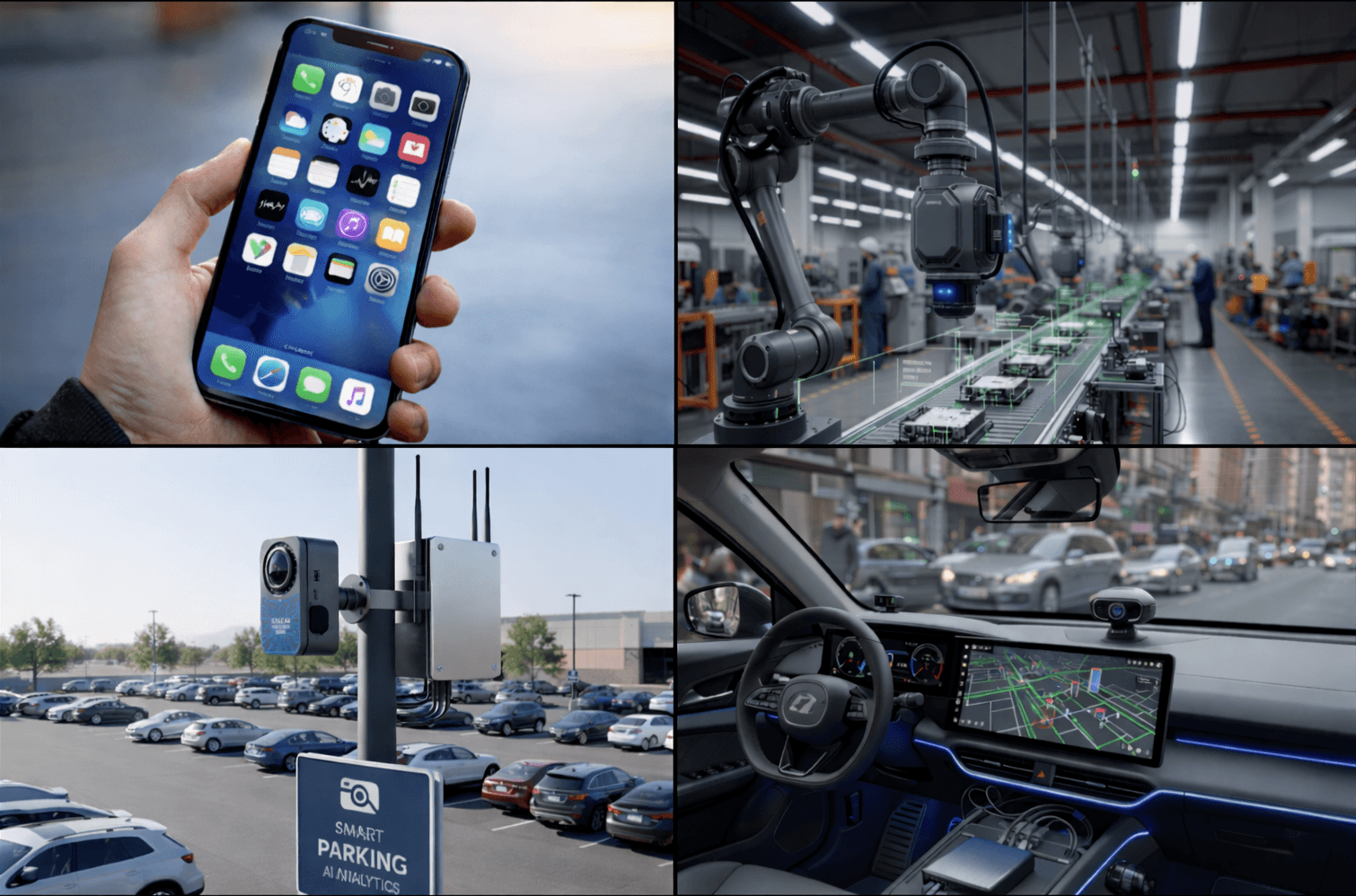
Smartphones
Cameras
In-vehicle devices
Machines on manufacturing lines
The idea is to place AI models within devices that are present on-site and allow them to make judgments there, which is Edge AI.
2. The Two Steps of AI Operation: “Learning” and “Inference”
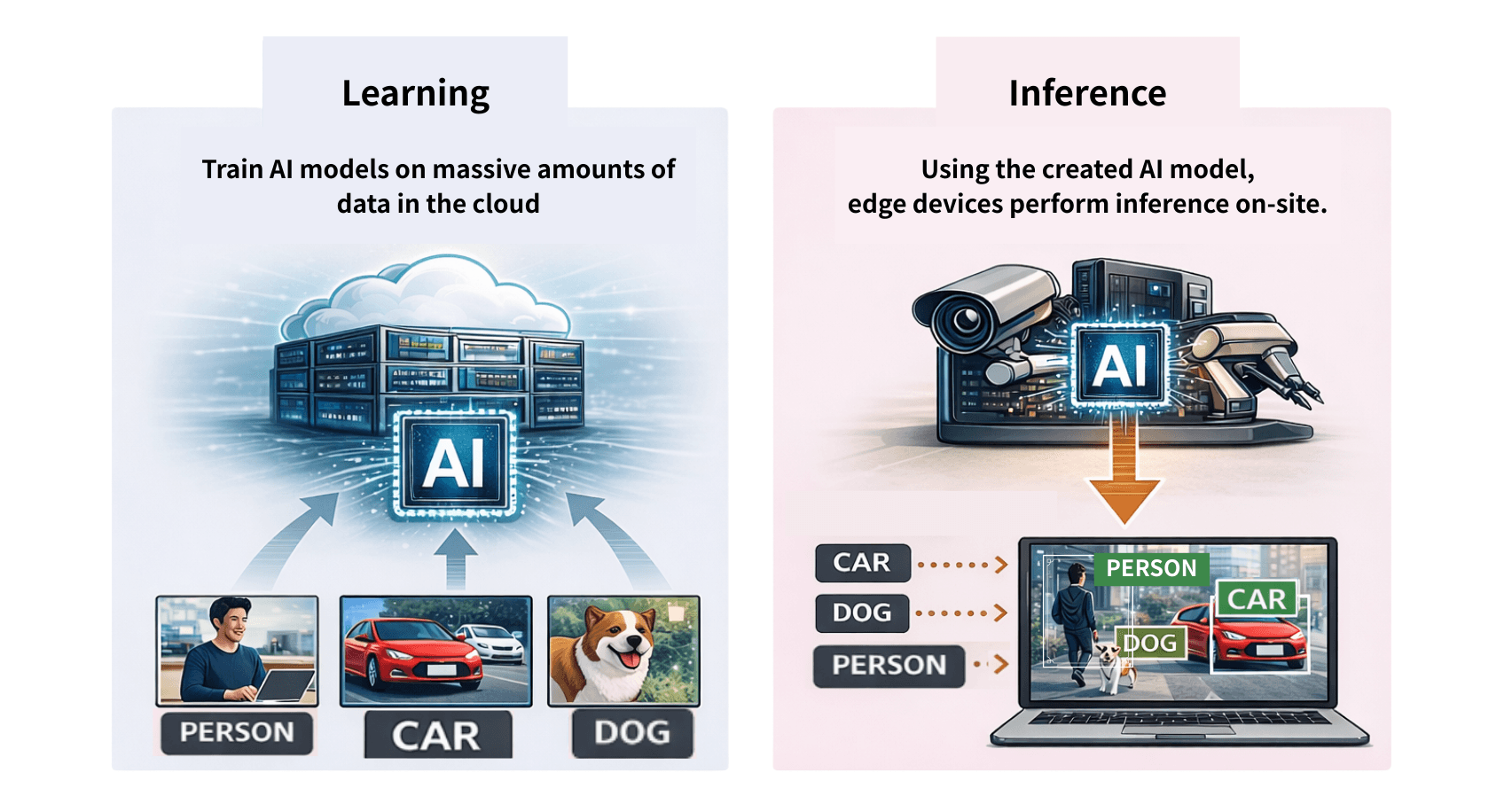
AI can be broadly divided into two steps.
Learning (Training)
Inference
Cloud AI is generally understood to perform both learning and inference on the cloud side.
On the other hand, Edge AI has a division of roles such that "learning" is done on the cloud side and "inference" is mainly done on-site devices.
3. The Structure of Edge AI: Learning in the Cloud and Inferring on the Ground
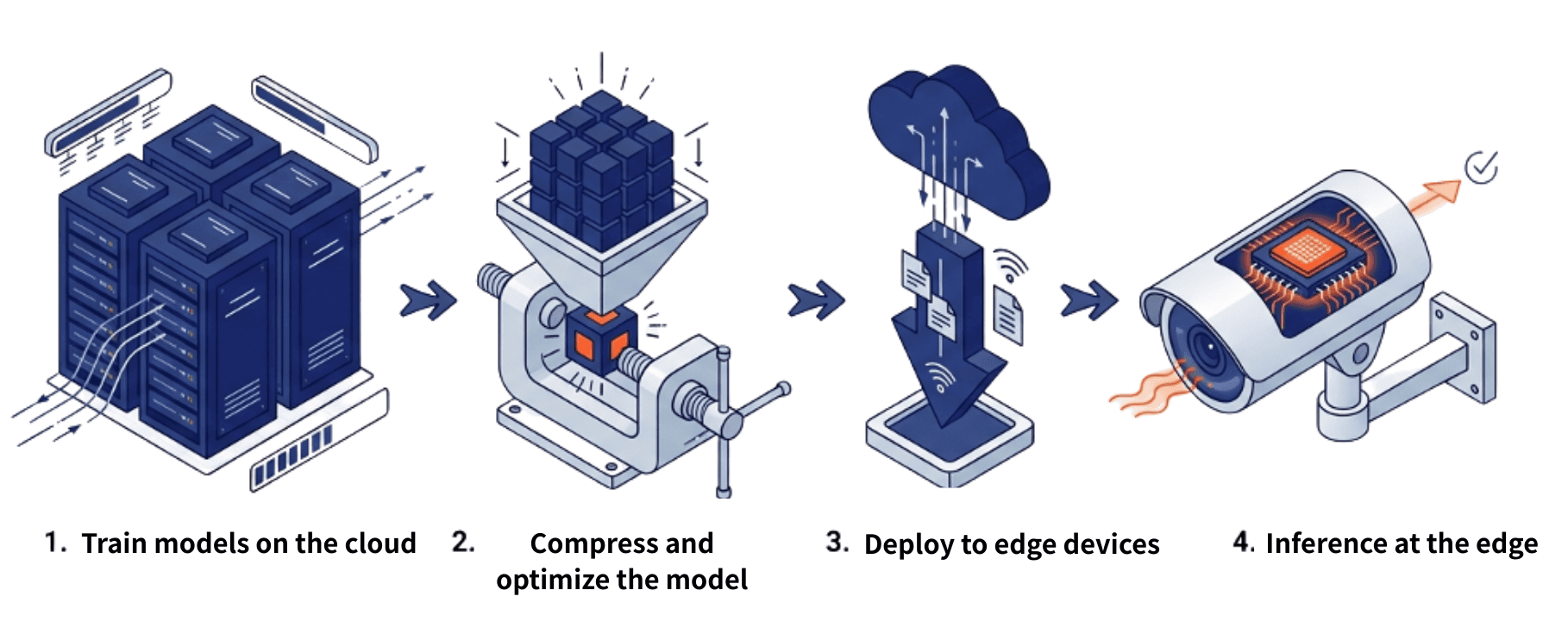
Following the concept of the slides, let me explain the flow of Edge AI in a bit more detail.
Train the model in the cloud (learning)
Compress and lighten the model
Deploy (distribute) to edge devices
Perform inference on-site
4. Why Edge AI is Gaining Attention: Three Points
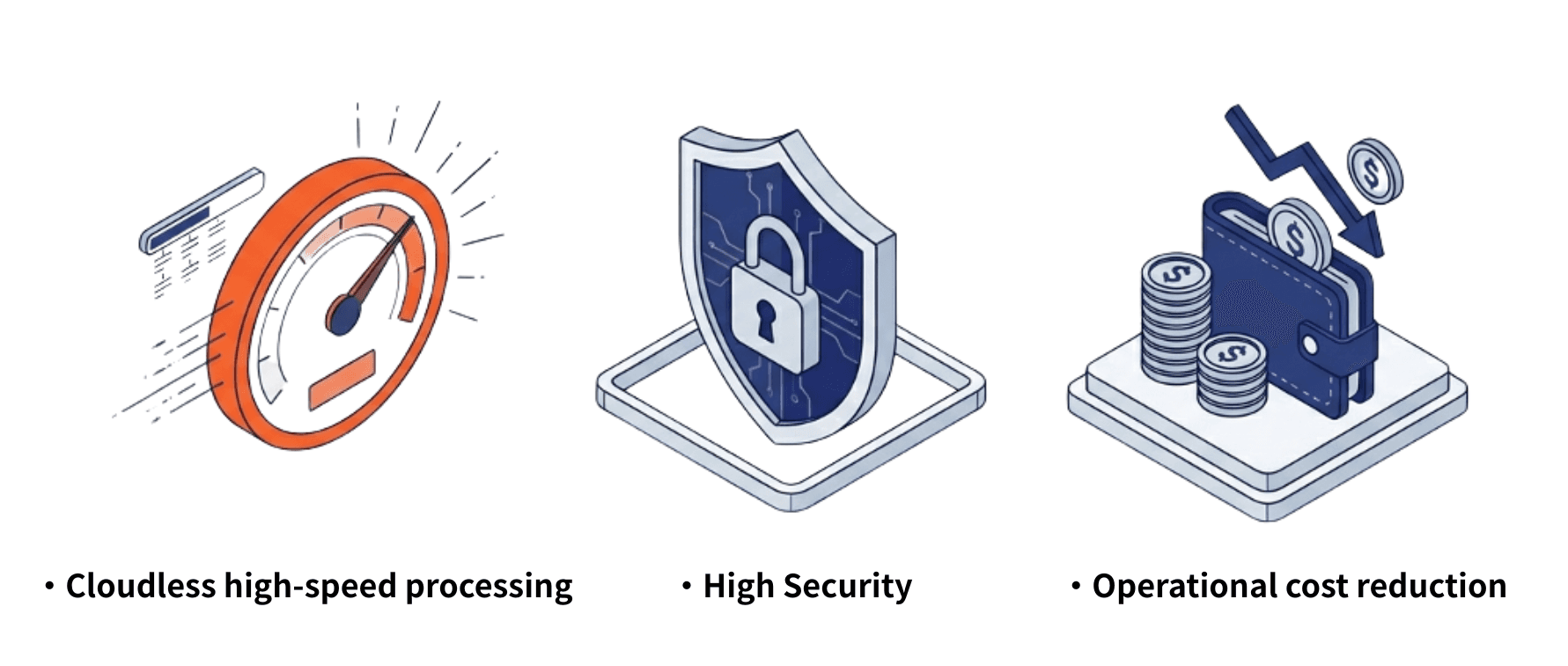
1. Cloudless High-Speed Processing (Real-time processing with minimal delay)
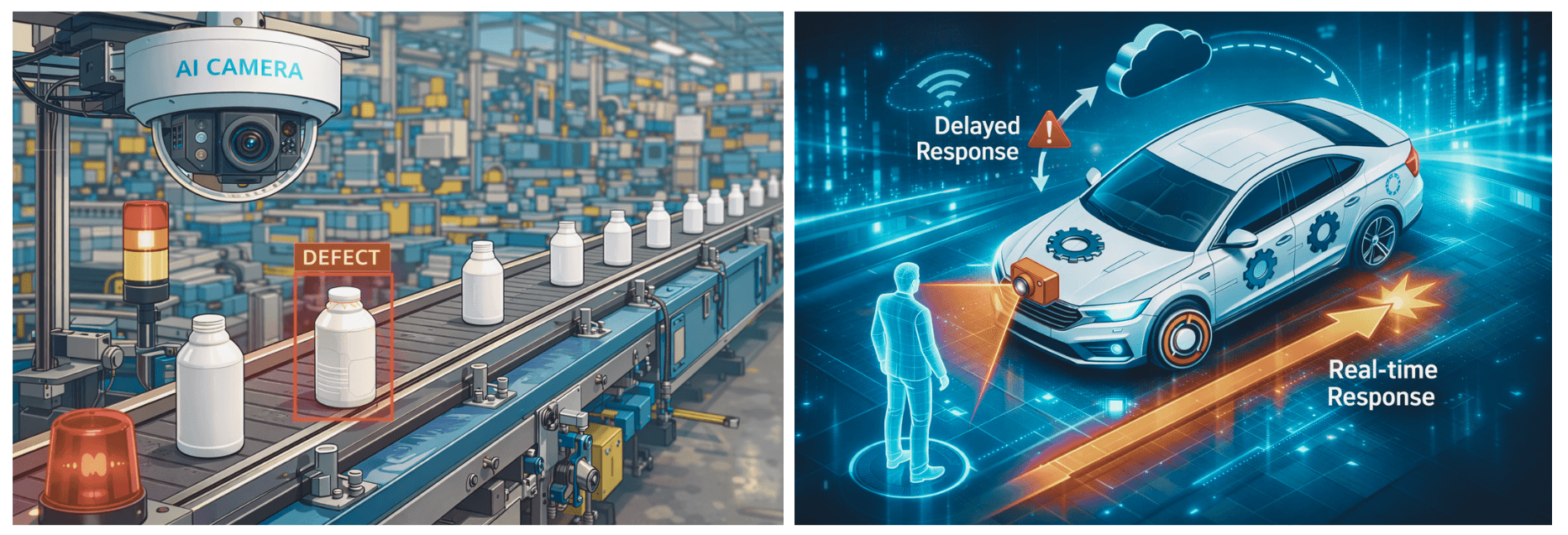
The biggest advantage of Edge AI is its immediacy.
Manufacturing sites
Self-driving cars
If data is sent to the cloud every time,
a time lag of "Sending → Processing → Receiving results" inevitably occurs.
In scenarios where quick judgment is crucial, this delay poses a significant risk.
With Edge AI, since everything can be completed within the device, delays can be minimized.
2. High Security and Improved Privacy
With Edge AI, data containing personal information is not sent to the cloud,
which has the advantage of being able to process data only within the devices.
Facial data used for facial recognition
Detailed operation data of vehicles
Medical and healthcare-related data
By being able to process such sensitive information without exposing it externally, the risk of information leaks and unauthorized access can be reduced.
The approach of "processing as much data as possible on-site without exposing it" will become even more critical in the future.
3. Reduction of Communication Costs
In sites where numerous surveillance cameras and IoT devices are installed, continuing to send all data to the cloud leads to huge communication volumes.
Surveillance cameras operating 24 hours a day, 365 days a year
Numerous sensors installed in factories, warehouses, and buildings
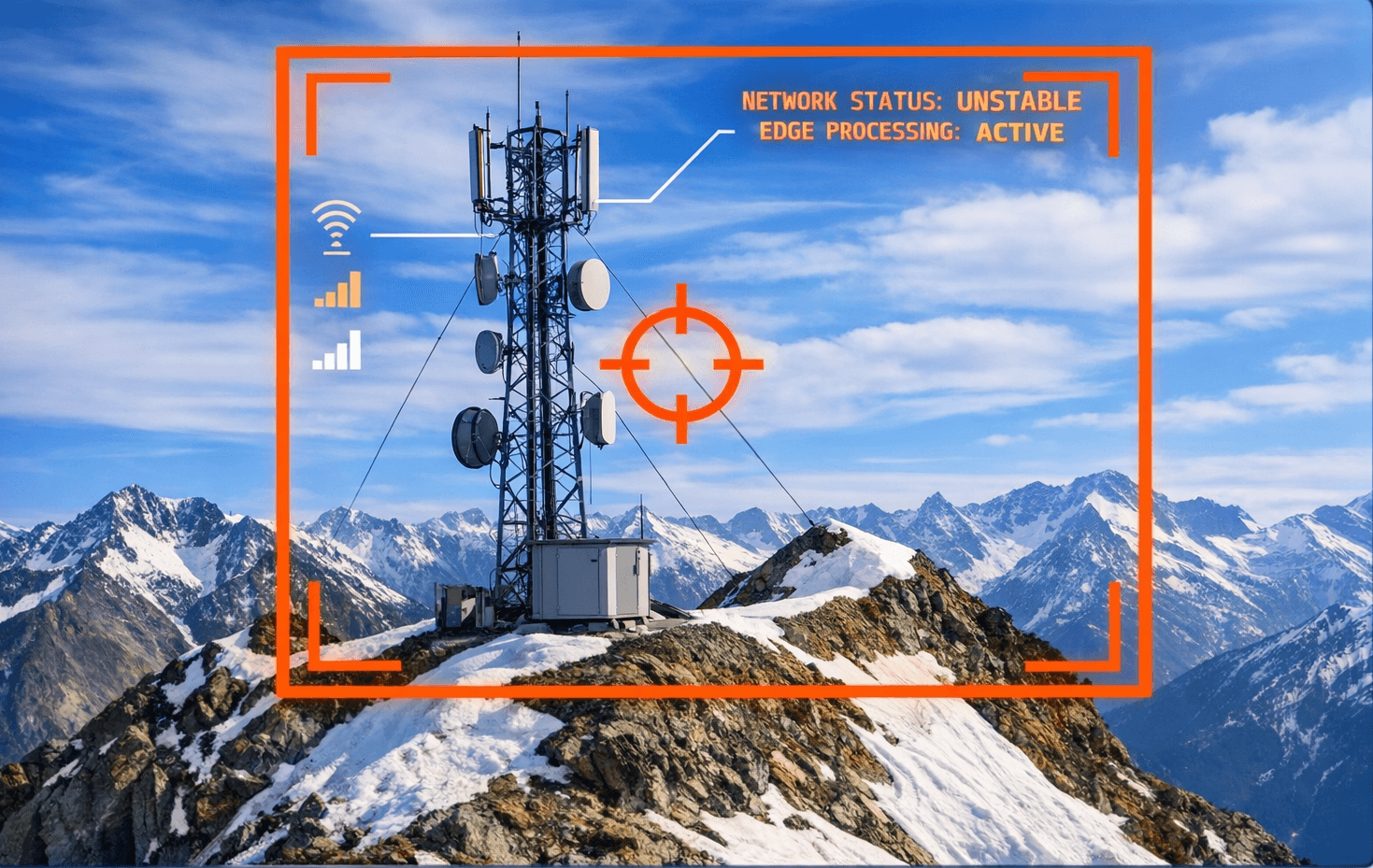
Unstable communication environments such as on ships, in mountainous areas, or remote regions
In such environments, raw data from images or sensors can be processed on the edge, and notifications can be sent only when abnormalities occur, or only the necessary summarized information sent to the cloud, thus significantly reducing communication volume and costs.
5. Typical Scenarios Where Edge AI is Active
Edge AI is active in the following scenarios.
Its value is realized in places where quick and smart judgments are required without relying too much on the cloud.
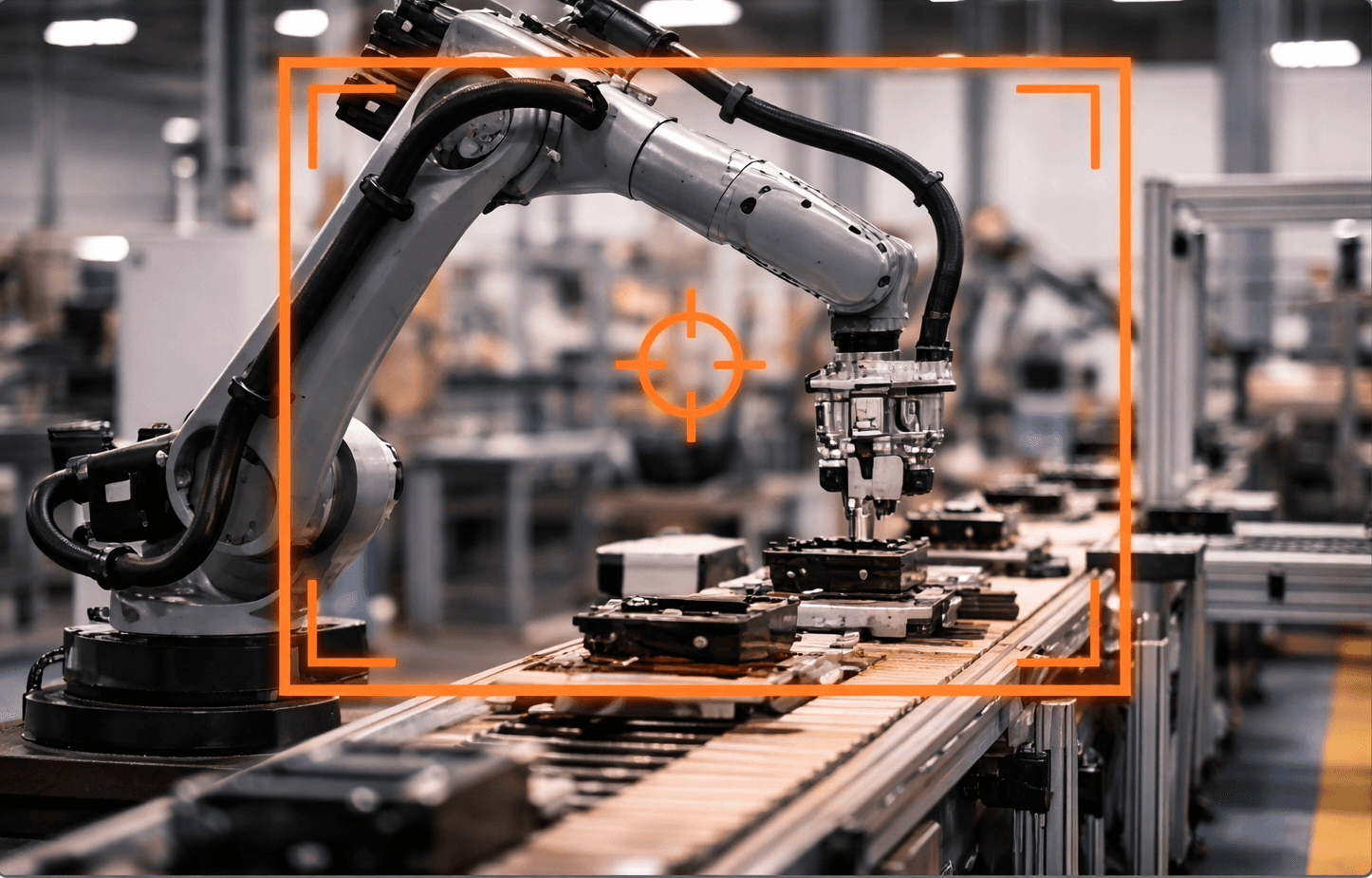
Manufacturing Sites: Defective product detection, line monitoring, worker safety confirmation, etc.
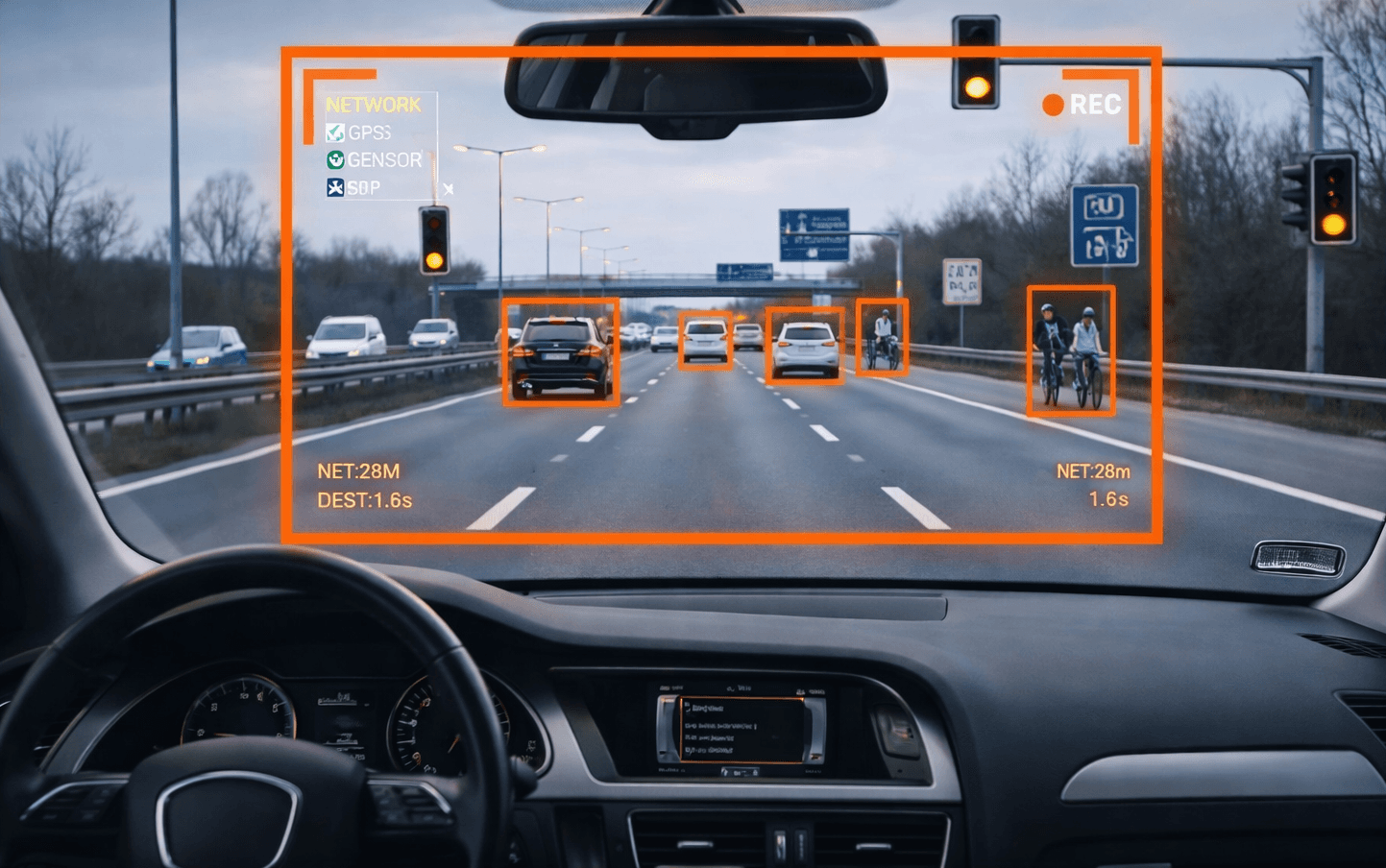
Autonomous Driving and In-Vehicle Systems: Pedestrian detection, distance management, dangerous driving detection, etc.
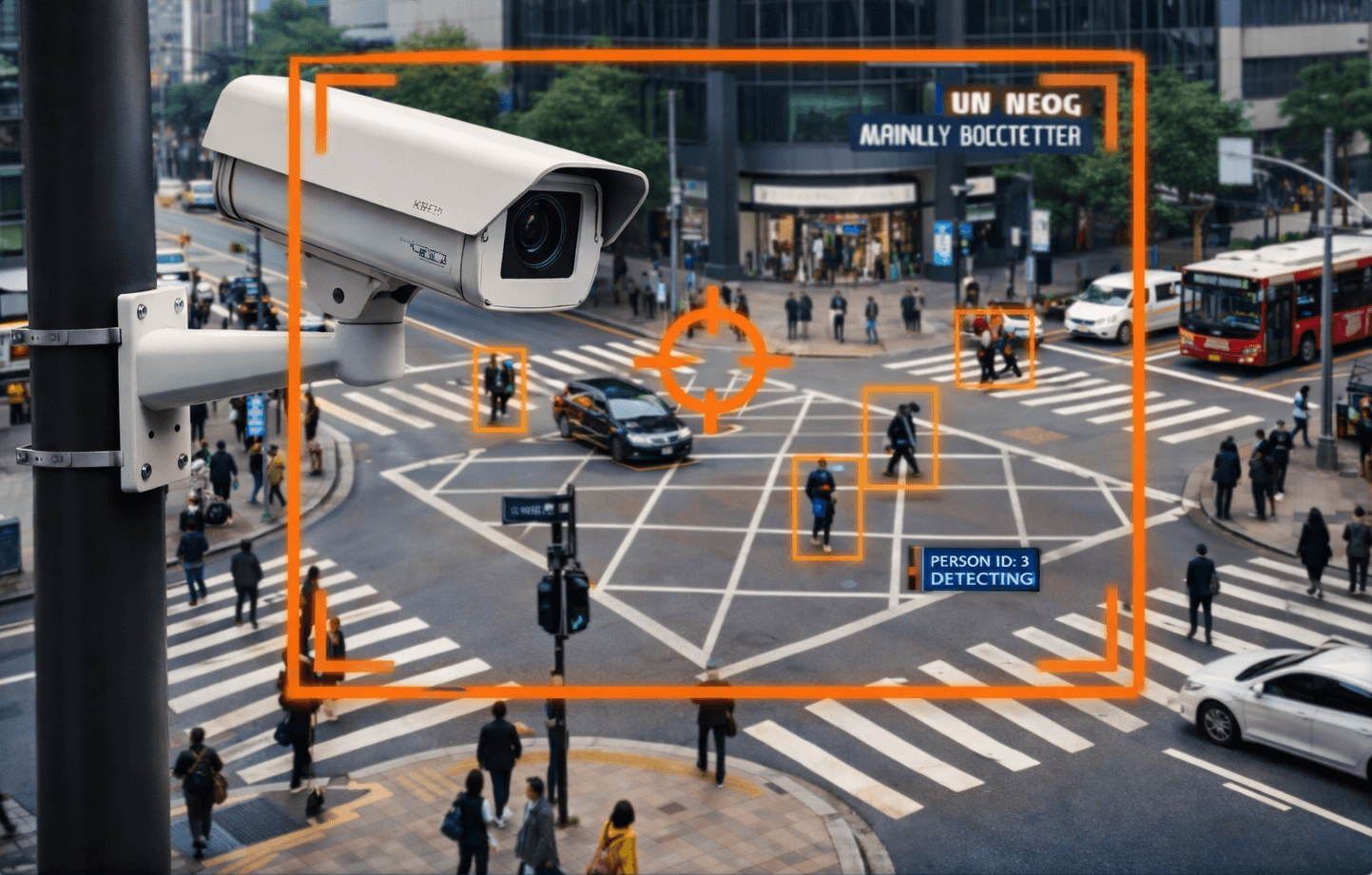
Smart Cities and Infrastructure Monitoring: Visualization of traffic volume and congestion, human flow analysis, detection of danger areas, etc.
Sites with Unstable Communication: Monitoring of facilities and infrastructure in ships, mountainous areas, and remote regions, etc.
Conclusion: The “Best of Both Worlds” of Cloud and Edge is the Future of AI
To summarize the points:
Edge AI is an AI that performs inference on site devices rather than the cloud
The flow is 【Learning in the Cloud → Lightweight the Model → Deploy to Edge Devices → Perform Inference on Site】
The reasons for its attention are...
Future AI systems will blend mass data learning in the cloud and immediate judgment at the edge, and this combination of Cloud AI and Edge AI will become the mainstream.