The Streets of the Philippines: Things That Change and Things That Don't
Where do you think these soaring skyscrapers piercing the blue sky are located? (Figure 1)
They are found in a newly developed area of Ayala Triangle Gardens, located in Makati City, the capital of the Philippines and part of Metro Manila. The tower on the right is a 40-story office building, while the left tower is a 24-story five-star hotel. This was taken during a business trip to the Philippines in September 2021 by two staff members from Zenmov amidst the COVID-19 pandemic.
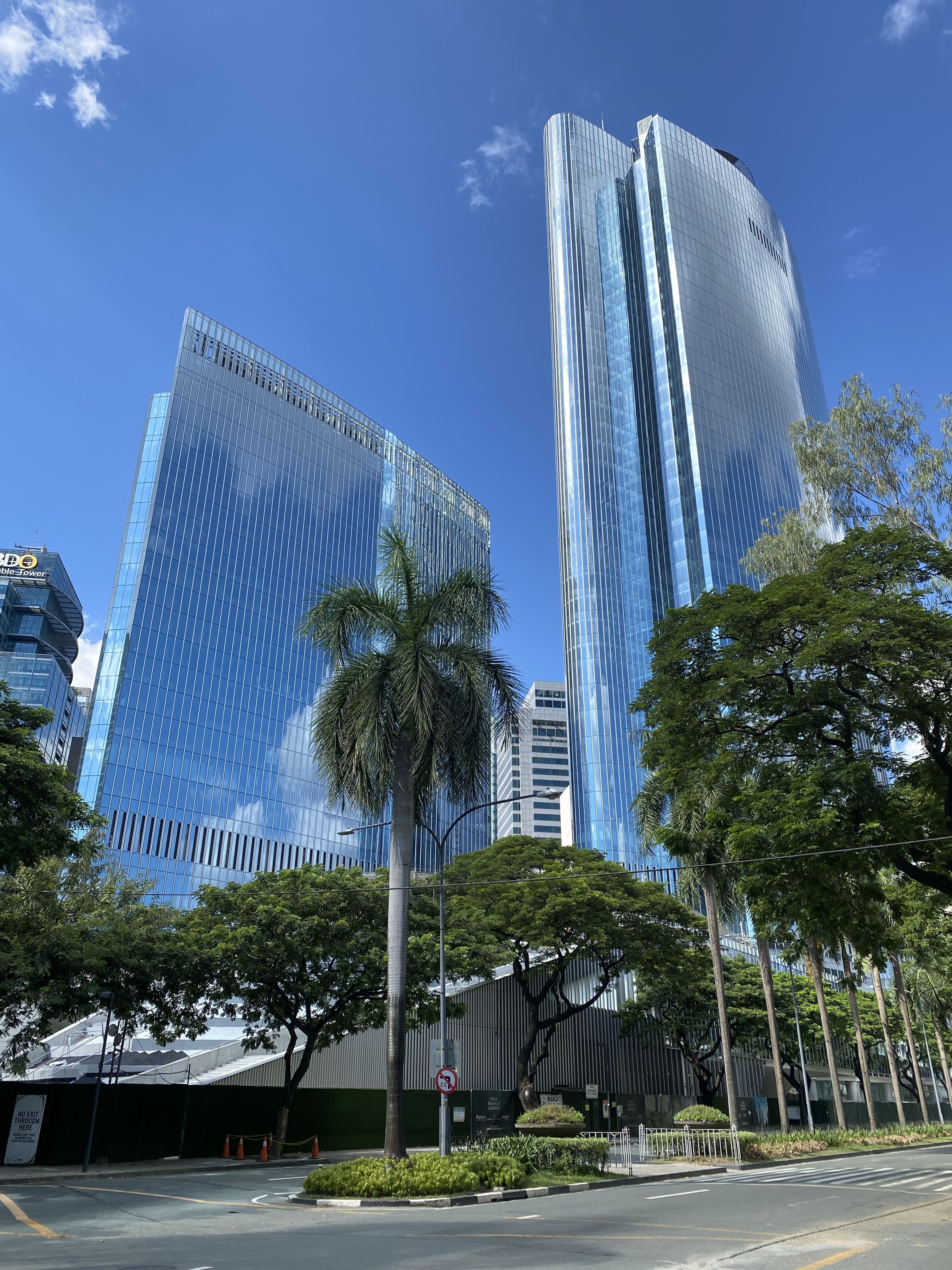
Figure 1 Ayala Triangle Gardens
Source: Taken by Zenmov Staff
When people think of the Philippines, they often have a strong image of it as a poor country with slums... but it is developing every day. The average age of Filipinos is 26, while in Japan, it is 47. The Philippines is a young and rapidly growing country, and each time I visit on business, the cityscape changes.
The 'Ayala' in Ayala Triangle Gardens, which has its skyscrapers, is named after a Philippine conglomerate that operates in various sectors including retail, education, real estate, banking, telecommunications, water infrastructure, renewable energy, electronics, information technology, automobiles, healthcare, management, and BPO.
The real estate division that developed this area is Ayala Land, one of the major developers in the Philippines, and one of the most spotlighted cities in the Philippines is Bonifacio Global City (BGC), located in the northeastern part of Taguig City, adjacent to Makati City (Figure 2). The area that BGC occupies was originally Fort McKinley, a US military base, which was returned to the Philippines in 1949 and renamed Fort Bonifacio. Since 1999, the Bases Conversion and Development Authority (BCDA) has been selling the land for development purposes for office areas, and Ayala Land and Campos Group’s Evergreen Holdings carried out the development. The current townscape of BGC, lined with modern high-rise office buildings, is orderly and beautiful, making one feel disoriented as to where they are (Figure 3).
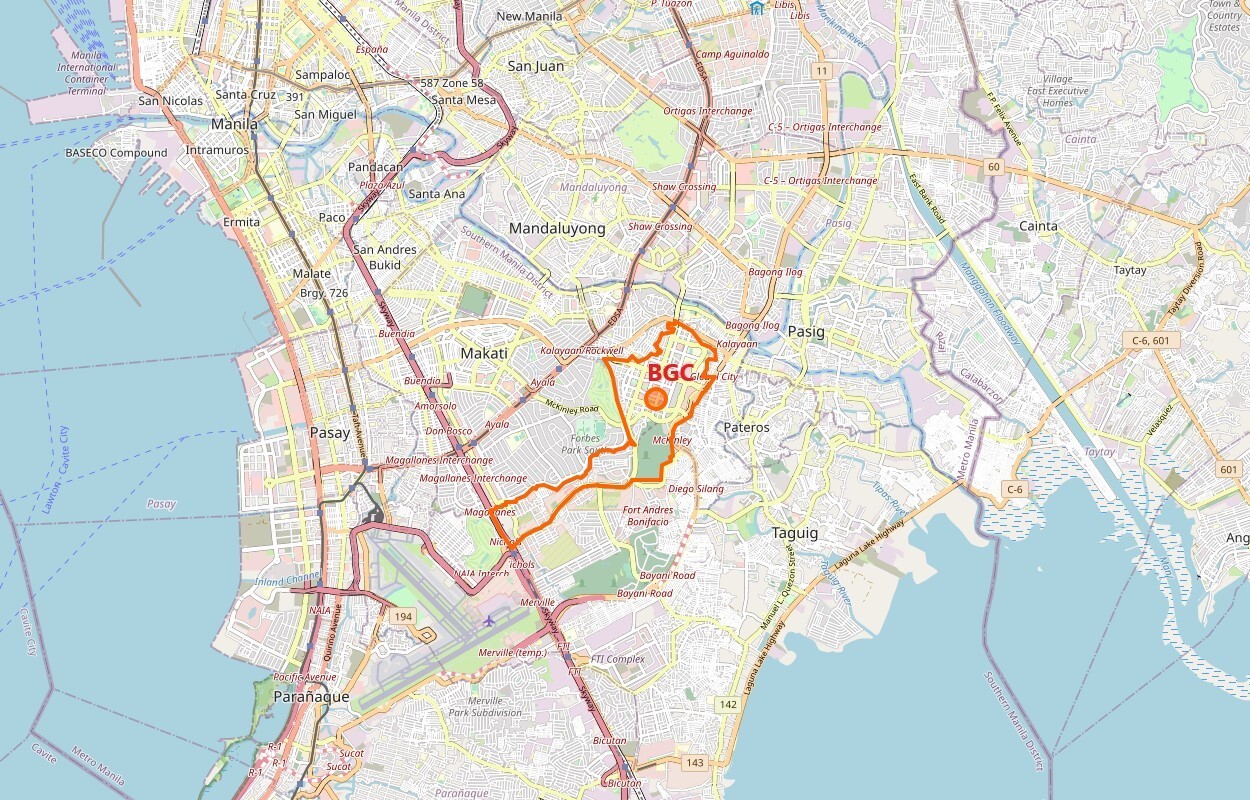
Figure 2 Location of BGC
Source: OpenStreetMap
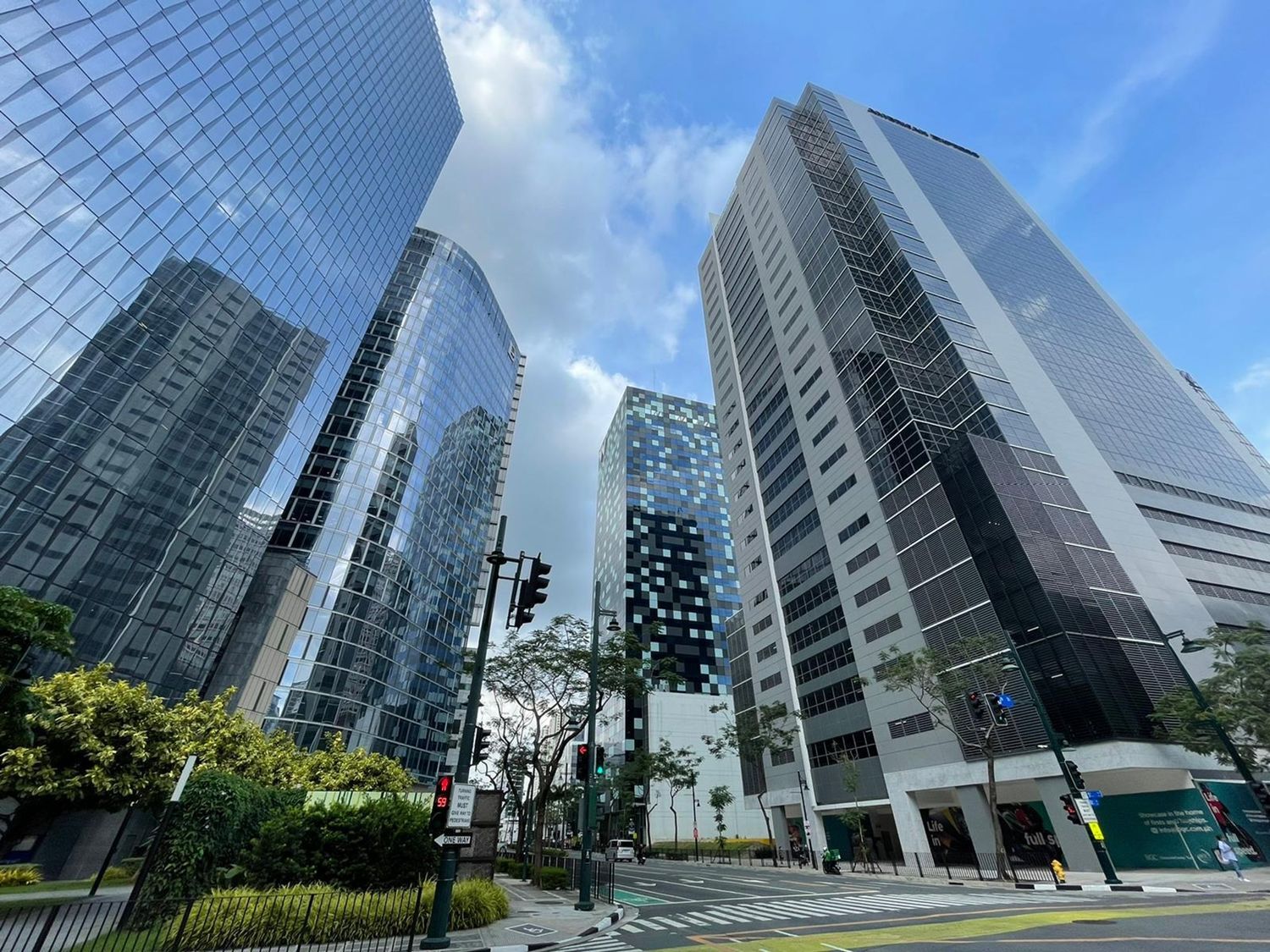
Figure 3 Townscape of BGC: ① High-rise Buildings
Source: Taken by Zenmov Staff
BGC covers an area of 240 hectares, accounting for 5% of the entire Taguig City. As of 2020, the population was 11,912. The use of tricycles and jeepneys, which are typical in the Philippines, is prohibited within the area. As a result, the air is clean, and it maintains a quiet atmosphere that's free from the chaos typical of the Philippines. The roads and sidewalks are well-maintained, and there are office buildings and shopping malls. Security is good, which has led to residences for expatriates from various countries, along with ample parks and plazas (Figure 4).
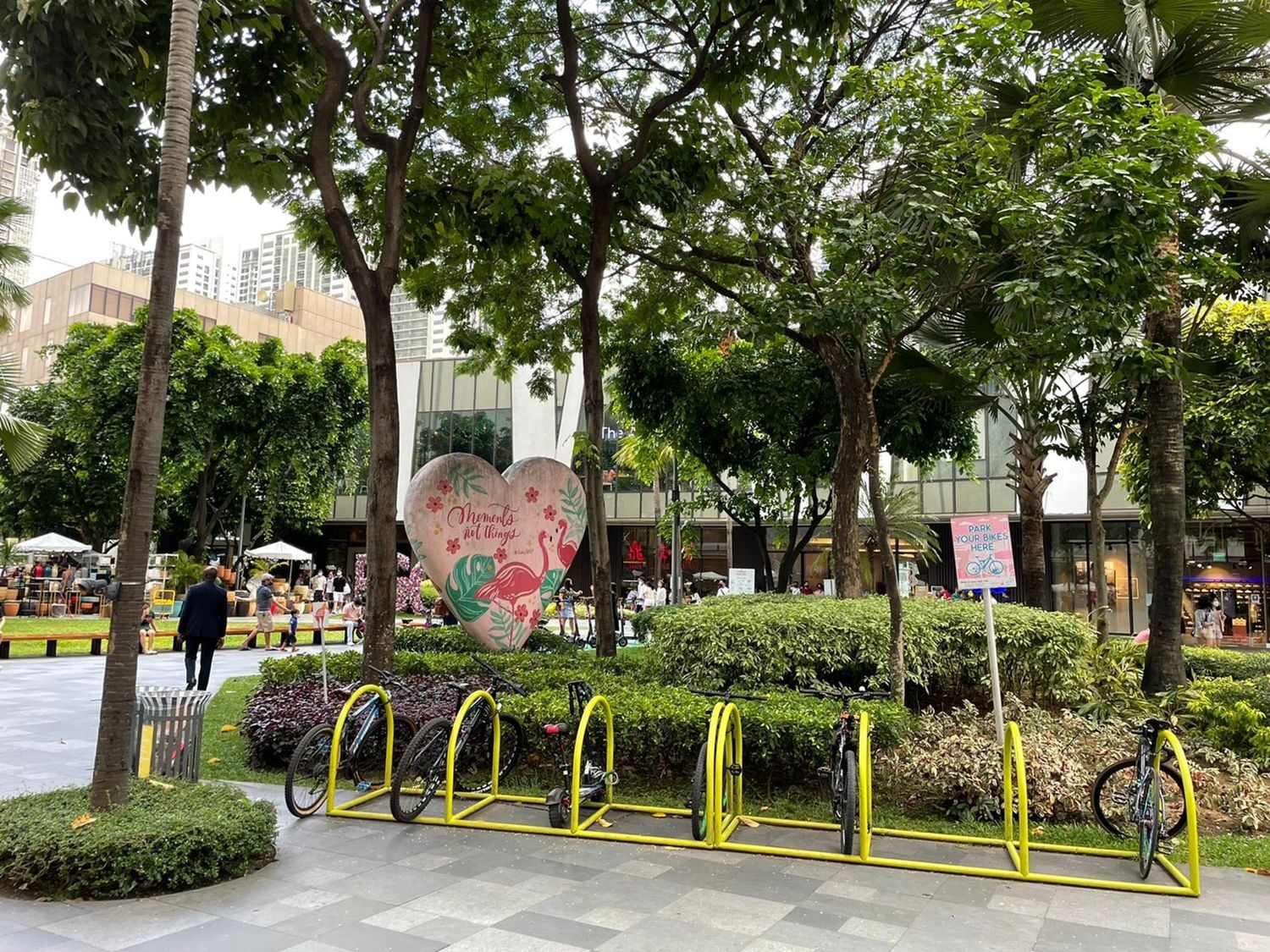
Figure 4 Townscape of BGC: ② Plentiful Green Spaces
Source: Taken by Zenmov Staff
However, one cannot help but feel that BGC is still in the Philippines... and the traffic issue makes this painfully clear. Transportation within the area is by private car, shuttle buses, rental bikes, or on foot, but it usually takes about 10 minutes by car to travel to the nearby business hub of Makati City, which can take up to 40 minutes during peak morning and evening hours.
At Zenmov, which operates MaaS business in Intramuros in Manila City and Pasay City, we often think about what kind of convenient, environmentally friendly, and fashionable transportation services could be designed for the beautiful streets of BGC.
As the Philippines undergoes daily changes, let me share one unchanging view at the end. The sunset over Manila Bay (Video 1). I have visited and stayed in the Philippines countless times, but this view never changes. When I see this sunset, I always feel that I am in the Philippines.
Video 1: Sunset over Manila Bay
Source: Taken by Zenmov Staff