Micro Tourism & Zero Carbon Drive (1)
Introduction
I hear news related to electric vehicles almost every day recently.
For example,
By 2030, the number of EVs is expected to increase to 145 million worldwide. (https://ev2.nissan.co.jp/BLOG/654/)
Countries other than Japan are also reportedly implementing the following policies:
United Kingdom : Banning the sale of new gasoline and diesel cars by 2030
France: Banning the sale of fossil fuel vehicles by 2040
China : Planning to limit new vehicle sales to environmentally friendly vehicles (such as EVs and hybrids) by 2035
United States : California plans to make all new vehicle sales in the state zero-emission vehicles by 2035
Canada : Banning the sale of new vehicles equipped with internal combustion engines, such as gasoline and diesel vehicles, by 2035
While I have been hearing opposing opinions about this, overall society seems to be moving towards the popularization of electric vehicles, so we are also conducting various research through projects we are involved in.
Additionally, there is a concept called micro tourism proposed by Hoshino Resorts. Specifically, it refers to "short-distance tourism to local or nearby areas within about one hour from home." Furthermore, according to the company's website, there was also the following message.
I strongly agree with discovering attractive experiences within a distance that can be reached from home in 1 to 2 hours, and this aligns with the concept of zero travel (making CO2 emissions from EVs and FCVs effectively zero) that we are implementing in the project we are participating in.
By using an EV for this micro tourism, I decided to verify whether it can provide comfortable transportation or whether there are challenges.
Concerns about Riding in an EV
However, there are concerns associated with EVs, especially for paper drivers.
- I might run out of charge partway. I'm anxious because it might happen suddenly.
- I don't know how to charge. It's a hassle to think about it.
- I don't know where charging facilities are located. I'm not sure if I can make it while driving.
- I'm worried that the operation is different from gasoline vehicles and that I might get confused.
- Charging might take a long time. Having to charge multiple times seems time-consuming. I don't like waiting.
There are various reasons for not trying out an EV, but I will actually report on the true experience after a paper driver tries driving.
Vehicle Used = Tesla Model 3 (Long Range)
I used the Tesla Model 3 (Long Range), which is my company's company car.
The travel distance with a full charge (catalog value) is 580 km.
However, this time I started with a low charge remaining of 159 km.
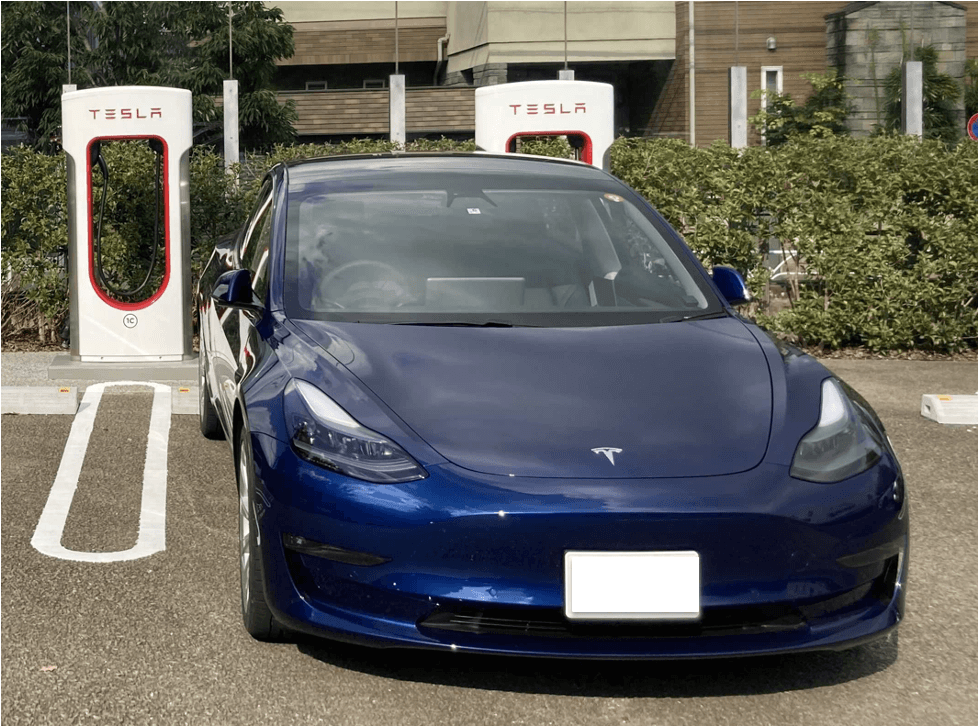
Destination = To the Base of Mount Fuji (Oshino Hakkai)
I decided to go from the parking lot location (Shinagawa Ward) to Oshino Hakkai. After all, it's Mount Fuji.
However, since Mount Fuji is a bit far, I aimed for this view before it.
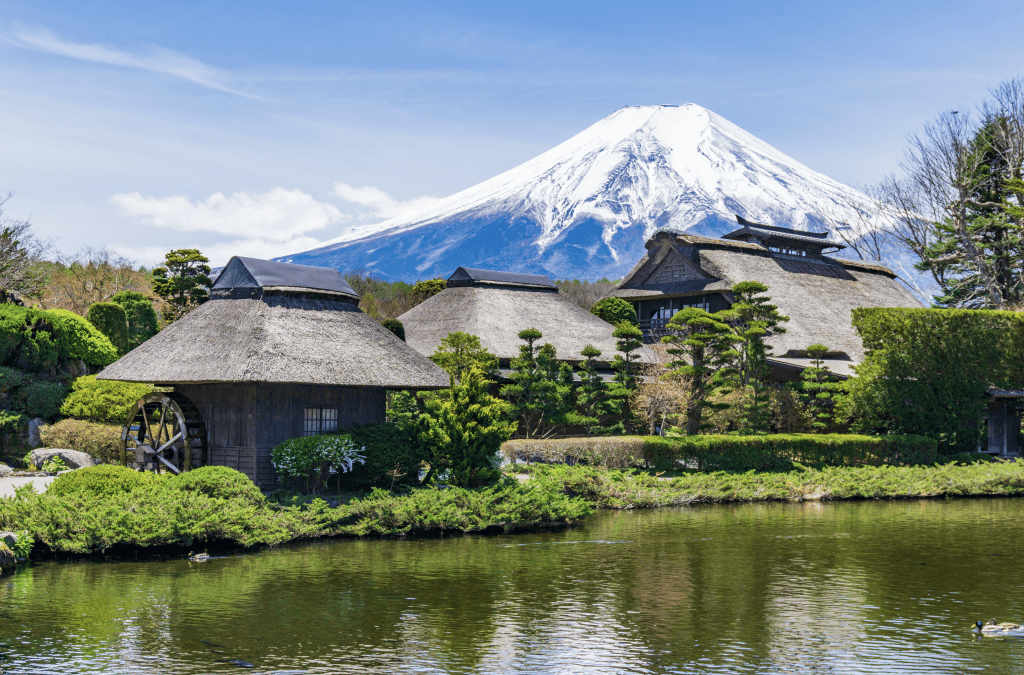
Source: From Adobe Stock
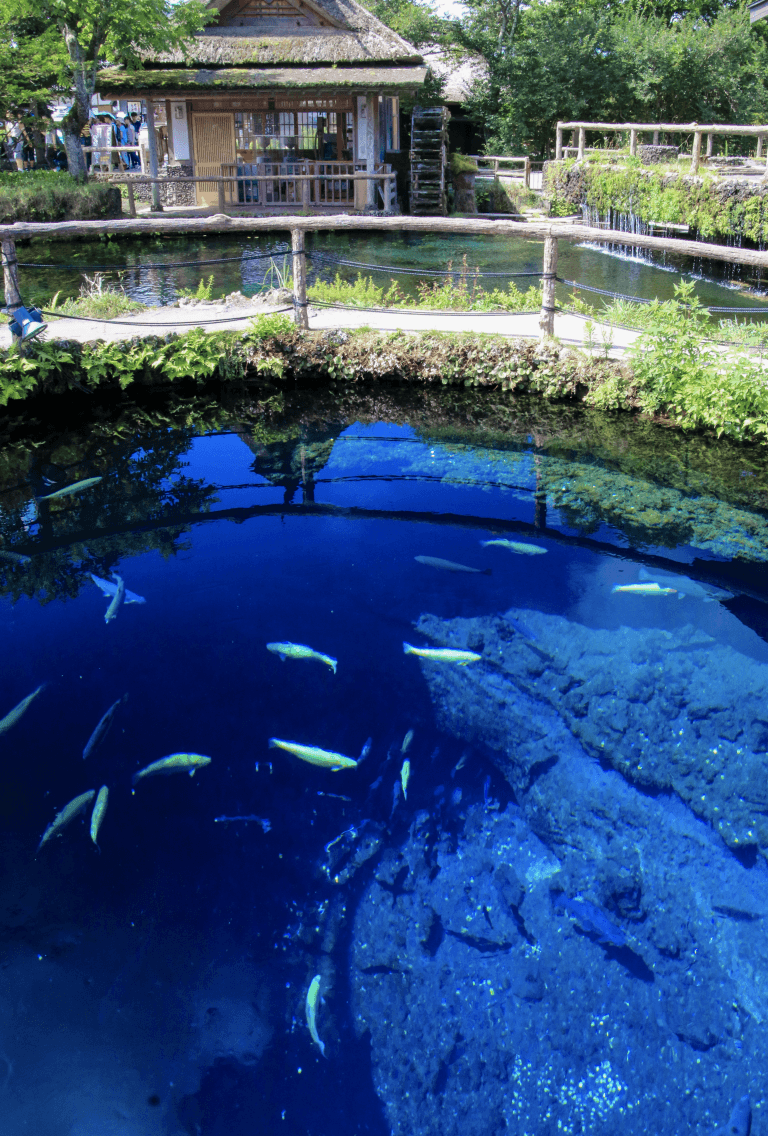
Source: From Adobe Stock
According to Google Maps, it takes about 1 hour 30 minutes to 2 hours. Here is the challenge.
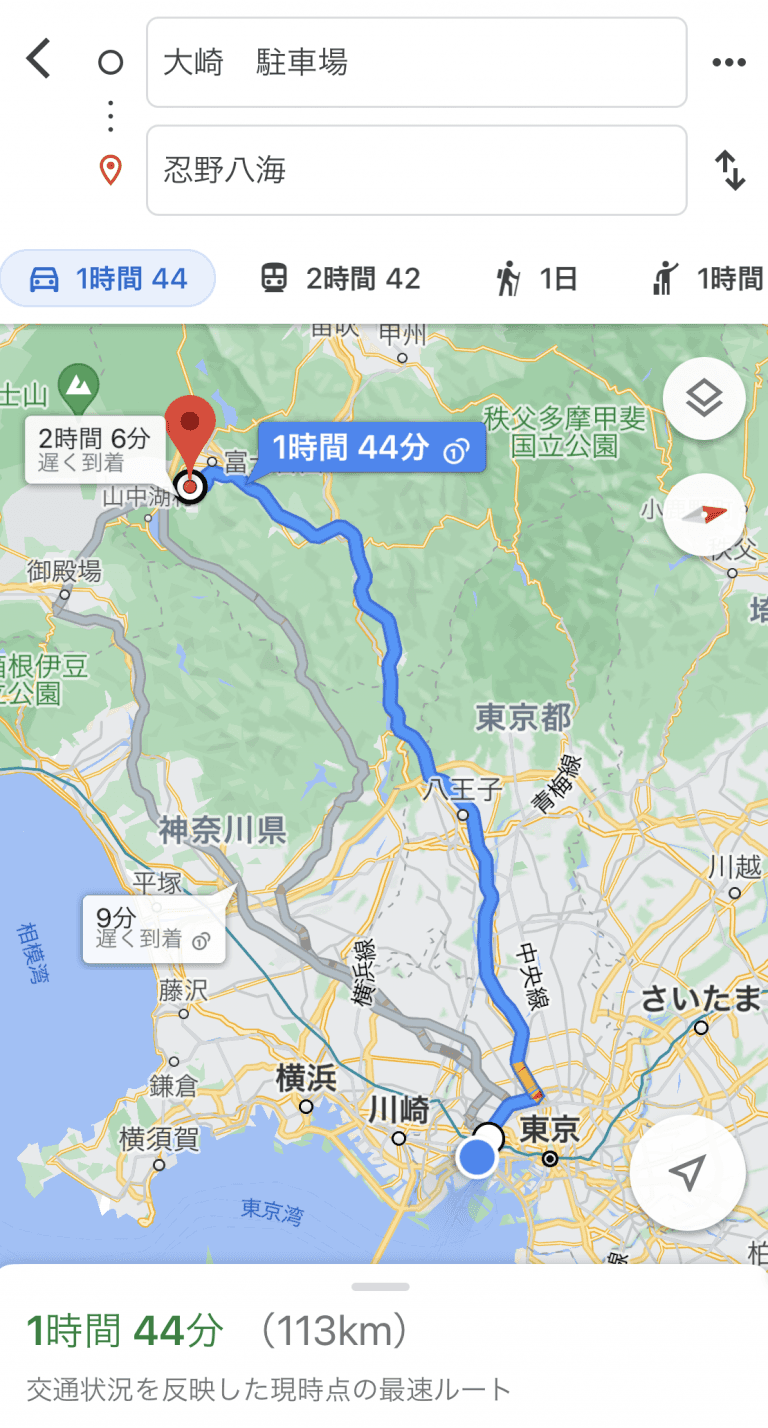
Map: Google Maps
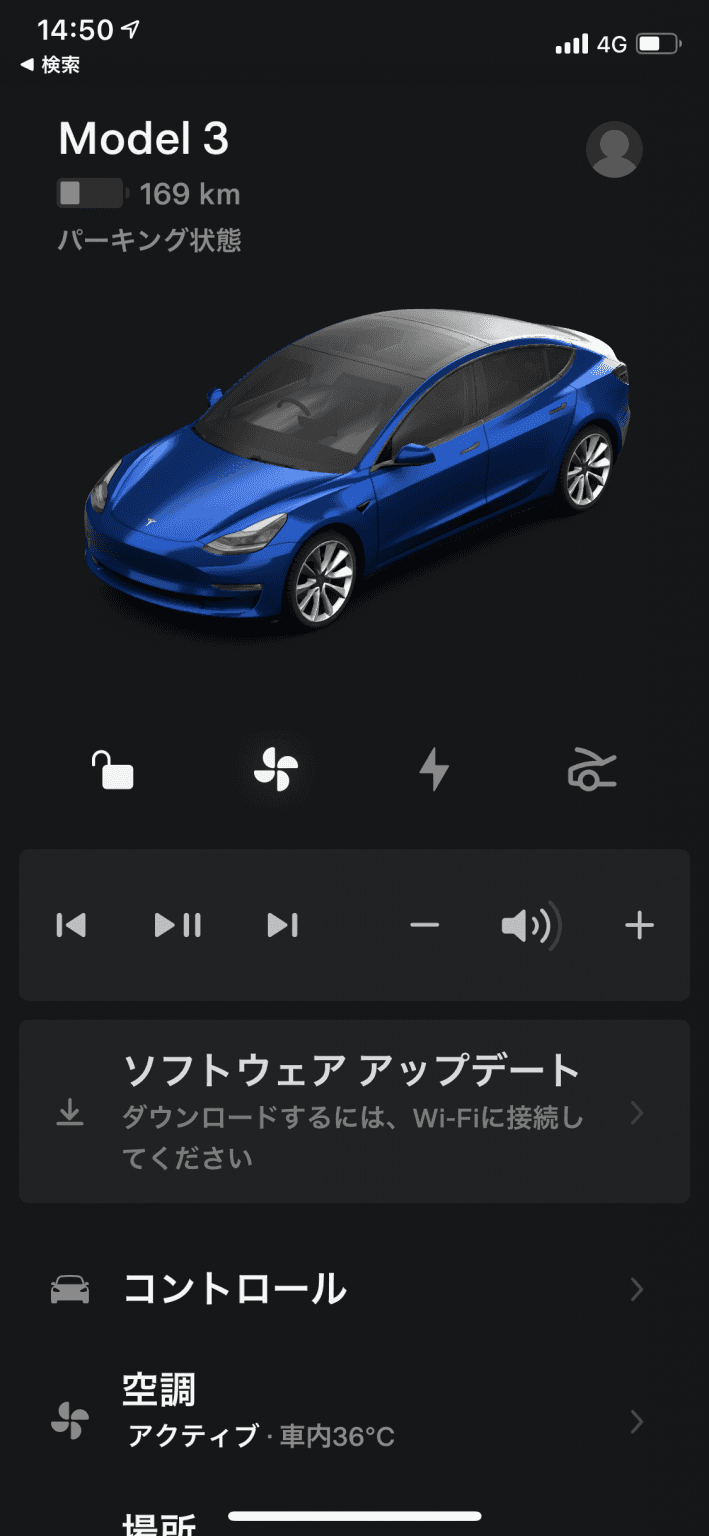
Tesla's App
The car's door lock is opened via the app. The key icon on the left is that.
Navigation
With Tesla's standard navigation, you can see the guidance for charging locations, but it's a bit hard to read.
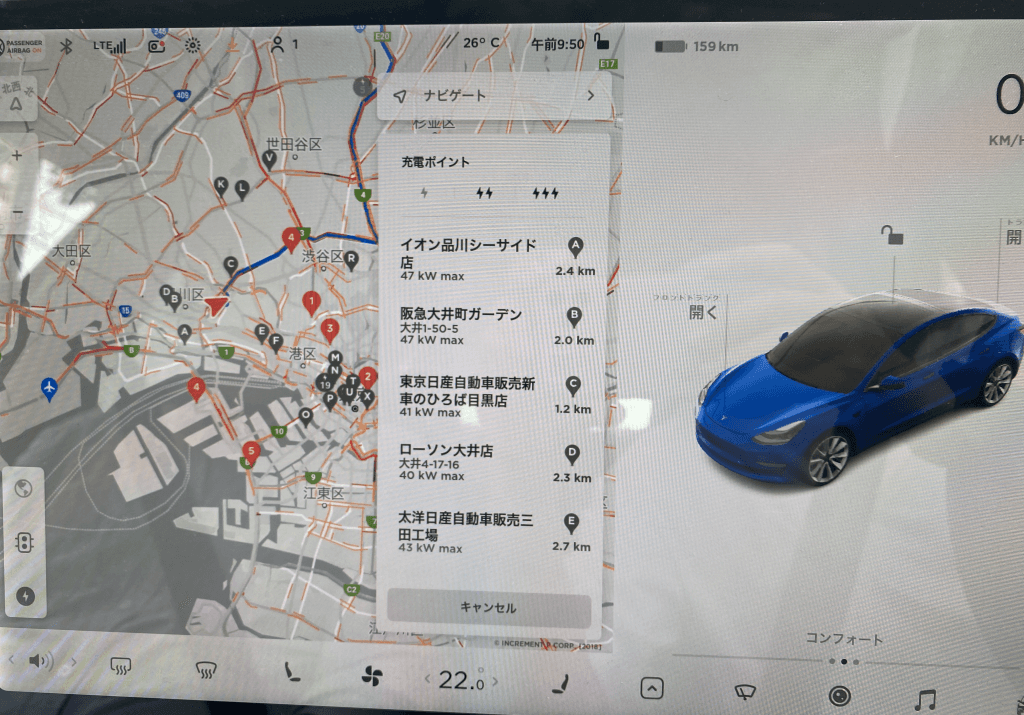
While the navigation itself has no problem providing guidance in general areas,
when driving on the urban expressway, it misleads you into thinking you are on local roads, and although the sign should indicate going left, it instructs you to go right.
When driving on the urban expressway, it misunderstands and provides guidance as if on local roads.
The signs should indicate going left, but it instructs you to go right.
I felt that it often provides incomprehensible guidance, so caution is necessary.
Charging
I heard that most service areas and parking areas have charging stations, so I decided to charge on the highway.
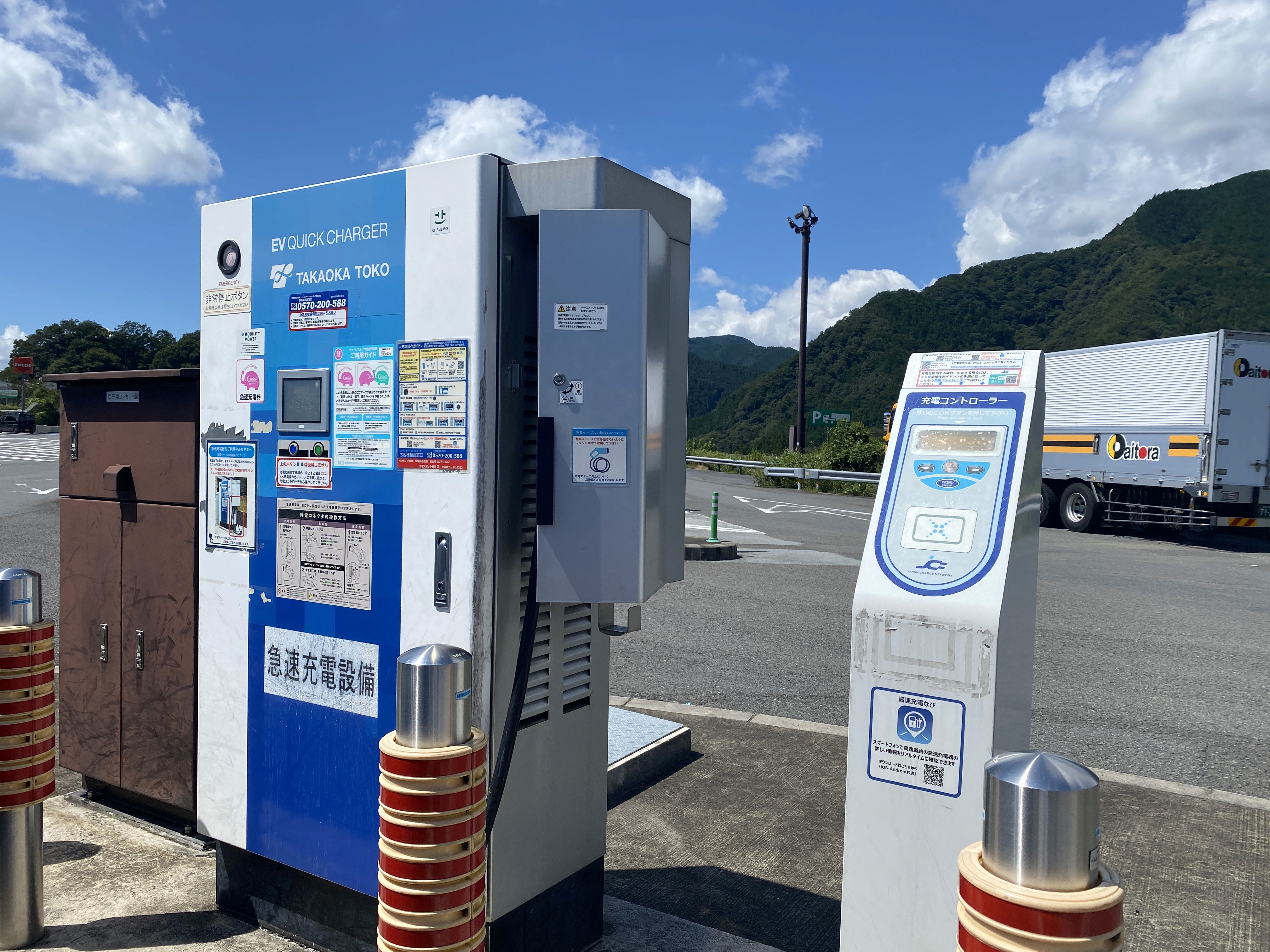
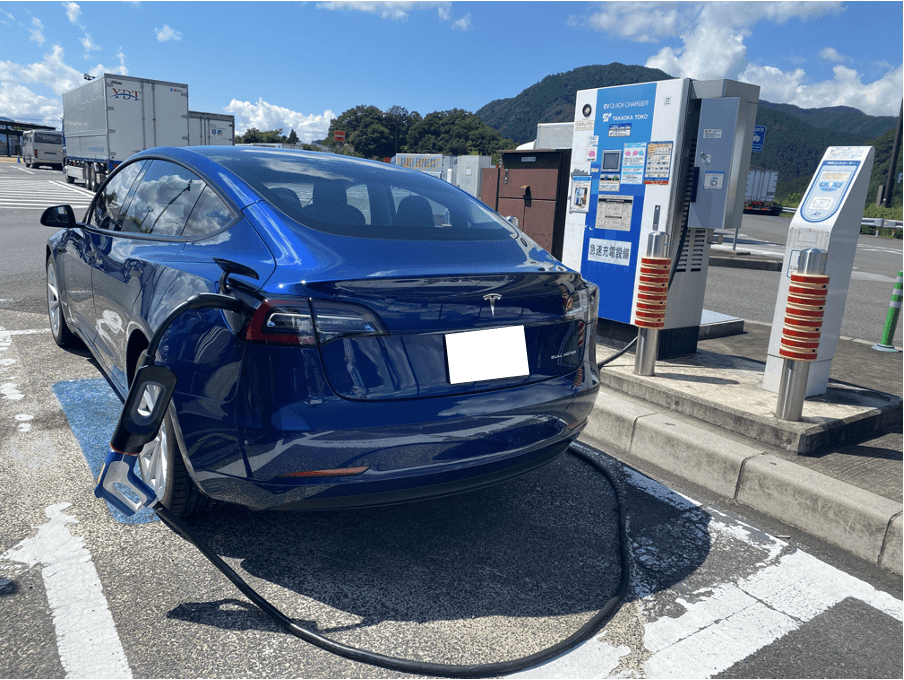
Even while stuck in highway traffic, I charged at the Tangogezaka service area. It seems there is only one station on the descent.
The display on the charging controller (box on the right in the photo) is almost unreadable due to the sun. This is quite tough. A colleague mentioned that it seems to be a similar situation elsewhere. I wonder if many people get lost in this? I hope for improvements in charging infrastructure.
Since each charge takes about 30 minutes, if other cars are already using it, you may have to wait. On the way back, I actually found that there was a prior user at the charging facility, and wait time occurred.
Charging Costs
When I arrived at the Tangogezaka service area, I had about 95 km remaining.
After 30 minutes of charging, the travel distance was: 189 km
Charging amount: 17.6 kWh,
Cost: 496 yen
In other words, about 496 yen for 100 km
Comparison with Gasoline Costs
For a gasoline vehicle with a fuel efficiency of 10 km / L, the gasoline cost is 150 yen / L x 100 km / 10 km = 1,500 yen
For a gasoline vehicle with a fuel efficiency of 20 km / L, the gasoline cost is 150 yen / L x 100 km / 20 km = 750 yen
* Gasoline prices reference (average price as of September 11, 2021): https://gogo.gs/13
Since charging for 100 km costs about 500 yen, it seems to be approximately 1/3 of the gasoline cost.
According to Tesla's website, using Tesla's supercharger results in electricity costs being about 1/3 less than gasoline, so it seems reasonable to consider that as a guideline.
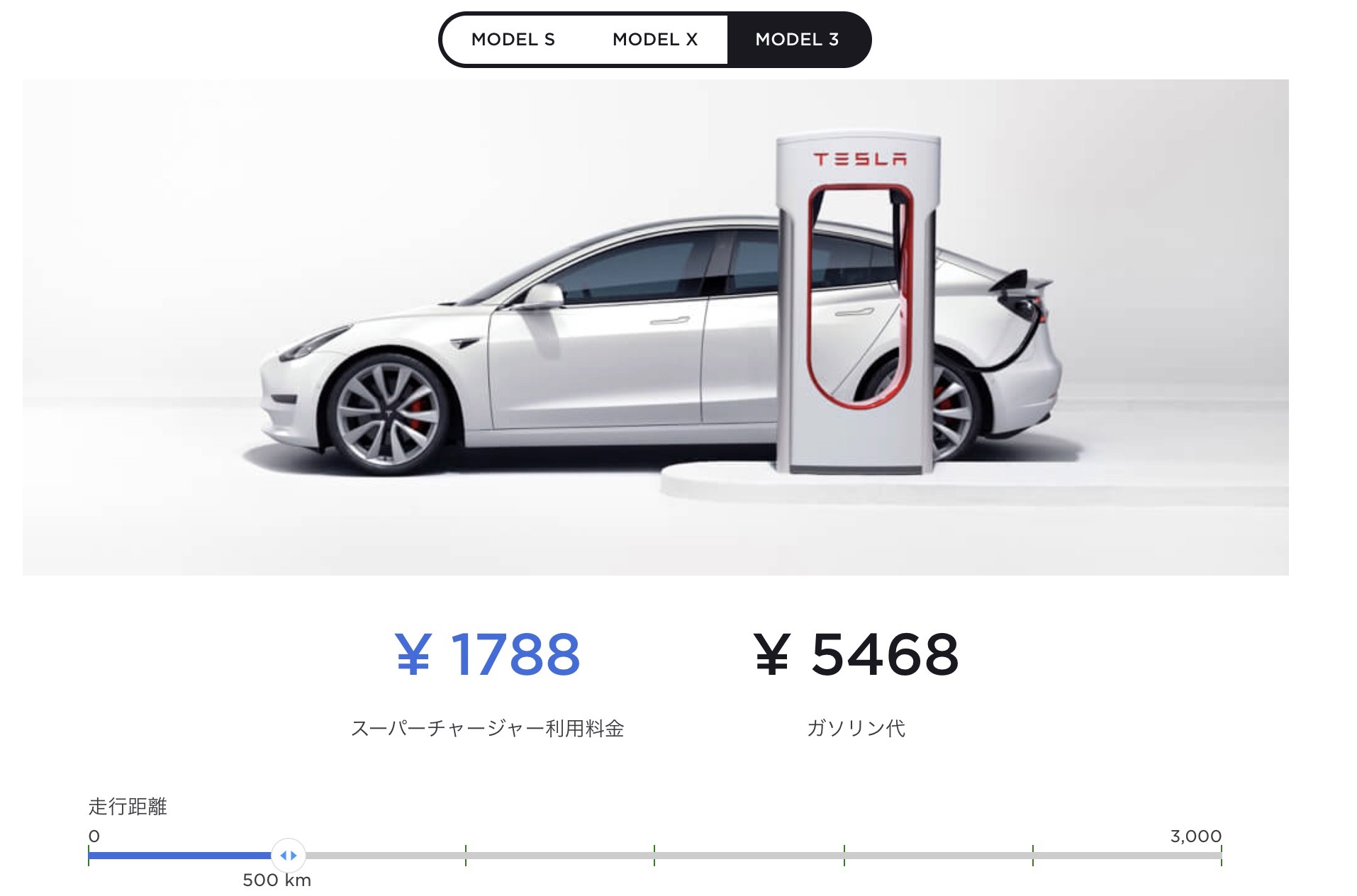
Source: From Tesla's official website ( https://www.tesla.com/jp/supercharger )
Brakes
Since regenerative braking works well, I probably only pressed the brake about two times during the round trip from Tokyo to Oshino Hakkai. With this, brake pad wear seems minimal, so replacements are also unlikely to occur often. Maintenance costs definitely seem like they will be low.
However, since regenerative braking is quite effective, adjusting how to release the accelerator requires a bit of getting used to.
Comfort
I think it varies by vehicle type, but since there is absolutely no engine noise (of course), it is quiet. I think it might be okay for people who easily get car sick.
The unique acceleration of electric vehicles was experienced a bit on the highway. I used autopilot as well. I think this might be convenient when you get used to it, but since I don't fully trust it, I still feel a bit anxious. I hold the steering wheel even without guidance from the navigation.
The Outbound Trip Took 3 Hours
Initially fooled by the navigation, I suddenly went off course
→ I got on the highway but got stuck in traffic
→ Charged for 30 minutes at Tangogezaka service area
→ Arrived at Oshino Hakkai
As a result, it took almost 3 hours. Without charging time, it would be about 2 and a half hours.
Mount Fuji was partially hidden by clouds, and I could only see the top a little. It’s difficult to achieve a situation like that of a professional photograph.
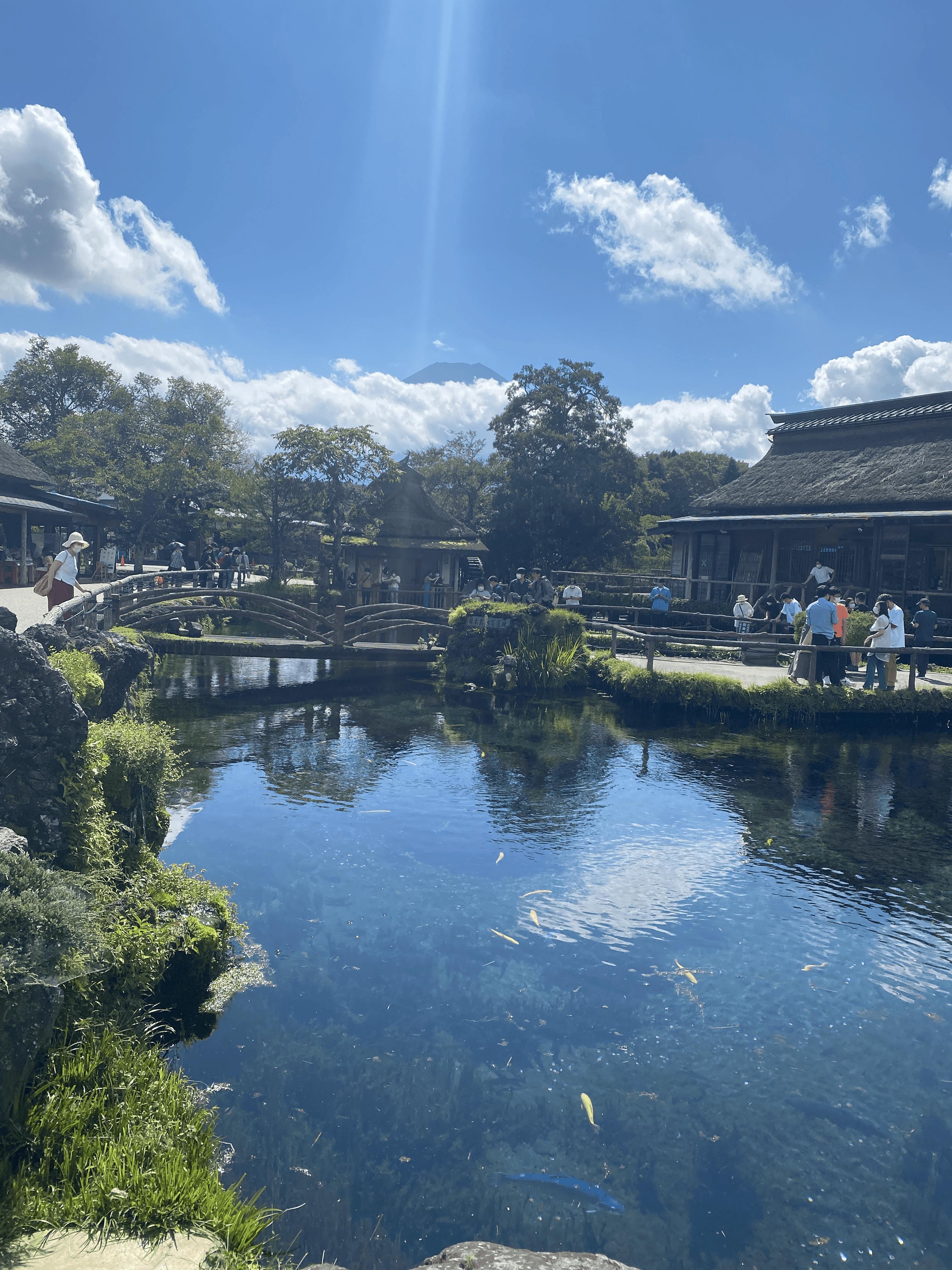
The pond is beautiful, but it seems my hand is reflected in the photo, so it's not great...


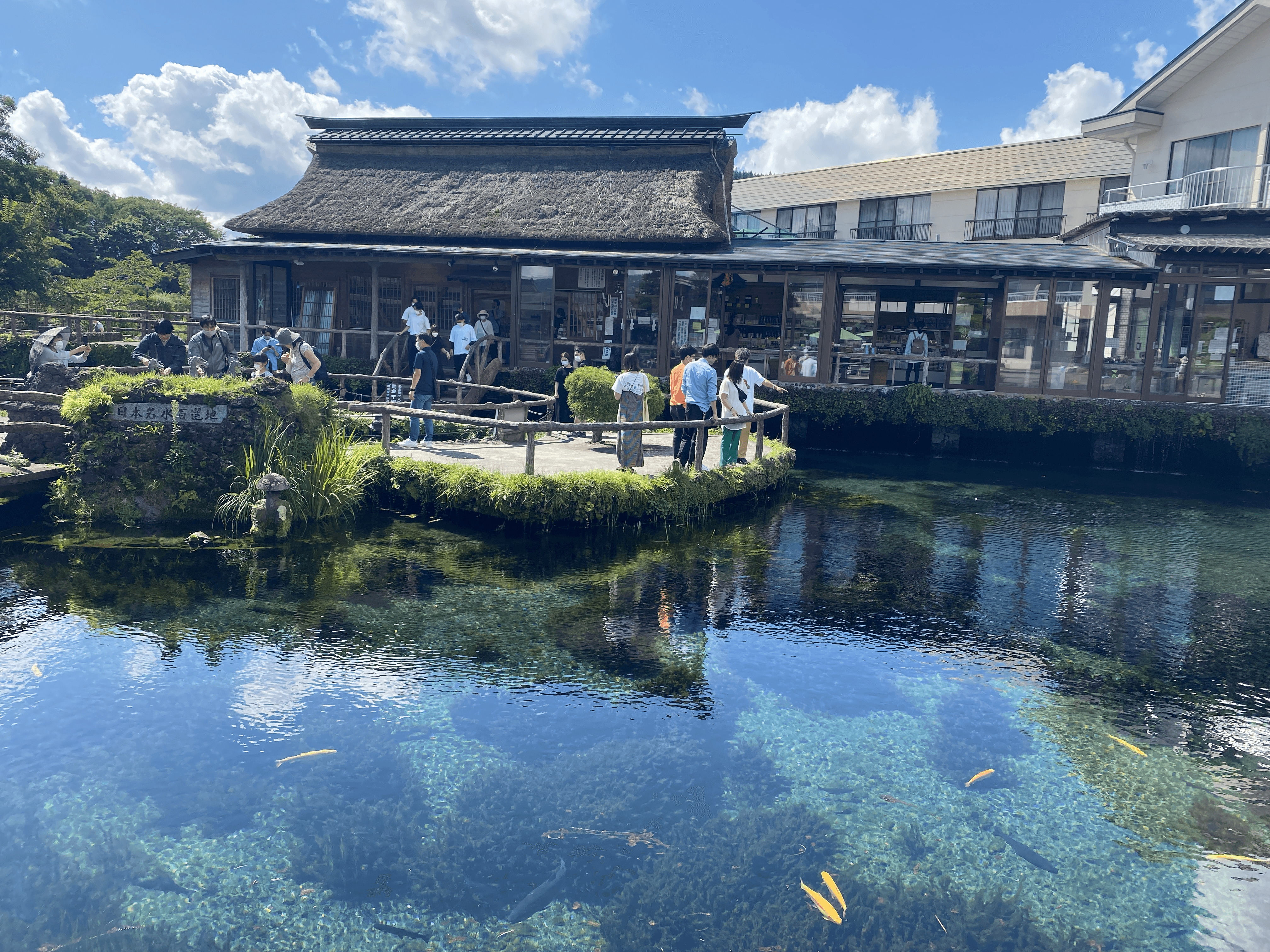
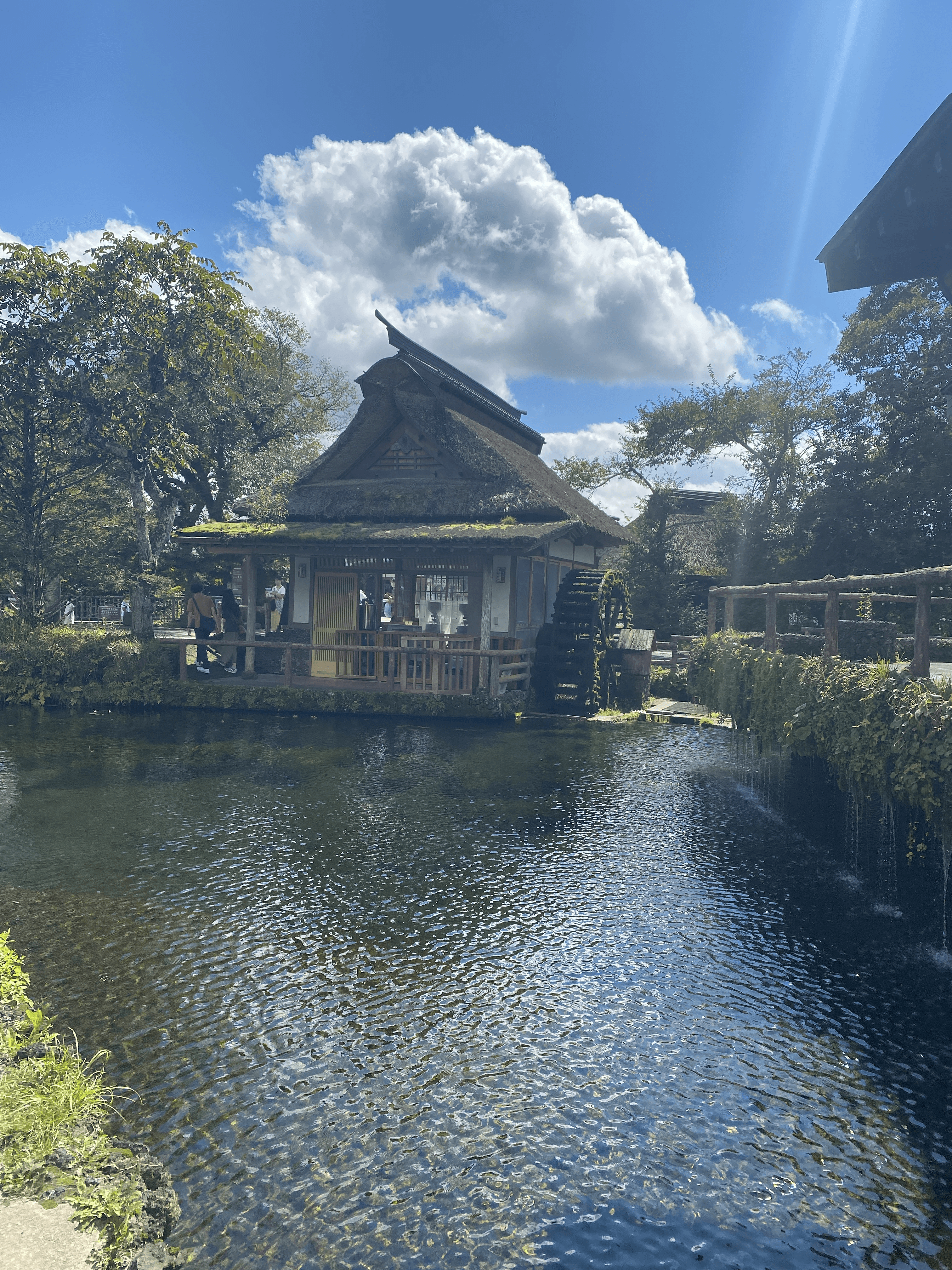
The Return Trip Took 2 and a Half Hours
On the way back, I attempted to charge at Tangogezaka service area, but the charging facilities were full, and I had to wait for about 15 minutes.
→ However, when the previous person's charging ended, the owner took a while to appear, so, having no other choice, I unplugged the charger and connected it here.
→ Charged for about 30 minutes
→ Arrived in Shinagawa
So it took 2 and a half hours. Without charging and waiting times, it would be about 1 hour 45 minutes.
The ideal situation would be to fully charge beforehand and charge during break times when a charging point is available, as that seems to save time. I felt that during trips that require charging in the middle for a quick movement, charging and waiting times become a hindrance.
Conclusion
Pros
It’s initially discomforting, but after driving 2-3 times, you get used to it quite a bit. You remember how to drive. It’s easier to start if someone supports you initially. I think if there is a service for EV driving instruction, the barriers would lower, and more people would use it.
Driving is surprisingly not difficult. Parking in reverse and entering tight mechanical parking lots is supported by the car, so it’s not much of a hassle.
Engaging in Micro Tourism with EVs allows for the rediscovery of attractive places nearby one's living city in Japan, and driving quietly with an EV is certainly enjoyable. By using effectively renewable energy EVs, it leads to the realization of zero carbon drives and zero travels. (Our company purchases carbon credits to achieve the effective use of renewable energy for all vehicle operations.)
Cons
Charging infrastructure is indeed still scarce. Since there aren't many installations, if someone is using it first, waiting times occur, making it inefficient with the charging time.
It’s best to trust the Tesla navigation about 70%.